Skip to content
Start Learning

English topics for children

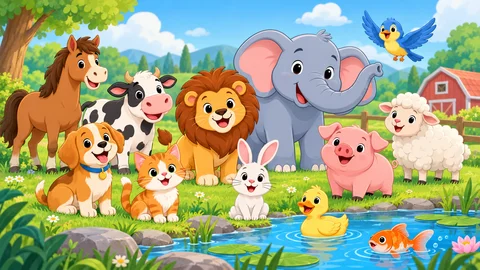
Pets, farm animals and wild animals in an illustrated landscape

Animals in English for Kids: 12 Names and Three Games

Animals turn up in picture books, toys and everyday conversations, giving you familiar things to name together in English. This guide brings together 12 animal names, useful phrases and three games with simple drawings, so you can introduce the words through play at home.
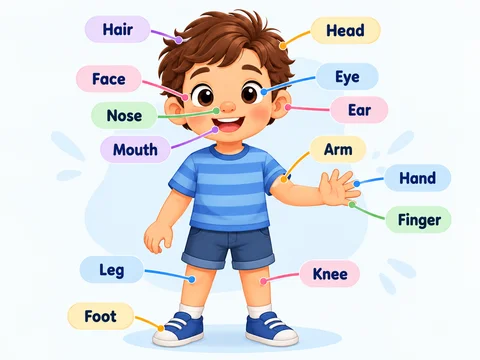

A boy with English labels for thirteen body parts

Body Parts in English for Kids

Words such as head, hand and nose come up when children draw people or describe a character. Here you'll find 13 body-part words in English, example phrases and three games using drawings. Your child can join in by looking, pointing or speaking, with no need to touch or move their body.

A lion choosing from a wardrobe of clothes

Clothes in English for kids

Getting dressed gives you everyday objects to name and describe in English. This guide covers clothing words such as T-shirt, pants and socks, including phrases for one item and for pairs. Two games show how to practice with clothes or simple drawings.

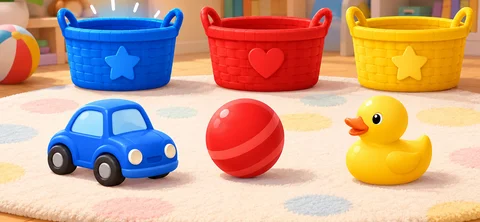
Blue, red and yellow toys with matching colored baskets

Colors in English for Kids: Words and Two Simple Games

From clothes to toy cars, colors give you plenty of everyday things to talk about in English. This guide introduces 11 color words with example phrases and two games to play at home. You can also explore how colors appear in Nativik's city scene.

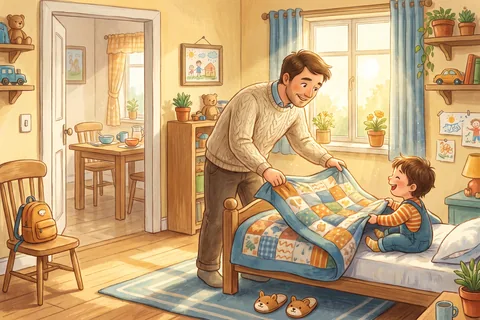
A child and father make the bed on a sunny morning.

Daily routine in English: words for your child's day

Wake up, get dressed, have breakfast and go to bed are useful daily routine phrases in English. Use the present simple for things you do regularly: "I have breakfast." Add first and then to describe a short sequence that fits a real or fictional day.

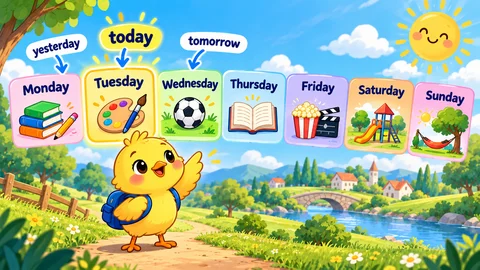
Monday to Sunday in order, with today, tomorrow and yesterday

Days of the week in English for kids

Monday, Tuesday, Wednesday, Thursday, Friday, Saturday and Sunday are the seven days of the week in English. This guide connects the names with familiar routines, explains spelling and pronunciation, and offers two games for talking about the days together.

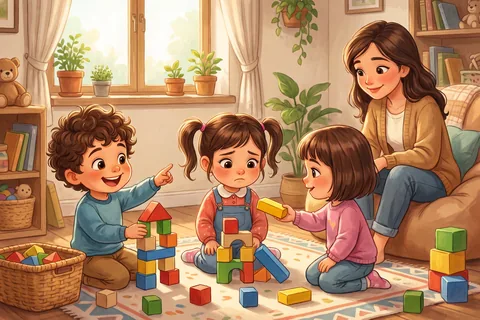
Three children show joy, disappointment and kindness while playing with blocks.

Emotions in English: words for feelings and stories

Happy, sad, angry, afraid and excited are useful feeling words in English. Use "I feel happy" for yourself or "The character feels worried" in a story. A child can learn the words through fictional characters without having to describe a personal feeling.

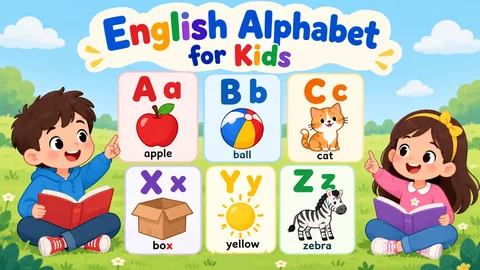
Uppercase and lowercase letter pairs with familiar picture words

English Alphabet for Kids: A-Z Letters and Simple Games

The English alphabet has 26 letters, each with an uppercase and lowercase form. Learning to recognize a letter, say its name and connect it with a familiar word are different parts of getting started. Here you'll find A–Z examples and two games you can play together with drawings.

An extended family sharing a picnic

Family members in English for kids: words and games

Family words help children talk about people and follow stories in English. This guide introduces common names for family members and phrases for simple introductions. The two drawing games use an imaginary family, so you can adapt the activity to your child without asking them to describe their own household.

A child and parent at a table with food and drinks

Food and drinks in English for kids

Food and drink words help children name familiar things and make simple requests in English. This guide combines everyday vocabulary with phrases for offering and choosing food, followed by two pretend-play games. You can use pictures and let your child choose how to respond.

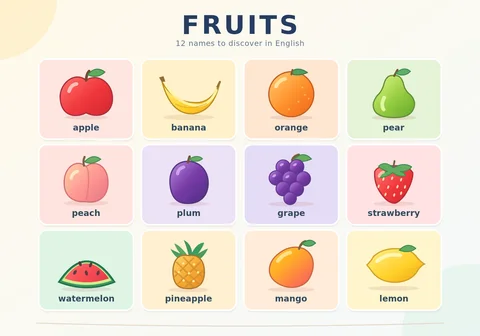
Twelve fruits with their English names

Fruits in English for Kids: 12 Names and Two Simple Games

Fruit names can become part of English practice when you talk about a snack, look at a picture or play pretend shop. This page brings together 12 fruit words, short phrases and two games you can adapt to the fruit your child already recognizes.

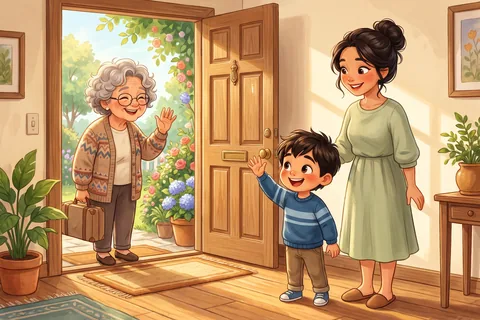
A child and mother greet a visiting grandmother at the front door.

Greetings and polite words in English for children

Hello and hi greet someone; goodbye and see you end a conversation. Please helps make a request, and thank you shows gratitude. Practise these English expressions in a short exchange, with one person greeting, asking or offering and another replying.

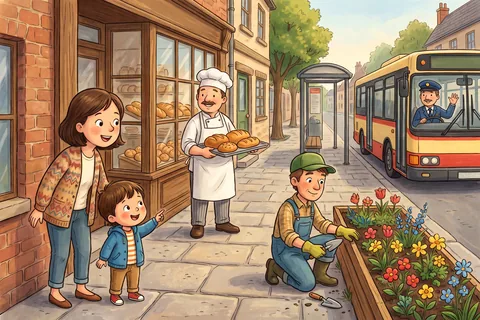
A child and mother see a baker, gardener and bus driver at work.

Jobs in English: words and pretend-play ideas for children

Teacher, doctor, nurse, farmer and cook are useful job names in English. Pair a name with a simple action: "A teacher teaches" or "A cook prepares food." Drawings and pretend characters let children explore the words without needing costumes or real equipment.

A child and father turn the pages of an illustrated seasonal desk calendar.

Months of the year in English: names, order and activities

The twelve months in order are January, February, March, April, May, June, July, August, September, October, November and December. English month names begin with a capital letter. Use "in May" for a month and "on 5 May" for a particular date.

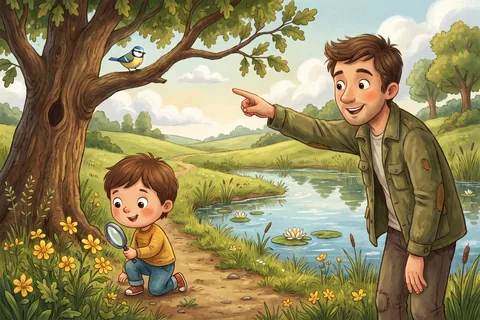
A child and father discover flowers and a bird beside a pond.

Nature vocabulary in English: words for looking and drawing

Tree, leaf, flower, grass, river and mountain are useful nature words in English. Use "I can see a tree" to name something in view, then add a colour or number if you want. A window view, drawing or book picture can supply the whole activity.

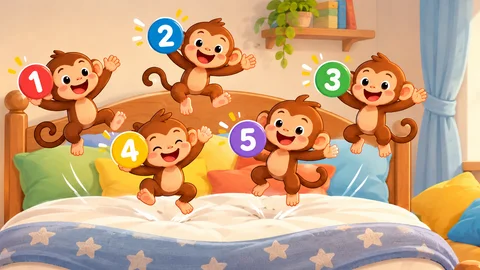
Five monkeys holding the numbers one to five while jumping on a bed

Numbers in English for Kids: 0–20

Counting toys or steps gives English number words a place in everyday play. This guide covers numbers from 0 to 20, with examples and two games for matching a spoken number to the things you can see and count together.

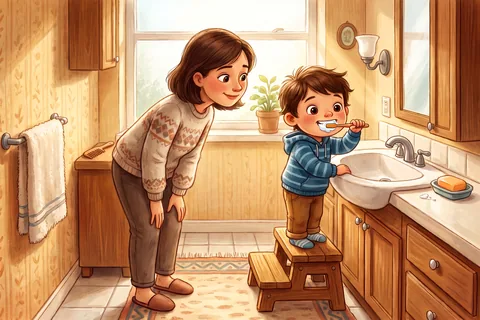
A child brushes teeth with a parent nearby in a bright bathroom.

Personal hygiene vocabulary in English for children

Soap, towel, toothbrush and toothpaste are useful personal hygiene words in English. Pair them with actions such as wash, rinse, dry and brush. Pictures let you practise the language without changing your family's care routine or handling toiletries during the activity.

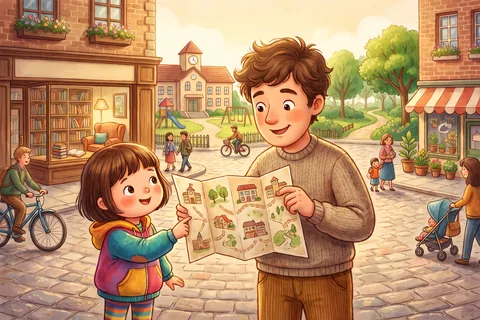
A child and father explore town places using an illustrated map.

Places in the city in English: words and paper-map activities

Park, school, library, hospital and supermarket are useful place names in English. Ask "Where is the library?" and answer with a simple location: "It's next to the park." A pretend map lets children practise the words without navigating a real street.

A child and father play with a small open-front dollhouse.

Rooms of the house in English: words for home

Kitchen, bedroom, bathroom and living room are useful room names in English. A home is where someone lives; a house is a kind of building. You can practise room words with a drawing, whether your family lives in a house, a flat or another kind of home.

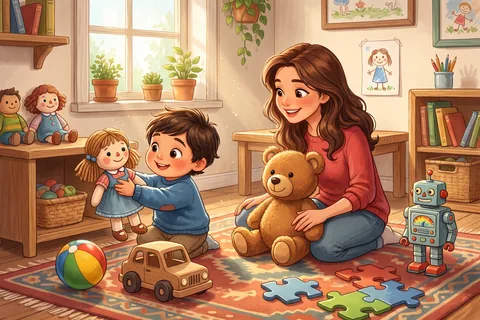
A child and mother play with a doll, teddy bear and other toys.

Toys in English: words for playing together

Ball, doll, teddy bear and toy car are useful toy words in English. Pair a few names with "Can I have...?", "Here you are" and "Let's play." The activities below work with toys you already use or with simple pictures.

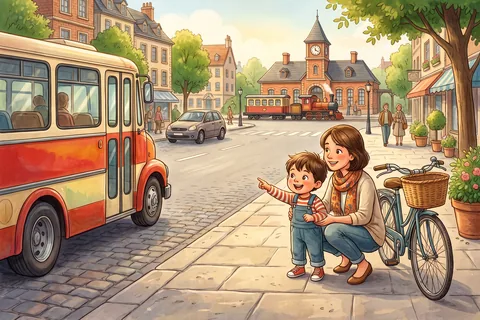
A child and mother watch a bus and other vehicles from a sidewalk.

Transport in English: vehicle words for children

Car, bus, train, bike, boat and plane are common transport words in English. Use them in short lines such as "I go by bus" or "I can see a train." A paper journey lets children practise the words even when a vehicle is unfamiliar in daily life.

A child and mother explore whole vegetables at a kitchen table.

Vegetables in English: words and games for children

Carrot, potato, tomato and onion are useful vegetable words for a first English conversation. Add familiar vegetables from the list, then use phrases such as "A carrot, please" and "I like peas." Pictures are enough for every activity here.

A child and mother look through a window at a snowy winter garden.

Weather and seasons in English: words to use together

Use "It's sunny", "It's cloudy" or "It's windy" to describe the weather you can see. Spring, summer, autumn and winter are four English season names. Keep today's weather separate from a season label: a picture of winter does not have to show snow.