English Alphabet for Kids: A-Z Letters and Simple Games
The English alphabet has 26 letters, each with an uppercase and lowercase form. Learning to recognize a letter, say its name and connect it with a familiar word are different parts of getting started. Here you'll find A–Z examples and two games you can play together with drawings.
- Learning language
- English
- Age
- Ages 3–10
- Level
- Beginner
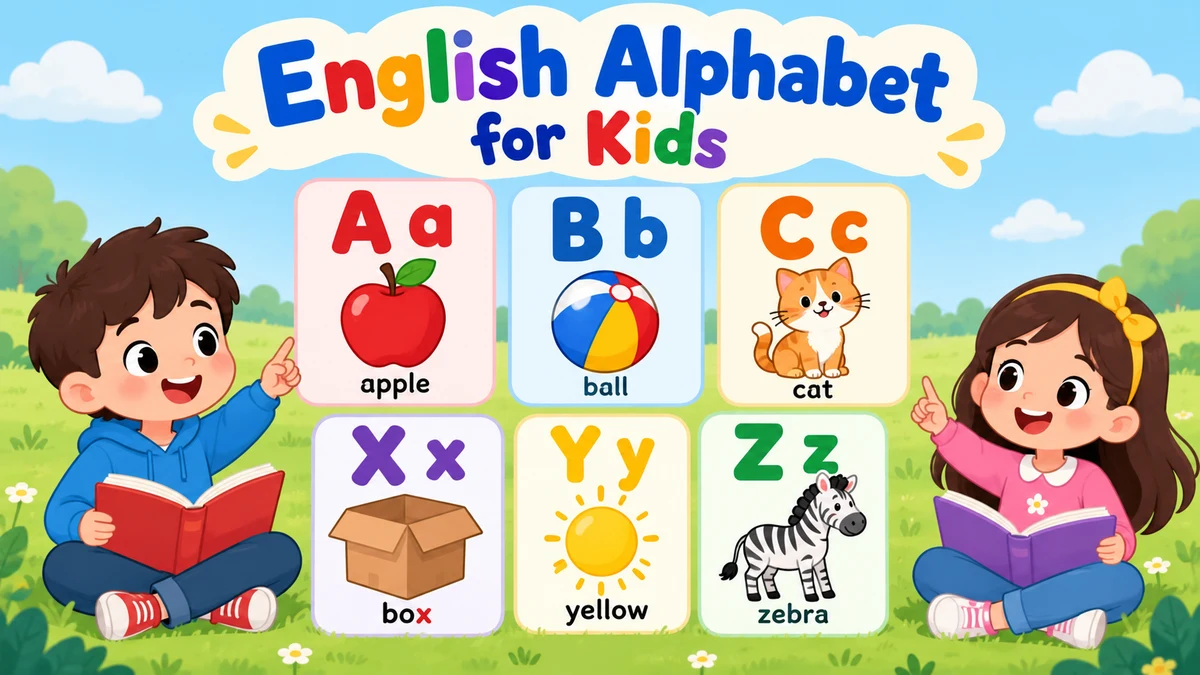
Uppercase means capital letters, such as A; lowercase uses forms such as a. The pairs below show the same letters in both forms.
Choose a few familiar letters and match each uppercase letter to its lowercase form. The picture words help you talk about the letters. In box, x is at the end of the word.
- Aaapple
- Bbball
- Cccat
- Dddog
- Eeegg
- Fffish
- Gggoat
- Hhhat
- Iiinsect
- Jjjuice
- Kkkite
- Llleaf
- Mmmoon
- Nnnose
- Ooorange
- Pppen
- Qqqueen
- Rrrabbit
- Sssun
- Tttoy
- Uuumbrella
- Vvvan
- Wwwater
- Xxbox (x at the end)
- Yyyellow
- Zzzebra
Use these short phrases in the games below. Say each one while showing what you mean; your child may point or move a drawing instead of repeating a sentence.
- Here is an apple.
- This is a ball.
- This is a cat.
- Find uppercase A.
- Find lowercase a.
- Point to the ball.
- What is missing?
- The cat is missing.
Letter names label letters; word sounds are what we hear when we speak. Saying a word's letter names spells it, rather than sounding it out. The name of A is not the first sound in apple.
An example word shows a spelling, not a fixed sound for every use of that letter. Compare the first sounds in cat and city, or goat and giraffe: the same starting letter can represent different sounds.
For Q, notice qu together in queen; do not use Q's letter name as the opening sound. In box, the final x represents two sounds together. These examples are not universal initial-sound rules.
This guide uses the US name zee for Z. In UK English, the name is zed; it is the same letter. An adult can consult the dictionary entries below before playing, but no recording or video is required.
Play: Match the Letters
Nativik has a separate alphabet mini-game where your child can practice writing each letter. Alongside writing, our language practice gives children a chance to hear English first, then say it themselves. After playing, you can choose a letter from the A–Z letter chart on this page and draw it together on paper.
The British Council suggests using familiar objects and pictures for parent-led English practice. The games below are original activity suggestions, not a tested teaching program.
1. Match the letter pair and find its word
- Goal
- Match A/a, B/b and C/c, then find the first letter in apple, ball and cat.
- Preparation
- An adult writes A, a, B, b, C and c on six separate pieces of paper. On three more pieces, draw an apple, a ball and a cat, with the matching word below each drawing. Keep the pen with the adult.
Steps
- Show and name the three drawings: "Here is an apple." "This is a ball." "This is a cat."
- Place A, B and C in a row. Say "Find uppercase A" and point to it together.
- Offer a, b and c. Say "Find lowercase a" and demonstrate placing it beside A. Invite your child to match the other two pairs.
- Read apple aloud and point to its first printed letter, a. Help your child put the apple drawing beside A/a. Repeat with ball and cat.
- Let your child choose a drawing for you to name and match. Finish after a comfortable turn; there is no need to add more letters.
- Adult help
- Read every label and name each letter yourself. When the choice is unclear, show the matching pair again without demanding a spoken answer.
- Easier variation
- Use only A, a and the apple drawing. Make the match yourself and let your child point or watch.
For more challenge, shuffle the same six letter pieces and match them without a model row. A child who enjoys print can also find the first letter in a familiar name that you write and read aloud. This is an optional choice, not an age target.
2. Which picture is missing?
- Goal
- Recall apple, ball and cat after one picture disappears, then connect the missing word with its first letter.
- Preparation
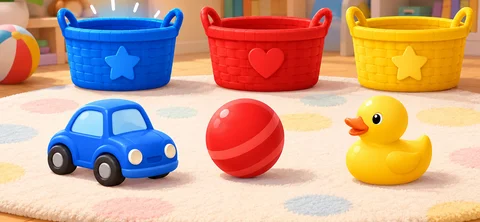
- An adult draws an apple, a ball and a cat on three separate pieces of paper. Leave the backs blank. No letter cards, printer, real food or live animals are needed.
Steps
- Lay out the three drawings and name them. Ask "Point to the ball" while all three remain visible.
- Invite your child to look away. Turn one drawing face down, keeping the other two visible.
- Ask "What is missing?" Accept a word or a point to the hidden picture. When needed, offer two spoken choices, such as "Apple or cat?"
- If the cat is hidden, model "The cat is missing." Turn the drawing back over, write cat below it, and point to c while naming that letter.
- Let your child hide a drawing while you look away. Name the missing picture when you turn back, and repeat only while the game remains welcome.
- Adult help
- Supply the missing word when needed and do the writing yourself. Do not treat silence or a pointed answer as a failed turn.
- Easier variation
- Use two drawings and turn one over while your child watches. Reveal it together and say the word; skip the letter step.
For more challenge, keep the same three pictures but rearrange them before hiding one. Invite your child to name the missing picture and its first letter before you reveal it. Avoid adding unfamiliar words at the same time.
Should we learn letter names or sounds first? For this matching game, use letter names. When practicing reading, work with sounds rather than joining letter names together. Follow any phonics approach used at school; this page does not prescribe a teaching sequence.
Must my child already read? No. In these activities, the adult reads every label and names each picture. A child can join by pointing, moving a drawing or choosing between two spoken words. Writing is not required.
Should we say zee or zed? This guide uses zee for US English. Zed is the UK name for the same letter, not an extra letter or a mistake.
Why can one letter have different sounds? English spelling does not give each letter just one sound, and letters can work in groups. Compare cat with city, and notice qu in queen. Say the whole word instead of applying one letter chart example everywhere.
The letter chart pairs all 26 letters with editorially selected familiar words, checked against dictionary entries. Sentences and the two parent-led games were written for this article; the adult supplies the reading and adjusts the number of choices.
The word list is an editorial choice and the examples are not a tested curriculum or a promise of fluent reading. The age range 3-10 describes the intended audience, not a deadline for recognizing letters or writing.