Numbers in English for Kids: 0–20
Counting toys or steps gives English number words a place in everyday play. This guide covers numbers from 0 to 20, with examples and two games for matching a spoken number to the things you can see and count together.
- Learning language
- English
- Age
- Ages 3–10
- Level
- Beginner
Start practice with 1–5; for a bigger round, try 1–10. Keep 11–20 available to look up rather than expecting all 21 words in one sitting. These are practice choices for beginners, not age-based milestones.
| English number | Pronunciation (US IPA) | Meaning / use | Example |
|---|---|---|---|
| 0 — zero [1] | /ˈzɪɹoʊ/ | No objects in the group. [1] | There are zero blocks on the mat. /ðɛɹ ɑɹ ˈzɪɹoʊ blɑks ɑn ðə mæt./ |
| 1 — one [1] | /wʌn/ | Just a single object. [1] | Here is one block. /hiɹ ɪz wʌn blɑk./ |
| 2 — two [1] | /tu/ | A group with 2 objects. [1] | I have two blocks. /aɪ hæv tu blɑks./ |
| 3 — three [1] | /θɹi/ | A group with 3 objects. [1] | Put three blocks here. /pʊt θɹi blɑks hiɹ./ |
| 4 — four [1] | /fɔɹ/ | A group with 4 objects. [1] | Can you find four blocks? /kæn ju faɪnd fɔɹ blɑks?/ |
| 5 — five [1] | /faɪv/ | A group with 5 objects. [1] | Let's count five blocks. /lɛts kaʊnt faɪv blɑks./ |
| 6 — six [1] | /sɪks/ | A group with 6 objects. [1] | There are six blocks. /ðɛɹ ɑɹ sɪks blɑks./ |
| 7 — seven [1] | /ˈsɛvən/ | A group with 7 objects. [1] | I can see seven dots. /aɪ kæn si ˈsɛvən dɑts./ |
| 8 — eight [1] | /eɪt/ | A group with 8 objects. [1] | Count eight dots. /kaʊnt eɪt dɑts./ |
| 9 — nine [1] | /naɪn/ | A group with 9 objects. [1] | Can you draw nine dots? /kæn ju dɹɔ naɪn dɑts?/ |
| 10 — ten [1] | /tɛn/ | A group with 10 objects. [1] | We have ten blocks. /wi hæv tɛn blɑks./ |
| 11 — eleven [1] | /ɪˈlɛvən/ | A group with 11 objects. [1] | There are eleven dots. /ðɛɹ ɑɹ ɪˈlɛvən dɑts./ |
| 12 — twelve [1] | /twɛlv/ | A group with 12 objects. [1] | I drew twelve dots. /aɪ dɹu twɛlv dɑts./ |
| 13 — thirteen [1] | /ˈθɝˈtin/ | A group with 13 objects. [1] | Can you count thirteen dots? /kæn ju kaʊnt ˈθɝˈtin dɑts?/ |
| 14 — fourteen [1] | /ˈfɔɹˈtin/ | A group with 14 objects. [1] | We counted fourteen dots. /wi ˈkaʊntɪd ˈfɔɹˈtin dɑts./ |
| 15 — fifteen [1] | /fɪfˈtin/ | A group with 15 objects. [1] | I can see fifteen dots. /aɪ kæn si fɪfˈtin dɑts./ |
| 16 — sixteen [1] | /sɪkˈstin/ | A group with 16 objects. [1] | This page has sixteen dots. /ðɪs peɪdʒ hæz sɪkˈstin dɑts./ |
| 17 — seventeen [1] | /ˈsɛvənˈtin/ | A group with 17 objects. [1] | There are seventeen dots here. /ðɛɹ ɑɹ ˈsɛvənˈtin dɑts hiɹ./ |
| 18 — eighteen [1] | /eɪˈtin/ | A group with 18 objects. [1] | I counted eighteen dots. /aɪ ˈkaʊntɪd eɪˈtin dɑts./ |
| 19 — nineteen [1] | /ˈnaɪnˈtin/ | A group with 19 objects. [1] | Can you find nineteen dots? /kæn ju faɪnd ˈnaɪnˈtin dɑts?/ |
| 20 — twenty [1] | /ˈtwɛnti/ | A group with 20 objects. [1] | Let's count twenty dots. /lɛts kaʊnt ˈtwɛnti dɑts./ |
Broad US IPA is a reading aid. Listen to the audio for connected speech.
Reuse these short phrases in both games. Change the number as needed, and demonstrate any unfamiliar instruction.
| English | Pronunciation (US IPA) |
|---|---|
| "Let's count." Invite your child to begin. | /lɛts kaʊnt./ |
| "How many?" Ask about the whole group. | /haʊ ˈmɛni?/ |
| "Show me two." Ask for the numeral or a matching group. | /ʃoʊ mi tu./ |
| "Put three here." Request a quantity in a chosen space. | /pʊt θɹi hiɹ./ |
| "There are three." Give a short answer after counting. | /ðɛɹ ɑɹ θɹi./ |
| "Zero. None here." Describe an empty space. | /ˈzɪɹoʊ. nʌn hiɹ./ |
| "Your turn." Invite your child to choose or count. | /jɔɹ tɝn./ |
| "Let's check." Count together again. | /lɛts tʃɛk./ |
Broad US IPA is a reading aid. Listen to the audio for connected speech.
In two, the letter w is silent. In Merriam-Webster's first-listed pronunciation of thirteen, the stronger beat is on the last syllable; in twenty, it is on the first. These are dictionary models, not a rule for stress in every sentence.
Say one word slowly, then naturally. Pause for an echo or a pointing response, and model the word again rather than demanding a perfect repetition. Dictionary audio is optional; an adult can lead all the practice without it.
Play: Numbers in English for Kids: 0–20
Keep learning through play — the Nativik app has even more learning games and adventures. Try it!
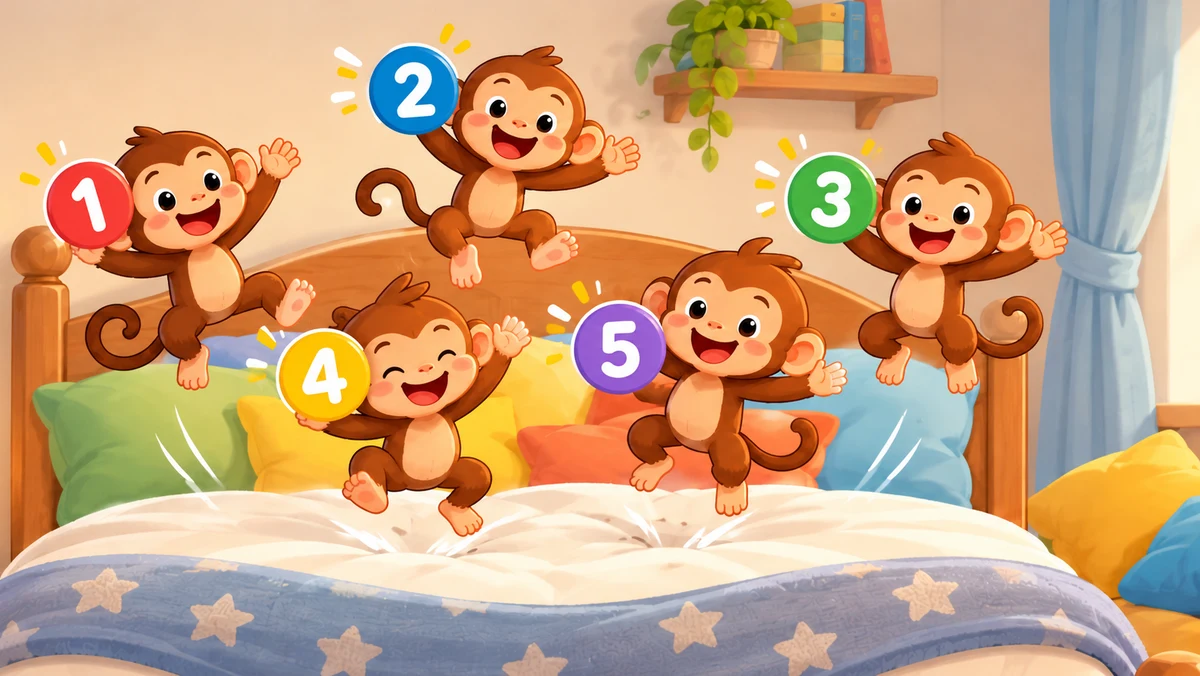
In Nativik, your child catches blocks marked with numbers in a mini-game that goes up to 100. They hear the numbers first, then say them as part of the language practice. You can use the 0–20 reference on this page to revisit the smaller numbers together after playing.
British Council guidance recommends using familiar everyday situations and objects for English practice.
Stanford DREME distinguishes reciting number words from counting objects: pair one word with each item; after a correct count, the final number tells the total.
The games below are original practice suggestions. Use blocks suitable for your child's usual supervised play, or adult-made drawings. No small loose counters are needed. Offer pointing as well as speaking, and stop for a break whenever needed.
Count, then match
- Goal
- Connect a spoken number, a group of objects, and its written numeral.
- Preparation
- Use five large blocks and a sheet with 0–5 written well apart. For a drawing-only version, draw separate groups of one to five dots and an empty box for zero.
Steps
- Place three blocks in a row, or choose the three-dot drawing. Say "Let's count." Point once to each item as you say "one, two, three."
- Ask "How many?" Gesture around the whole group and model "There are three."
- Show the written numerals 2 and 3. Ask your child to point to 3 and invite them to say "three." Model the answer if needed.
- Try other quantities from 1–5. For zero, clear the blocks or show the empty box. Point to 0 and say "Zero. None here."
- For a bigger round, extend the sheet and the groups to 1–10. Keep the same steps.
- Adult help
- If an item gets counted twice, start again together. Move each counted block aside, or point slowly to each drawn dot. Read unfamiliar numerals aloud; pointing is an acceptable response.
- Easier variation
- Use only one and two. You count and choose the numeral while your child moves or points to the objects.
You ask, I draw
- Goal
- Request a quantity in English and check whether a drawing matches it.
- Preparation
- The adult draws three empty boxes on a sheet of paper and keeps the drawing tool. No numeral reading is required.
Steps
- Invite your child to choose a number from 1–5. They can say it or show it on their fingers; repeat the English word before drawing.
- Draw that many dots in a box. Say "Let's check," count together, and ask "How many?"
- Invite another request for the next box. Try zero too: leave a box empty and say "Zero. None here."
- Make a playful checking round: agree on three, but deliberately draw only two dots. Count together, then add the missing dot.
- Take turns choosing the number while the adult continues drawing. For a harder round, use requests from 1–10.
- Adult help
- Repeat a requested number without insisting on a full sentence. If your deliberate mistake is confusing, explain it and draw the agreed quantity together. The game is not a test.
- Easier variation
- Offer a choice of one or two. Your child can show a finger choice while you supply the word and draw the dots.
Should we start with 1–5 or 1–10? Try 1–5 first. If those words are already familiar, play with 1–10; for an easier round, choose one and two. Use the table for reference, not as a memorization deadline.
What does zero mean? In these games, zero means none of the objects are there. Show an empty box beside one containing a dot and say "Zero dots. One dot."
Why can my child recite but not count? Reciting, matching words to objects, and understanding the total are different parts of counting. Try fewer objects and model the count together.
Do we need ordinals? Not for these activities. Stay with zero through twenty. Ordinals, fractions, and numbers above twenty are outside this guide.
Dictionary entries support the number words and pronunciation notes. Teaching guidance informs the approach, not guaranteed results. The list is an editorial selection; the original examples and activities are not a tested curriculum. The product description is vendor-reported, not an efficacy test.