Months of the year in English: names, order and activities
The twelve months in order are January, February, March, April, May, June, July, August, September, October, November and December. English month names begin with a capital letter. Use "in May" for a month and "on 5 May" for a particular date.

- Learning language
- English
- Level
- beginner

Month names are useful when a child wants to talk about a birthday, a visit or an event on the calendar. Reciting the list is only one way to practise. Finding a month and using it in a small piece of family information gives the name a more specific meaning.
| English | Pronunciation (US IPA) | Meaning or use | Example |
|---|---|---|---|
| January | /ˈdʒænjuɛɹi/ | Month 1; after December. | The visit is in January. /ðə ˈvɪzɪt ɪz ɪn ˈdʒænjuɛɹi./ |
| February | /ˈfɛbjəwɛɹi/ | Month 2; after January. | The party is in February. /ðə ˈpɑɹti ɪz ɪn ˈfɛbjəwɛɹi./ |
| March | /mɑɹtʃ/ | Month 3; after February. | The trip is in March. /ðə tɹɪp ɪz ɪn mɑɹtʃ./ |
| April | /ˈeɪpɹəl/ | Month 4; after March. | The show is in April. /ðə ʃoʊ ɪz ɪn ˈeɪpɹəl./ |
| May | /meɪ/ | Month 5; after April. | My birthday is in May. /maɪ ˈbɝθdeɪ ɪz ɪn meɪ./ |
| June | /dʒun/ | Month 6; after May. | The visit is in June. /ðə ˈvɪzɪt ɪz ɪn dʒun./ |
| July | /dʒuˈlaɪ/ | Month 7; after June. | The party is in July. /ðə ˈpɑɹti ɪz ɪn dʒuˈlaɪ./ |
| August | /ˈɑɡəst/ | Month 8; after July. | The trip is in August. /ðə tɹɪp ɪz ɪn ˈɑɡəst./ |
| September | /sɛpˈtɛmbɚ/ | Month 9; after August. | The show is in September. /ðə ʃoʊ ɪz ɪn sɛpˈtɛmbɚ./ |
| October | /ɑkˈtoʊbɚ/ | Month 10; after September. | My birthday is in October. /maɪ ˈbɝθdeɪ ɪz ɪn ɑkˈtoʊbɚ./ |
| November | /noʊˈvɛmbɚ/ | Month 11; after October. | The visit is in November. /ðə ˈvɪzɪt ɪz ɪn noʊˈvɛmbɚ./ |
| December | /dɪˈsɛmbɚ/ | Month 12; before the next January. | The party is in December. /ðə ˈpɑɹti ɪz ɪn dɪˈsɛmbɚ./ |
Broad US IPA is a reading aid. Listen to the audio for connected speech.
Write May, not may, when you mean the month. Month names take a capital letter in English, even in the middle of a sentence. British Council: capital letters.
| English | Pronunciation (US IPA) |
|---|---|
| What month is it? | /wʌt mʌnθ ɪz ɪt?/ |
| It's October. | /ɪts ɑkˈtoʊbɚ./ |
| When is your birthday? | /wɛn ɪz jɔɹ ˈbɝθdeɪ?/ |
| My birthday is in May. | /maɪ ˈbɝθdeɪ ɪz ɪn meɪ./ |
| What comes after June? July. | /wʌt kʌmz ˈæftɚ dʒun? dʒuˈlaɪ./ |
| The visit is on 5 May. | /ðə ˈvɪzɪt ɪz ɑn fɪfθ meɪ./ |
Broad US IPA is a reading aid. Listen to the audio for connected speech.
Use in with a month: "in May". Use on with a day or a date: "on Monday" or "on 5 May". These are different kinds of time information. Keep the month-only phrase first if dates add too much at once. British Council: time and dates.
February has several listed pronunciations, including forms with and without the first r. Check the Cambridge February entry and choose a model you can use comfortably. Do not treat every accent difference as a mistake.
Say a month while pointing to its place on a calendar. Then model "in February" or a month important to your child. Spellings are not exact sound guides, and a child can find the month by its picture or position before saying it.
- [Days of the week in English for kids](/learn/days-of-the-week/)
- [Numbers in English for Kids: 0–20](/learn/numbers/)
- [Family members in English for kids: words and games](/learn/family/)
Play: Months of the year in English: names, order and activities
Keep learning through play — the Nativik app has even more learning games and adventures. Try it!
Nativik gives children opportunities to revisit English words and phrases during play. Alongside that game time, keep a paper calendar for conversations about family plans. Pick an event your child cares about, name its month in English and mark it together. Return to the calendar when there is something new to add.
Use any calendar that shows the English month names, or write the twelve names on large pieces of paper. Practise a small part of the year at first. The number of names in one activity is a choice, not a learning deadline.
Find our month
- Goal
- Connect a month name with a chosen event.
- Preparation
- Keep a calendar and draw a symbol for a real or pretend event.
Steps
- Say the current month or another month you want to use.
- Help your child find its name and place the event symbol there.
- Use one line: "The visit is in June." Let the child choose a second event if they want.
- Adult help
- Use fictional events when family dates are private or a birthday question is unwelcome.
- Easier variation
- Point to one month and say its name together.
The calendar gap
- Goal
- Practise a short part of the sequence.
- Preparation
- Write three neighbouring month names, such as April, May and June.
Steps
- Read the three names in order while pointing.
- Cover the middle name and ask, "What comes after April?"
- Let your child uncover May. Change who covers the name and repeat with another short sequence.
- Adult help
- Leave the full calendar nearby as a reference. Looking is part of the activity.
- Easier variation
- Use two neighbouring months and reveal both.
A year of chosen events
- Goal
- Use "in" with month names.
- Preparation
- Draw twelve boxes and add month names; prepare a few event symbols.
Steps
- Choose where a pretend visit belongs and say, "The visit is in August."
- Invite your child to place another symbol in any month.
- Describe the choice using its month name. Read the selected events in calendar order.
- Adult help
- Avoid assigning a holiday, school term or season to every month. Use events that fit your family or invented story.
- Easier variation
- Use only the current month and the next month.
Do we need to learn all twelve at once? No. Use the current month, a chosen birthday month or a short sequence. The full list can stay in view.
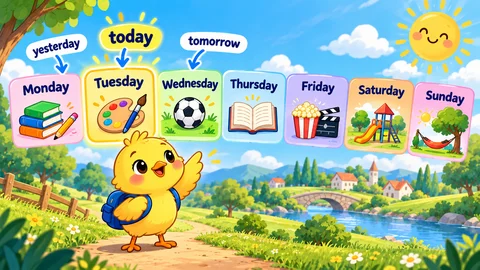
Are months and days of the week the same lesson? They are different sets. A month is part of a year; Monday through Sunday name days in a week. Practise one set before combining them in a date.
Should June always have a summer picture? Use pictures that fit the place or story you mean. A month name alone does not tell you the weather everywhere.