Shopping vocabulary in English: words and pretend conversations
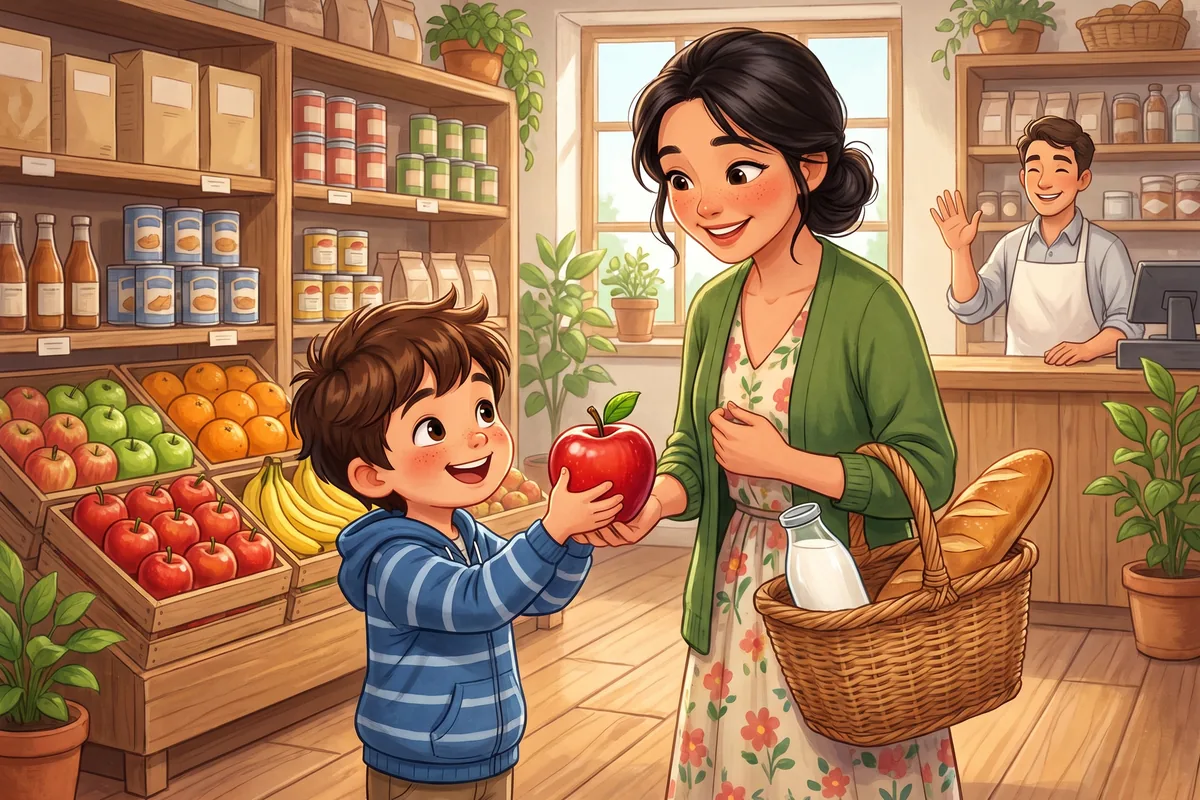
Shop, buy, pay, price and receipt are useful shopping words in English. Practise "Can I have this, please?", "How much is it?" and "Thank you" in a pretend exchange. Paper items and a drawn receipt are enough; you do not need real money or a purchase.
- Learning language
- English
- Level
- beginner

Shopping language includes more than naming what is on a shelf. You can ask for an item, find its price and check what is on a receipt. A pretend shop at home lets you slow down the exchange and repeat a line without holding up a real queue.
| English | Pronunciation (US IPA) | Meaning or use | Example |
|---|---|---|---|
| shop | /ʃɑp/ | A place where goods or services are sold. | This is our pretend shop. /ðɪs ɪz ˈaʊɚ pɹiˈtɛnd ʃɑp./ |
| store | /stɔɹ/ | Another word for a place where goods are sold. | The store is open. /ðə stɔɹ ɪz ˈoʊpən./ |
| buy | /baɪ/ | Get something in exchange for payment. | I want to buy a book. /aɪ wɑnt tə baɪ ə bʊk./ |
| pay | /peɪ/ | Give money for something you buy or a service. | I pay for the book. /aɪ peɪ fɔɹ ðə bʊk./ |
| price | /pɹaɪs/ | The amount asked for something being sold. | What is the price? /wʌt ɪz ðə pɹaɪs?/ |
| money | /ˈmʌni/ | Coins, notes or other means of payment. | This is pretend money. /ðɪs ɪz pɹiˈtɛnd ˈmʌni./ |
| bag | /bæɡ/ | A container for carrying things. | The book is in the bag. /ðə bʊk ɪz ɪn ðə bæɡ./ |
| receipt | /ɹɪˈsit/ | A paper or message that records a payment or purchase. | Here is your receipt. /hiɹ ɪz jɔɹ ɹɪˈsit./ |
| basket | /ˈbæskət/ | A container used here to hold shopping. | Put the picture in the basket. /pʊt ðə ˈpɪktʃɚ ɪn ðə ˈbæskət./ |
| shopping list | /ˈʃɑpɪŋ lɪst/ | A note of things someone plans to buy. | A book is on my shopping list. /ə bʊk ɪz ɑn maɪ ˈʃɑpɪŋ lɪst./ |
Broad US IPA is a reading aid. Listen to the audio for connected speech.
Shop is a common British English word for a place to buy things; store is common in American English. Both occur in English. Use one for the first game, and mention the other when your child meets it. Cambridge: shop.
| English | Pronunciation (US IPA) |
|---|---|
| Can I have this, please? | /kæn aɪ hæv ðɪs, pliz?/ |
| How much is it? | /haʊ mʌtʃ ɪz ɪt?/ |
| Two coins, please. | /tu kɔɪnz, pliz./ |
| Here you are. | /hiɹ ju ɑɹ./ |
| Can I have a receipt, please? | /kæn aɪ hæv ə ɹɪˈsit, pliz?/ |
| No, thank you. | /noʊ, θæŋk ju./ |
Broad US IPA is a reading aid. Listen to the audio for connected speech.
Use pay for with the thing: "I pay for the book". Buy takes the thing directly: "I buy the book". You can keep "Can I have this, please?" as the main request while pointing to the item.
Receipt has a silent p in Cambridge's /rɪˈsiːt/ form, with stress on the second syllable. Shop begins with /ʃ/, the sh sound. See receipt and shop.
Check the model yourself, then use "a receipt, please" while handing over the paper. Let your child be the shopkeeper or customer, or just move the pictures. Spelling and informal sound hints cannot show all English pronunciation details.
- [Numbers in English for Kids: 0–20](/learn/numbers/)
- [Food and drinks in English for kids](/learn/food/)
- [Fruits in English for Kids: 12 Names and Two Simple Games](/learn/fruits/)
Play: Shopping vocabulary in English: words and pretend conversations
Keep learning through play — the Nativik app has even more learning games and adventures. Try it!
Nativik includes a supermarket and a toy-shop scene. Use a visit as a starting point for your own pretend shopping: choose something on screen to talk about, then draw it on a shopping list. Away from the screen, take turns asking "Can I have this, please?" with your paper items and make a receipt for the pretend purchase.
Draw the goods and pretend coins directly on paper. Use simple invented prices and say they belong to the game. Keep real coins, bank cards and payment screens out of the activity; nobody needs to buy or earn anything.
A two-item shop
- Goal
- Use a request and a polite reply.
- Preparation
- Draw two goods and a shop counter; write an invented price of one or two pretend coins.
Steps
- Point to an item and model, "Can I have this, please?"
- Give the shopkeeper a reply: "Two coins, please." Exchange the paper item and drawn coins.
- Finish with "Thank you". Change roles or let the child close the shop.
- Adult help
- Counting can be left to the adult so the English request remains the main task.
- Easier variation
- Leave prices out and practise requesting and passing pictures.
The shopping list match
- Goal
- Use list and basket in context.
- Preparation
- Draw a short shopping list and the same goods on separate pictures.
Steps
- Point to the list and name the first thing on it.
- Let your child find that picture and put it in a basket outline.
- Compare list and basket together. Name what is there and add anything still wanted.
- Adult help
- The child can change the list. Explain a changed plan in your home language if needed.
- Easier variation
- Use a one-picture list.
Check the paper receipt
- Goal
- Connect receipt with the purchased items.
- Preparation
- Draw a receipt showing two item pictures from the pretend shop.
Steps
- Say, "Here is your receipt", and give it to the customer.
- Put the bought pictures beside it and compare them.
- Deliberately add one different drawing to the receipt. Let your child point to it and help you correct the paper.
- Adult help
- Make the mismatch an adult's playful mistake. No money calculation is required.
- Easier variation
- Use one bought item and one matching receipt picture.
Should we use a real shop? A pretend shop gives you time to explain the words. Use real shopping language later only when it fits the situation and the adults involved are comfortable.
Do we need a currency name? No. Pretend coins let you practise the exchange. Add a real currency word only if it helps with a specific example.
Is a receipt always a piece of paper? No. A receipt can also be a message, such as an electronic receipt. A paper drawing is simply convenient for this game.