3 povești scurte în engleză pentru copii începători: ascultați și citiți împreună
Un câine aduce lucrul greșit, o banană devine pălărie, iar un pește primește un cadou neașteptat. Descoperiți aceste trei povești scurte cu copilul folosind textul complet, imagini și audio. Fiecare are câteva cuvinte de observat, două întrebări și o modalitate de a repovesti întâmplările fără citire independentă.
- Limba de învățare
- engleză
- Vârstă
- Vârstă 3–10

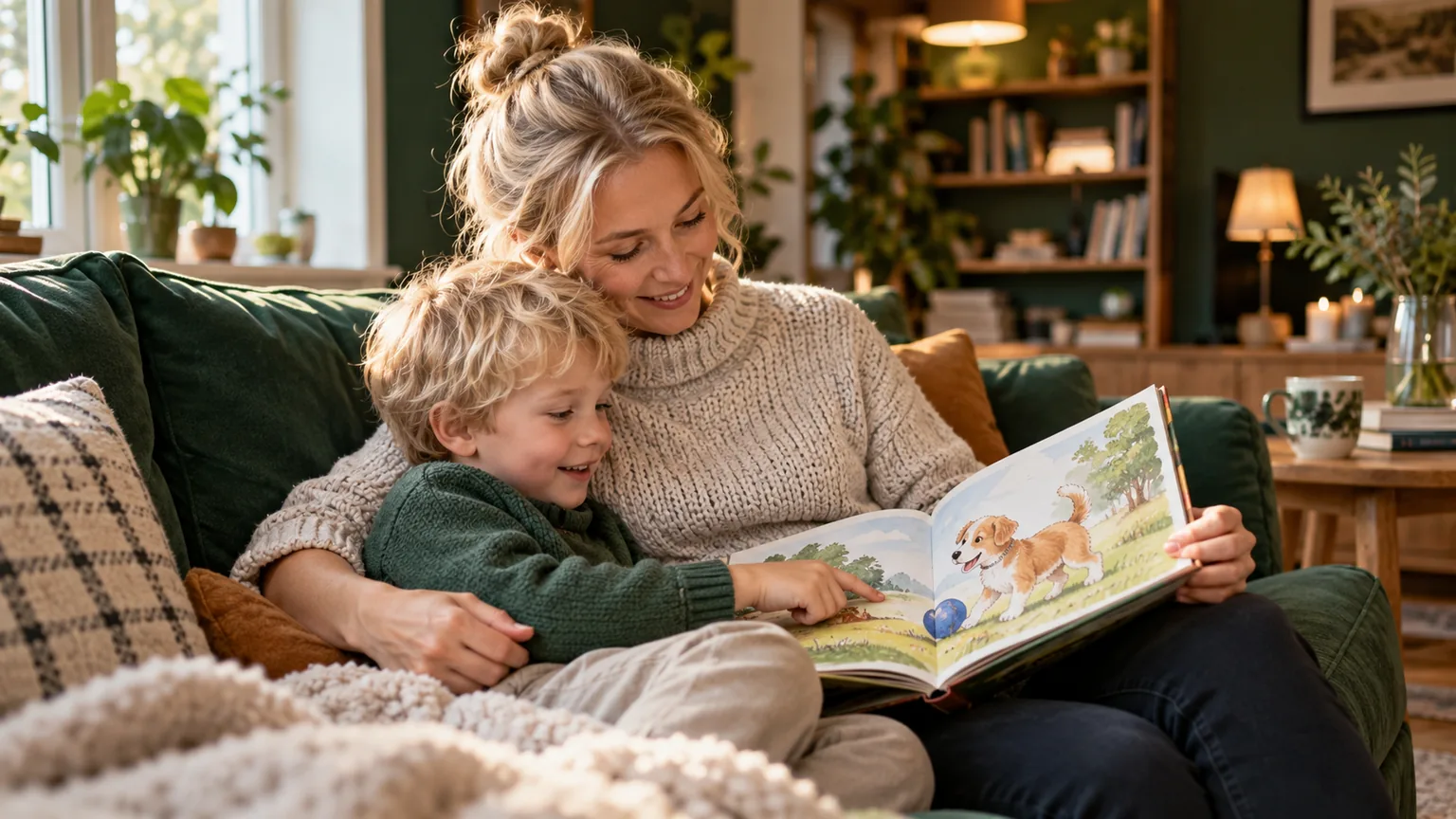
Priviți imaginea și explicați situația în limba de acasă dacă ajută. Redați o poveste sau faceți pauze între evenimente când citiți textul. Copilul poate arăta sau gesticula în loc să citească cu voce tare. Alegeți două sau trei cuvinte utile de observat; explicați alte cuvinte doar când este nevoie pentru a urmări povestea.
Fiecare player citește povestea completă tipărită dedesubt. Sunetul pornește doar când apăsați redare. Încercați cele două întrebări după ascultare, acceptând gesturi sau un răspuns în limba de acasă.
Transcriere
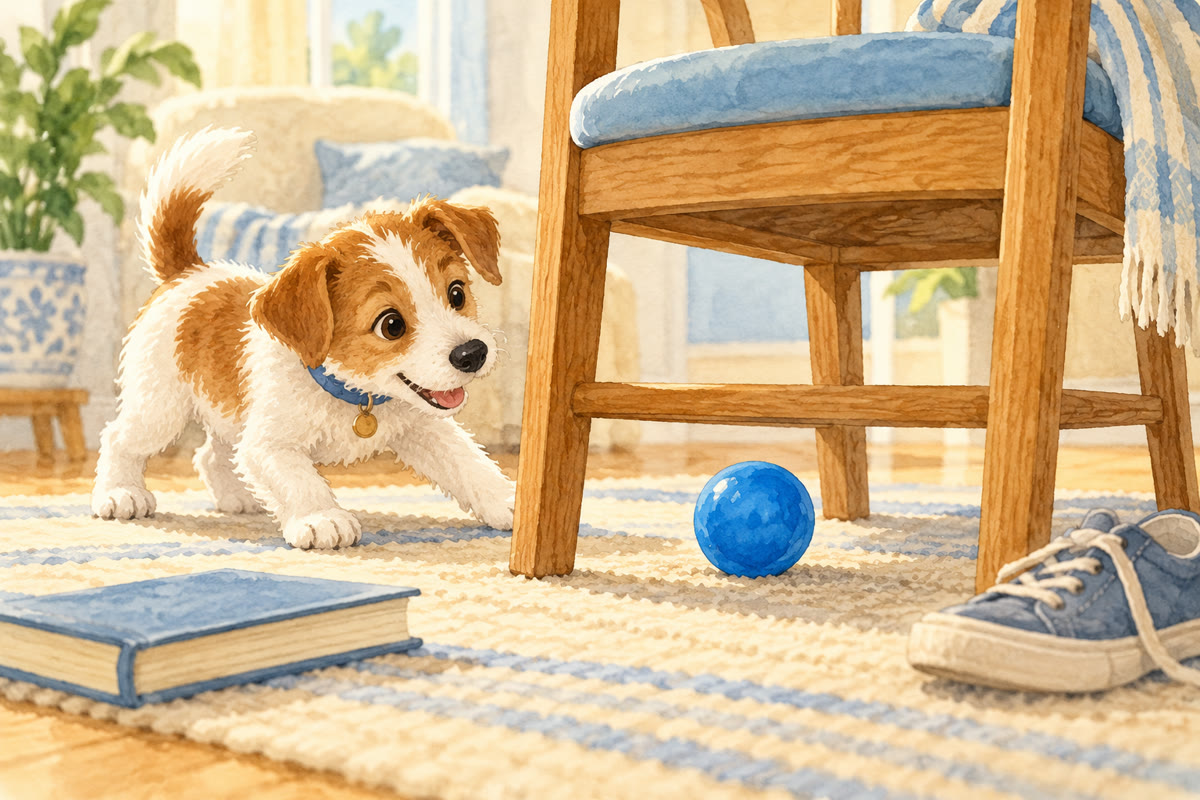
Maya has a blue ball. Her dog, Pip, loves the ball too. “Ready, Pip?” Maya asks. She throws the ball. Pip runs fast. The ball rolls under a chair. Pip comes back with a shoe. Maya laughs. “That is a shoe. Where is the blue ball?” Pip runs away again. This time he comes back with a book. “That is my book!” says Maya. “Where is the blue ball?” Pip puts his nose under the chair. He jumps back. Then he barks. Maya looks under the chair. The blue ball is there. “Good dog, Pip!” Maya reaches for the ball, but Pip is faster. He takes it and runs to the door. Maya laughs again. “Now I know where the blue ball is!”
Maya has a blue ball. Her dog, Pip, loves the ball too.
“Ready, Pip?” Maya asks.
She throws the ball. Pip runs fast. The ball rolls under a chair.
Pip comes back with a shoe.
Maya laughs. “That is a shoe. Where is the blue ball?”
Pip runs away again. This time he comes back with a book.
“That is my book!” says Maya. “Where is the blue ball?”
Pip puts his nose under the chair. He jumps back. Then he barks.
Maya looks under the chair. The blue ball is there.
“Good dog, Pip!”
Maya reaches for the ball, but Pip is faster. He takes it and runs to the door.
Maya laughs again.
“Now I know where the blue ball is!”
Urmăriți ball, blue, dog și shoe. “Under the chair” vă spune unde găsește Maya mingea.
Două întrebări:
- Ce aduce Pip mai întâi? A shoe.
- Unde găsește Maya mingea albastră? Under the chair.
Transcriere
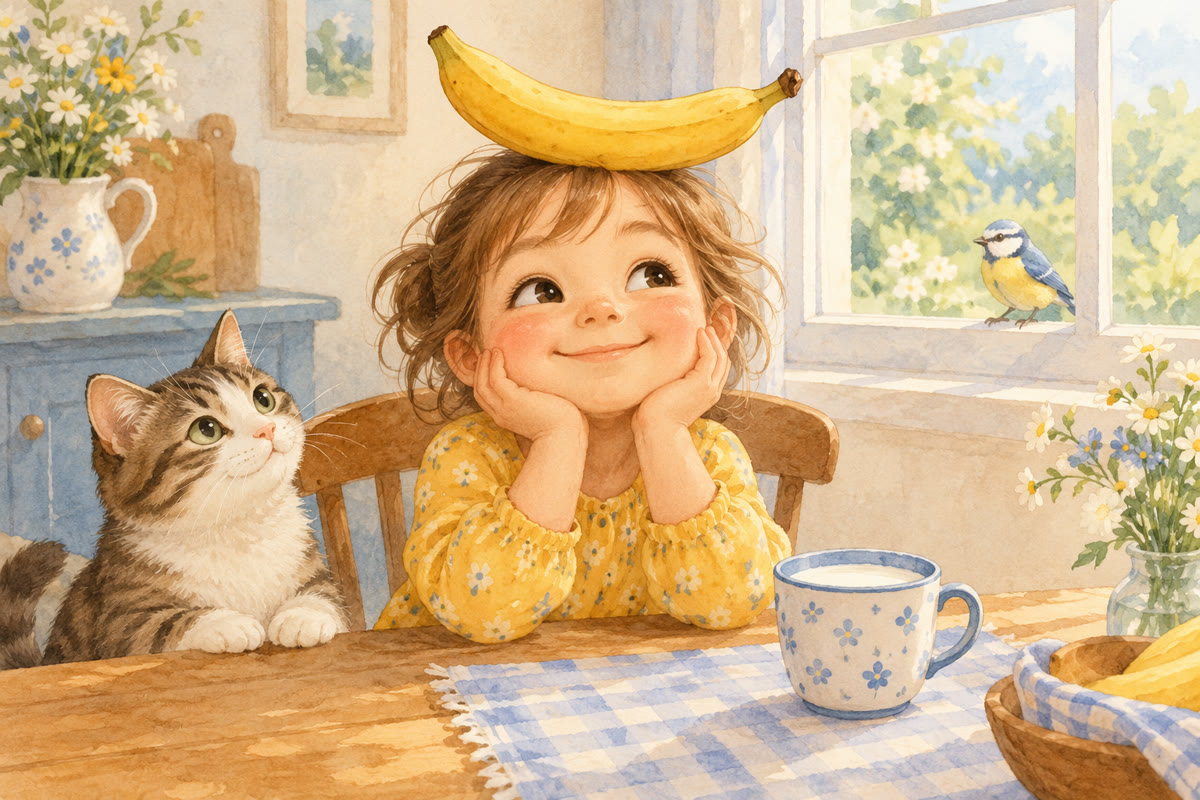
Leo is hungry. He has a yellow banana and a cup of milk. His cat, Coco, sits by the table. Leo puts the banana on his head. “Look, Coco. I have a banana hat!” Coco looks at Leo. Coco does not laugh. A little bird lands on the windowsill outside. Leo points to his head. “Banana hat!” The bird looks at Leo. Then it hops along the windowsill. Coco stands up. The bird hops again. Coco jumps too. Leo turns to watch them. Plop! The banana falls from his head and lands in his empty hand. Now Leo laughs. Coco looks at the banana. The bird looks at the banana. “No,” says Leo. “It is not a hat now. It is my snack.” He peels the banana. Coco sits down. The bird flies away. Leo takes a bite and says, “Yellow hats are delicious.”
Leo is hungry. He has a yellow banana and a cup of milk.
His cat, Coco, sits by the table.
Leo puts the banana on his head.
“Look, Coco. I have a banana hat!”
Coco looks at Leo. Coco does not laugh.
A little bird lands on the windowsill outside.
Leo points to his head. “Banana hat!”
The bird looks at Leo. Then it hops along the windowsill.
Coco stands up. The bird hops again. Coco jumps too.
Leo turns to watch them.
Plop!
The banana falls from his head and lands in his empty hand.
Now Leo laughs.
Coco looks at the banana.
The bird looks at the banana.
“No,” says Leo. “It is not a hat now. It is my snack.”
He peels the banana.
Coco sits down.
The bird flies away.
Leo takes a bite and says, “Yellow hats are delicious.”
Observați banana, yellow, cat și bird. Un windowsill este pervazul îngust din partea de jos a ferestrei.
Două întrebări:
- Ce își pune Leo pe cap? A yellow banana.
- Ce se întâmplă cu banana? It falls into his hand, and he eats it.
Transcriere
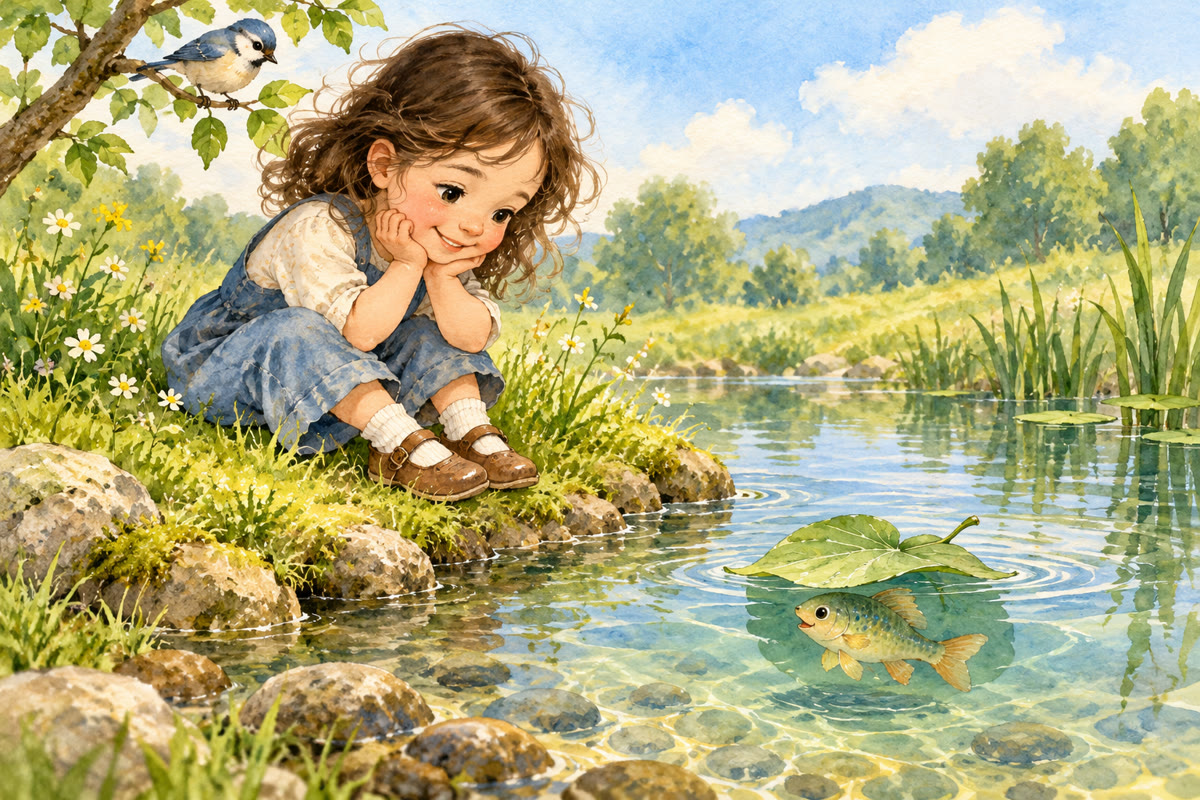
Nina sits by a small pond. One shoe and a green leaf are next to her foot. A fish swims close to the water’s edge. Nina lifts the shoe. “This is my shoe,” she says. The fish opens its mouth. “Do you want a shoe?” Nina asks. A bird on a branch looks down at them. Nina holds the shoe near the water. The fish swims in a little circle. “But you do not have a foot,” Nina says. She shows the fish her foot. The fish splashes. The bird makes a loud sound. Nina thinks. Then she puts the shoe back on her foot. She picks up the green leaf and puts it on the water. The fish swims under the leaf. “A green hat!” says Nina. The fish swims around with the leaf above it. Nina laughs. “No shoe for you. But that hat looks good.”
Nina sits by a small pond. One shoe and a green leaf are next to her foot.
A fish swims close to the water’s edge.
Nina lifts the shoe.
“This is my shoe,” she says.
The fish opens its mouth.
“Do you want a shoe?” Nina asks.
A bird on a branch looks down at them.
Nina holds the shoe near the water. The fish swims in a little circle.
“But you do not have a foot,” Nina says.
She shows the fish her foot.
The fish splashes.
The bird makes a loud sound.
Nina thinks.
Then she puts the shoe back on her foot. She picks up the green leaf and puts it on the water.
The fish swims under the leaf.
“A green hat!” says Nina.
The fish swims around with the leaf above it.
Nina laughs. “No shoe for you. But that hat looks good.”
Observați fish, shoe, foot și leaf. Nina pune frunza pe apă.
Două întrebări:
- De ce își păstrează Nina pantoful? The fish does not have a foot.
- Ce îi servește peștelui drept pălărie? A green leaf.
Textul de lângă fiecare player este transcrierea integrală; puteți deschide și „Transcriere” sub player. Narațiunea folosește o voce generată. Ascultați o dată pentru poveste, apoi redați din nou sau citiți un fragment preferat. Nu este nevoie să repetați fiecare propoziție.
Puneți cele două întrebări de lângă o poveste după ce ajungeți la final. Dacă un răspuns este dificil, reveniți împreună la acel moment. Copilul poate arăta, desena sau folosi un cuvânt familiar; întrebările nu deblochează următoarea poveste.
Lucrurile încurcate aduse de Pip
- Scop
- Puneți evenimentele primei povești în ordine.
- Pregătire
- Un pantof, o carte și o minge sau desene ale lor.
Pași
- Citiți sau redați Where Is the Blue Ball?
- Puneți cele trei obiecte sau desene în ordine amestecată. Întrebați ce aduce Pip mai întâi.
- Puneți-le în ordinea din poveste: shoe, apoi book, apoi ball. Reveniți la poveste dacă este nevoie.
- Interpretați un eveniment. Invitați replica “Where is the blue ball?” sau lăsați copilul să arate în timp ce o spuneți dumneavoastră.
- Ajutorul adultului
- Păstrați obiectele vizibile. Este un joc de repovestire, nu un test de memorie.
- Variantă mai ușoară
- Oferiți doar shoe și ball, apoi adăugați book.
În altă zi, desenați pălăria de banană a lui Leo sau mișcați o frunză de hârtie deasupra unui pește desenat. Puteți participa la o replică repetată, arăta un cuvânt familiar sau pur și simplu asculta din nou. Încercați cântece cu acțiuni dacă copilul dorește o schimbare de ritm.
Acestea sunt povești originale pregătite de Nativik pentru exersarea împreună a englezei de început. Recomandările British Council propun sprijin vizual și reluarea împreună a poveștilor familiare. Analiza Cochrane și studiul structurat din grădinițele norvegiene din Surse privesc intervenții mai largi, nu aceste povești. Ele nu stabilesc un anumit progres în învățare din această colecție.