3 histoires courtes en anglais pour enfants débutants : écouter et lire ensemble
Un chien rapporte le mauvais objet, une banane devient un chapeau et un poisson reçoit un cadeau inattendu. Partagez ces trois courtes histoires avec votre enfant grâce au texte complet, aux images et à l’audio. Chacune propose quelques mots à repérer, deux questions et une façon de raconter les événements sans lecture autonome.
- Langue d’apprentissage
- anglais
- Âge
- Âge 3–10

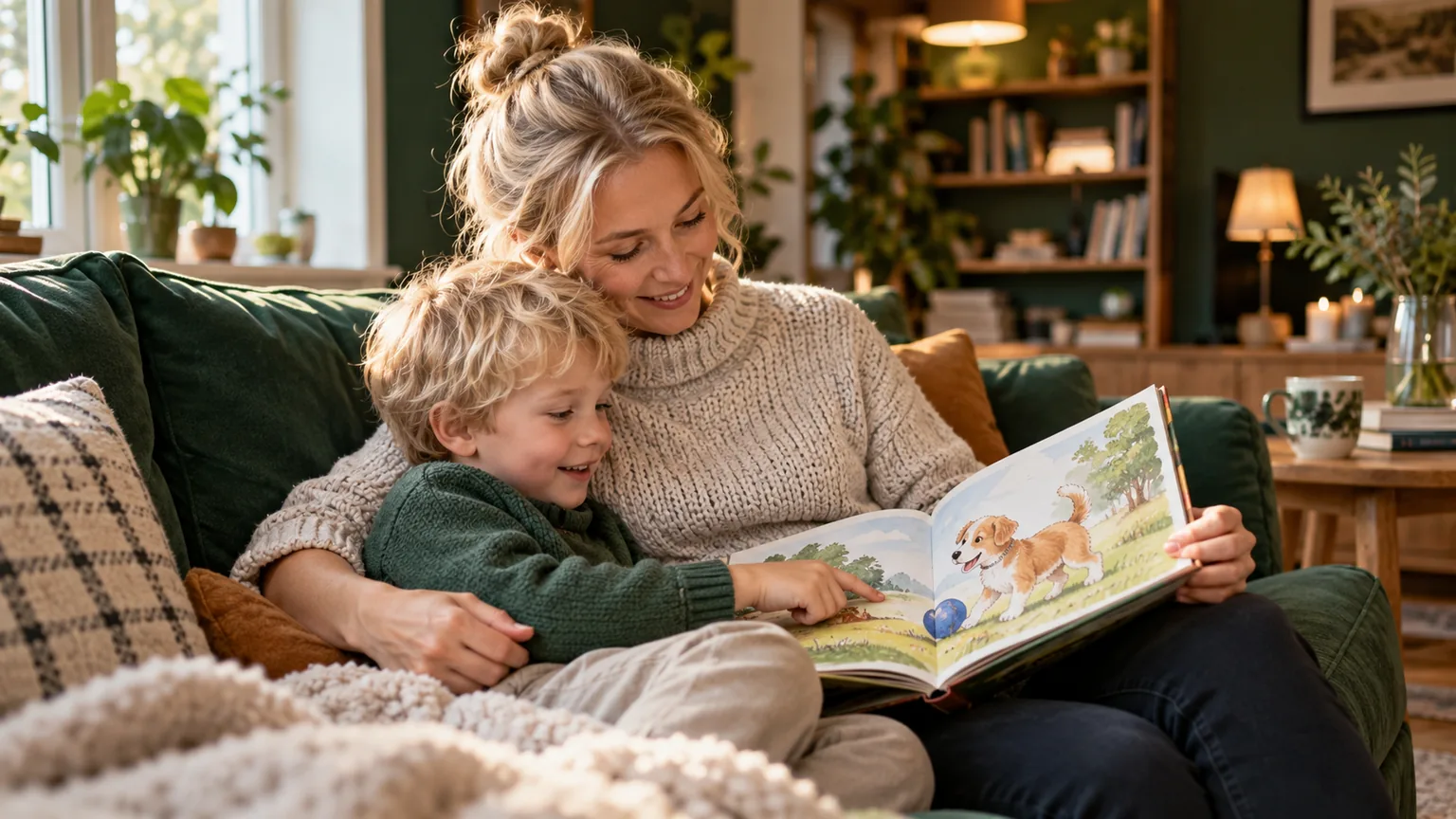
Regardez l’image et expliquez la situation dans votre langue familiale si cela aide. Écoutez une histoire ou faites des pauses entre les événements en lisant. Votre enfant peut montrer ou faire un geste au lieu de lire à voix haute. Choisissez deux ou trois mots utiles à repérer ; expliquez les autres seulement si nécessaire pour suivre l’intrigue.
Chaque lecteur lit l’histoire complète imprimée en dessous. L’audio démarre seulement lorsque vous lancez la lecture. Essayez les deux questions après l’écoute en acceptant les gestes ou une réponse dans votre langue familiale.
Transcription
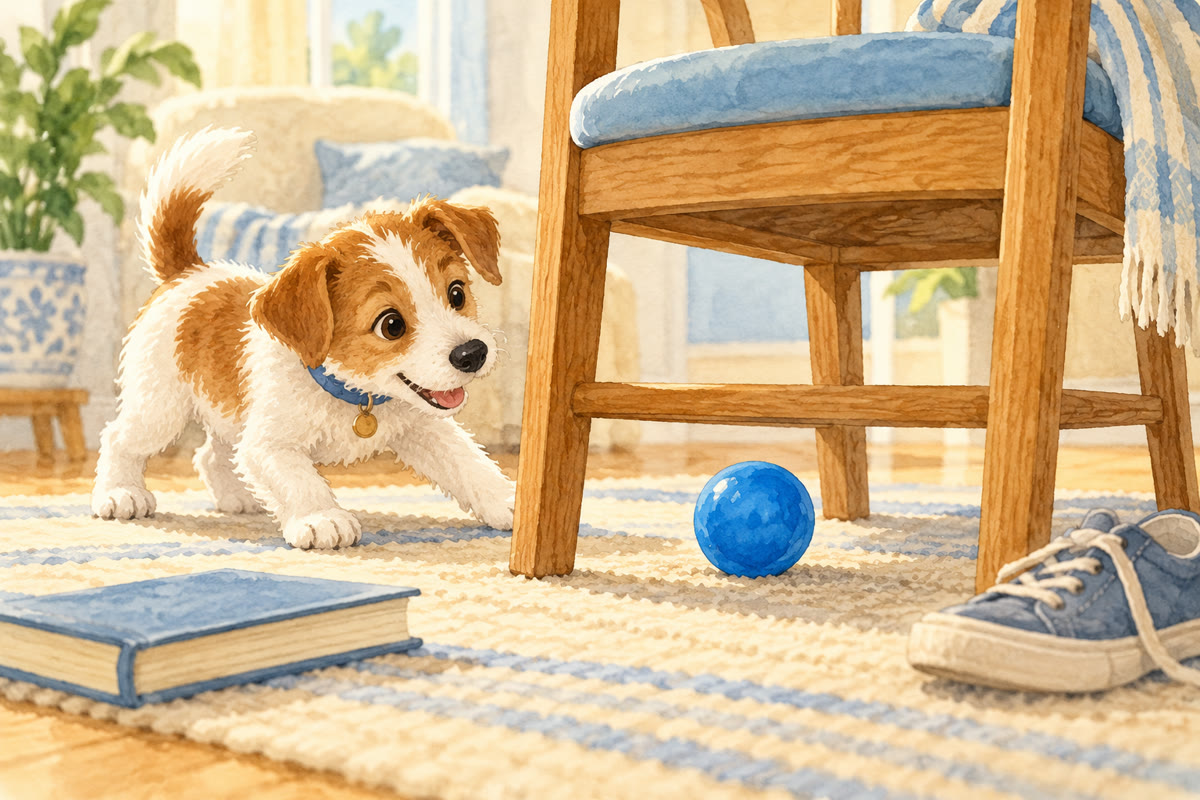
Maya has a blue ball. Her dog, Pip, loves the ball too. “Ready, Pip?” Maya asks. She throws the ball. Pip runs fast. The ball rolls under a chair. Pip comes back with a shoe. Maya laughs. “That is a shoe. Where is the blue ball?” Pip runs away again. This time he comes back with a book. “That is my book!” says Maya. “Where is the blue ball?” Pip puts his nose under the chair. He jumps back. Then he barks. Maya looks under the chair. The blue ball is there. “Good dog, Pip!” Maya reaches for the ball, but Pip is faster. He takes it and runs to the door. Maya laughs again. “Now I know where the blue ball is!”
Maya has a blue ball. Her dog, Pip, loves the ball too.
“Ready, Pip?” Maya asks.
She throws the ball. Pip runs fast. The ball rolls under a chair.
Pip comes back with a shoe.
Maya laughs. “That is a shoe. Where is the blue ball?”
Pip runs away again. This time he comes back with a book.
“That is my book!” says Maya. “Where is the blue ball?”
Pip puts his nose under the chair. He jumps back. Then he barks.
Maya looks under the chair. The blue ball is there.
“Good dog, Pip!”
Maya reaches for the ball, but Pip is faster. He takes it and runs to the door.
Maya laughs again.
“Now I know where the blue ball is!”
Repérez ball, blue, dog et shoe. « Under the chair » indique où Maya trouve le ballon.
Deux questions :
- Que rapporte Pip en premier ? A shoe.
- Où Maya trouve-t-elle le ballon bleu ? Under the chair.
Transcription
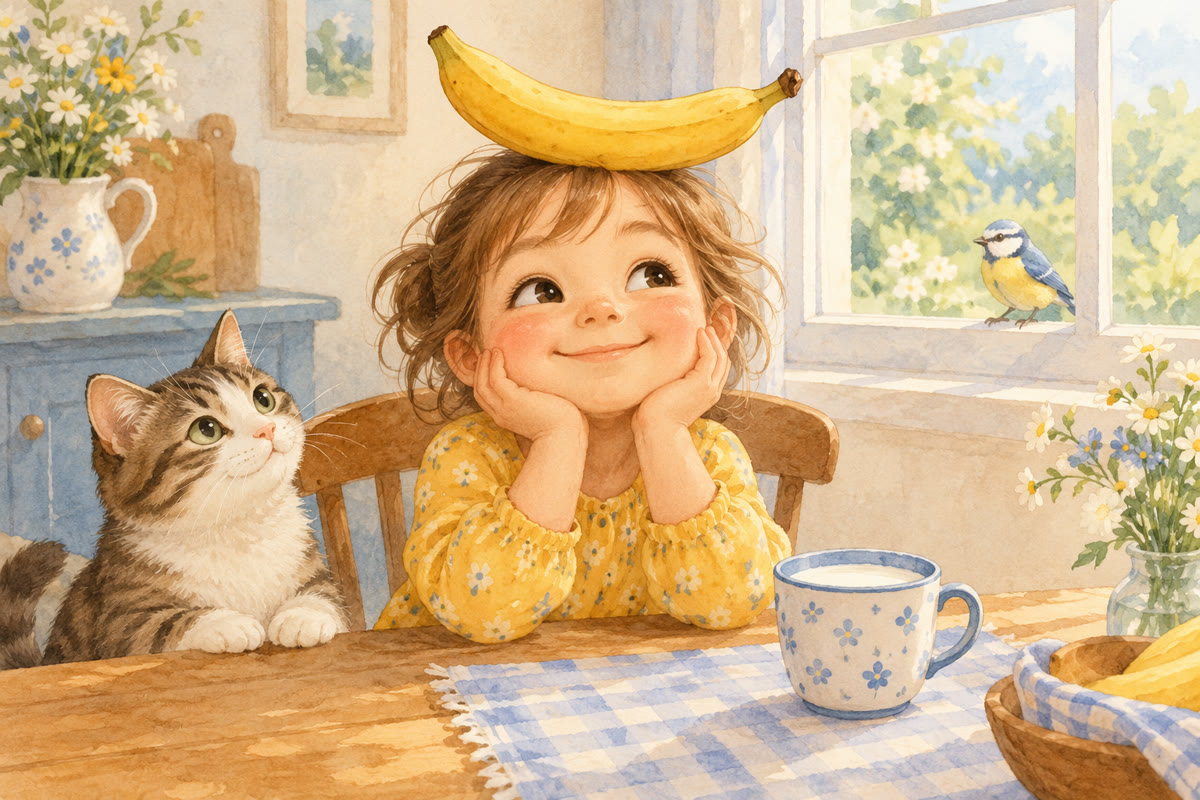
Leo is hungry. He has a yellow banana and a cup of milk. His cat, Coco, sits by the table. Leo puts the banana on his head. “Look, Coco. I have a banana hat!” Coco looks at Leo. Coco does not laugh. A little bird lands on the windowsill outside. Leo points to his head. “Banana hat!” The bird looks at Leo. Then it hops along the windowsill. Coco stands up. The bird hops again. Coco jumps too. Leo turns to watch them. Plop! The banana falls from his head and lands in his empty hand. Now Leo laughs. Coco looks at the banana. The bird looks at the banana. “No,” says Leo. “It is not a hat now. It is my snack.” He peels the banana. Coco sits down. The bird flies away. Leo takes a bite and says, “Yellow hats are delicious.”
Leo is hungry. He has a yellow banana and a cup of milk.
His cat, Coco, sits by the table.
Leo puts the banana on his head.
“Look, Coco. I have a banana hat!”
Coco looks at Leo. Coco does not laugh.
A little bird lands on the windowsill outside.
Leo points to his head. “Banana hat!”
The bird looks at Leo. Then it hops along the windowsill.
Coco stands up. The bird hops again. Coco jumps too.
Leo turns to watch them.
Plop!
The banana falls from his head and lands in his empty hand.
Now Leo laughs.
Coco looks at the banana.
The bird looks at the banana.
“No,” says Leo. “It is not a hat now. It is my snack.”
He peels the banana.
Coco sits down.
The bird flies away.
Leo takes a bite and says, “Yellow hats are delicious.”
Repérez banana, yellow, cat et bird. Windowsill désigne le rebord étroit en bas d’une fenêtre.
Deux questions :
- Que met Leo sur sa tête ? A yellow banana.
- Qu’arrive-t-il à la banane ? It falls into his hand, and he eats it.
Transcription
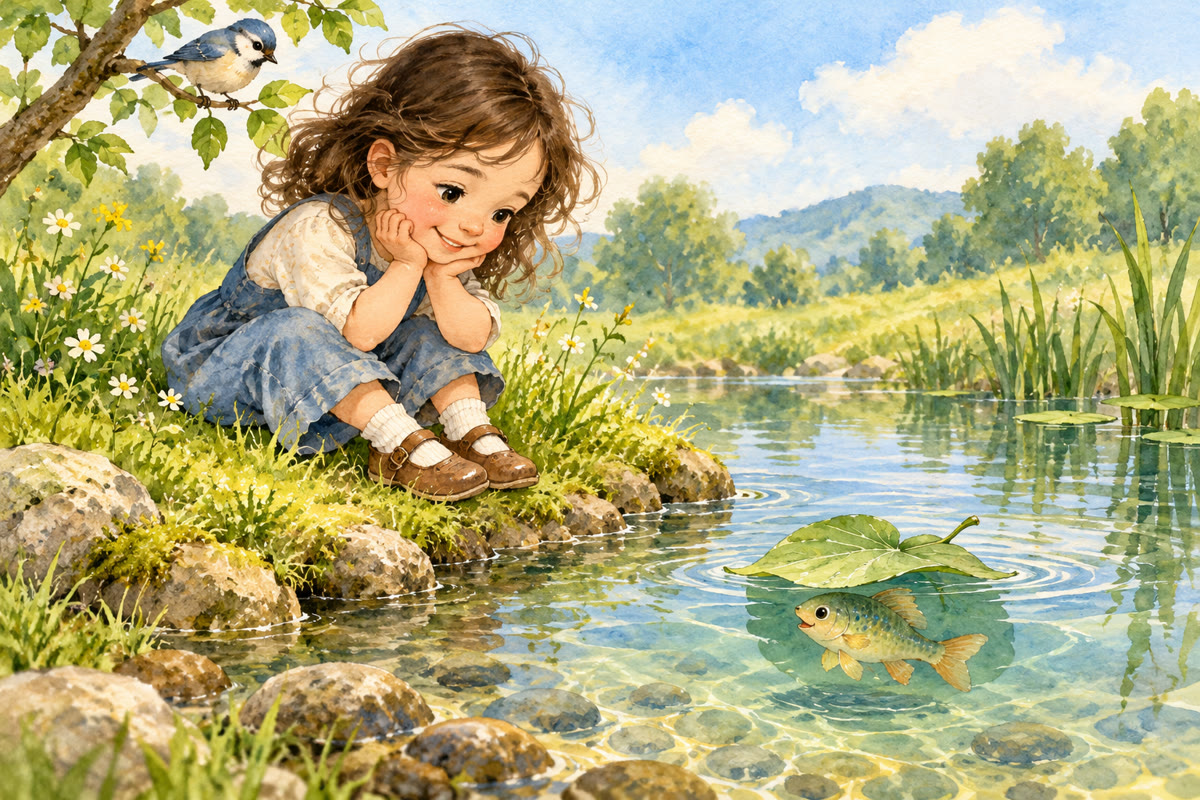
Nina sits by a small pond. One shoe and a green leaf are next to her foot. A fish swims close to the water’s edge. Nina lifts the shoe. “This is my shoe,” she says. The fish opens its mouth. “Do you want a shoe?” Nina asks. A bird on a branch looks down at them. Nina holds the shoe near the water. The fish swims in a little circle. “But you do not have a foot,” Nina says. She shows the fish her foot. The fish splashes. The bird makes a loud sound. Nina thinks. Then she puts the shoe back on her foot. She picks up the green leaf and puts it on the water. The fish swims under the leaf. “A green hat!” says Nina. The fish swims around with the leaf above it. Nina laughs. “No shoe for you. But that hat looks good.”
Nina sits by a small pond. One shoe and a green leaf are next to her foot.
A fish swims close to the water’s edge.
Nina lifts the shoe.
“This is my shoe,” she says.
The fish opens its mouth.
“Do you want a shoe?” Nina asks.
A bird on a branch looks down at them.
Nina holds the shoe near the water. The fish swims in a little circle.
“But you do not have a foot,” Nina says.
She shows the fish her foot.
The fish splashes.
The bird makes a loud sound.
Nina thinks.
Then she puts the shoe back on her foot. She picks up the green leaf and puts it on the water.
The fish swims under the leaf.
“A green hat!” says Nina.
The fish swims around with the leaf above it.
Nina laughs. “No shoe for you. But that hat looks good.”
Repérez fish, shoe, foot et leaf. Nina pose la feuille sur l’eau.
Deux questions :
- Pourquoi Nina garde-t-elle sa chaussure ? The fish does not have a foot.
- Qu’est-ce qui devient le chapeau du poisson ? A green leaf.
Le texte à côté de chaque lecteur est sa transcription complète ; vous pouvez aussi ouvrir « Transcription » sous le lecteur. La narration utilise une voix générée. Écoutez une fois pour l’histoire, puis réécoutez ou lisez un passage préféré. Inutile de répéter chaque phrase.
Posez les deux questions d’une histoire une fois arrivé à sa fin. Si une réponse est difficile, revenez ensemble au passage concerné. Un enfant peut montrer, dessiner ou utiliser un mot familier ; les questions ne débloquent pas l’histoire suivante.
Les objets mélangés de Pip
- Objectif
- Remettre les événements de la première histoire dans l’ordre.
- Préparation
- Une chaussure, un livre et un ballon, ou leurs dessins.
Étapes
- Lisez ou écoutez Where Is the Blue Ball?
- Disposez les trois objets ou dessins dans le désordre. Demandez ce que Pip rapporte en premier.
- Placez-les dans l’ordre de l’histoire : shoe, puis book, puis ball. Revenez au récit si nécessaire.
- Mimez un événement. Proposez « Where is the blue ball? » ou laissez votre enfant montrer pendant que vous dites la phrase.
- Aide de l’adulte
- Gardez les objets visibles. C’est un jeu pour raconter, pas un test de mémoire.
- Variante plus simple
- Proposez seulement shoe et ball, puis ajoutez book.
Un autre jour, dessinez le chapeau-banane de Leo ou déplacez une feuille de papier au-dessus d’un poisson dessiné. Vous pouvez reprendre une phrase répétée, montrer un mot familier ou simplement réécouter. Essayez des chansons avec gestes si votre enfant veut changer de rythme.
Ces histoires originales ont été préparées par Nativik pour une pratique partagée de l’anglais débutant. Le British Council recommande un appui visuel et la reprise d’histoires familières. La revue Cochrane et l’étude préscolaire norvégienne structurée citées dans les Sources concernent des interventions plus larges, pas ces histoires. Elles n’établissent pas de gain d’apprentissage précis pour ce recueil.