3 brevi storie inglesi per bambini principianti: ascoltate e leggete insieme
Un cane porta la cosa sbagliata, una banana diventa un cappello e un pesce riceve un regalo inatteso. Condividi queste tre brevi storie con tuo figlio usando testi completi, immagini e audio. Ognuna ha alcune parole da notare, due domande e un modo per raccontare di nuovo gli eventi senza lettura autonoma.
- Lingua da imparare
- inglese
- Età
- Età 3–10

Guarda l’immagine e spiega la situazione nella lingua di casa se aiuta. Riproduci una storia oppure fai una pausa tra gli eventi mentre leggi il testo. Tuo figlio può indicare o fare gesti invece di leggere ad alta voce. Scegli due o tre parole utili da notare; spiega le altre solo quando serve per seguire la trama.
Ogni lettore audio riproduce per intero la storia riportata sotto. L’audio parte solo quando premi Riproduci. Prova le due domande dopo l’ascolto, accettando gesti o una risposta nella lingua di casa.
Trascrizione
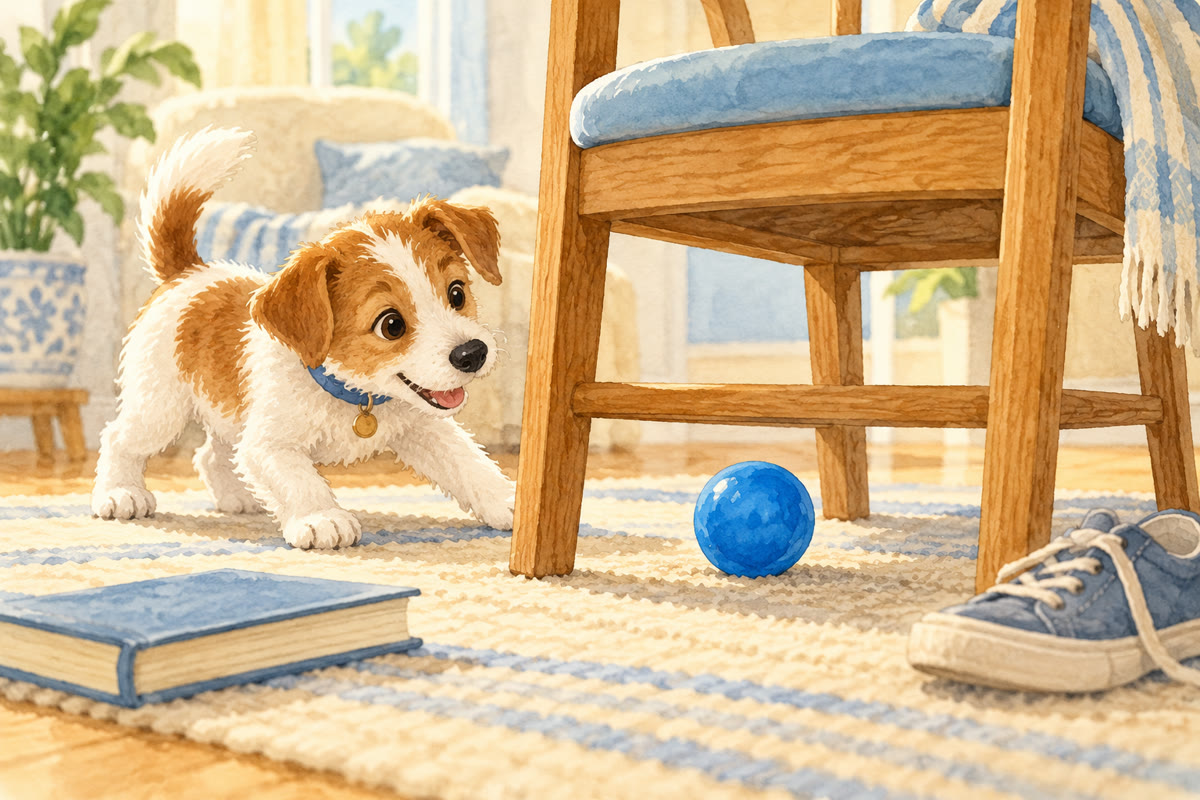
Maya has a blue ball. Her dog, Pip, loves the ball too. “Ready, Pip?” Maya asks. She throws the ball. Pip runs fast. The ball rolls under a chair. Pip comes back with a shoe. Maya laughs. “That is a shoe. Where is the blue ball?” Pip runs away again. This time he comes back with a book. “That is my book!” says Maya. “Where is the blue ball?” Pip puts his nose under the chair. He jumps back. Then he barks. Maya looks under the chair. The blue ball is there. “Good dog, Pip!” Maya reaches for the ball, but Pip is faster. He takes it and runs to the door. Maya laughs again. “Now I know where the blue ball is!”
Maya has a blue ball. Her dog, Pip, loves the ball too.
“Ready, Pip?” Maya asks.
She throws the ball. Pip runs fast. The ball rolls under a chair.
Pip comes back with a shoe.
Maya laughs. “That is a shoe. Where is the blue ball?”
Pip runs away again. This time he comes back with a book.
“That is my book!” says Maya. “Where is the blue ball?”
Pip puts his nose under the chair. He jumps back. Then he barks.
Maya looks under the chair. The blue ball is there.
“Good dog, Pip!”
Maya reaches for the ball, but Pip is faster. He takes it and runs to the door.
Maya laughs again.
“Now I know where the blue ball is!”
Cerca ball, blue, dog e shoe. “Under the chair” ti dice dove Maya trova la palla.
Due domande:
- Cosa porta Pip per prima cosa? A shoe.
- Dove trova Maya la palla blu? Under the chair.
Trascrizione
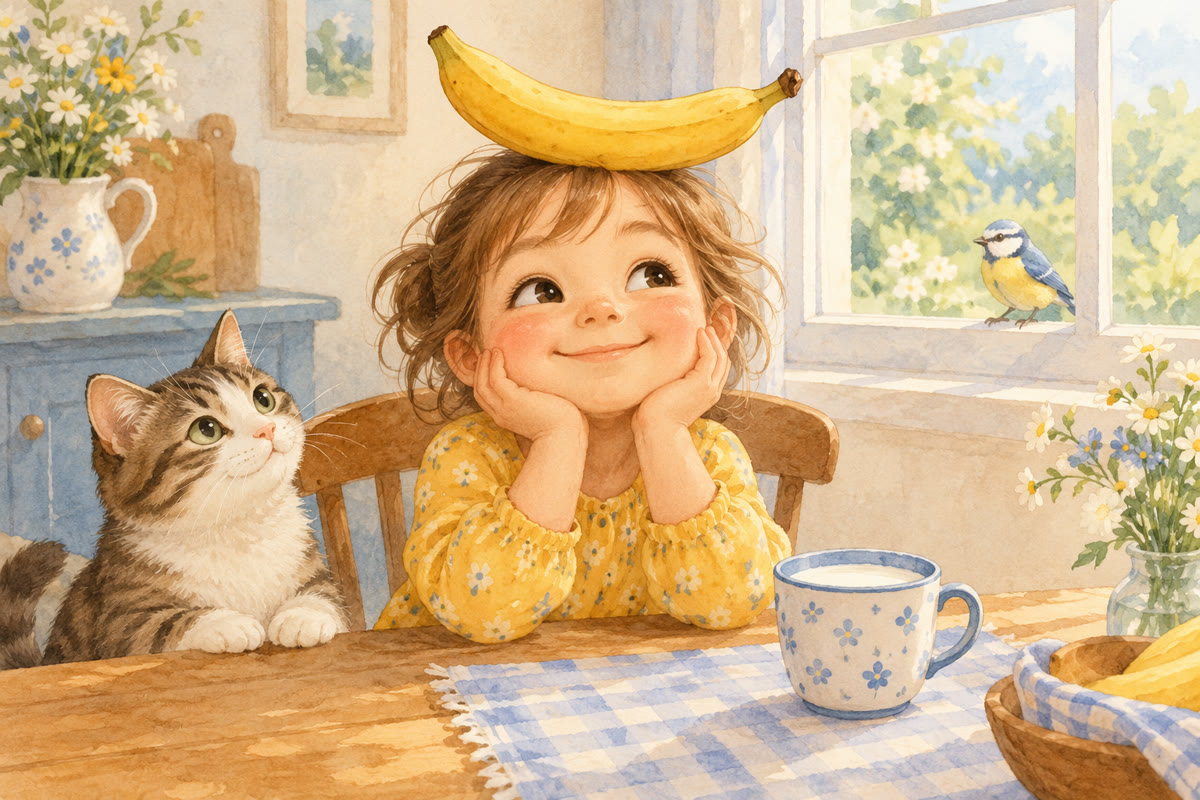
Leo is hungry. He has a yellow banana and a cup of milk. His cat, Coco, sits by the table. Leo puts the banana on his head. “Look, Coco. I have a banana hat!” Coco looks at Leo. Coco does not laugh. A little bird lands on the windowsill outside. Leo points to his head. “Banana hat!” The bird looks at Leo. Then it hops along the windowsill. Coco stands up. The bird hops again. Coco jumps too. Leo turns to watch them. Plop! The banana falls from his head and lands in his empty hand. Now Leo laughs. Coco looks at the banana. The bird looks at the banana. “No,” says Leo. “It is not a hat now. It is my snack.” He peels the banana. Coco sits down. The bird flies away. Leo takes a bite and says, “Yellow hats are delicious.”
Leo is hungry. He has a yellow banana and a cup of milk.
His cat, Coco, sits by the table.
Leo puts the banana on his head.
“Look, Coco. I have a banana hat!”
Coco looks at Leo. Coco does not laugh.
A little bird lands on the windowsill outside.
Leo points to his head. “Banana hat!”
The bird looks at Leo. Then it hops along the windowsill.
Coco stands up. The bird hops again. Coco jumps too.
Leo turns to watch them.
Plop!
The banana falls from his head and lands in his empty hand.
Now Leo laughs.
Coco looks at the banana.
The bird looks at the banana.
“No,” says Leo. “It is not a hat now. It is my snack.”
He peels the banana.
Coco sits down.
The bird flies away.
Leo takes a bite and says, “Yellow hats are delicious.”
Nota banana, yellow, cat e bird. Un windowsill è lo stretto ripiano alla base di una finestra.
Due domande:
- Cosa mette Leo sulla testa? A yellow banana.
- Cosa succede alla banana? It falls into his hand, and he eats it.
Trascrizione
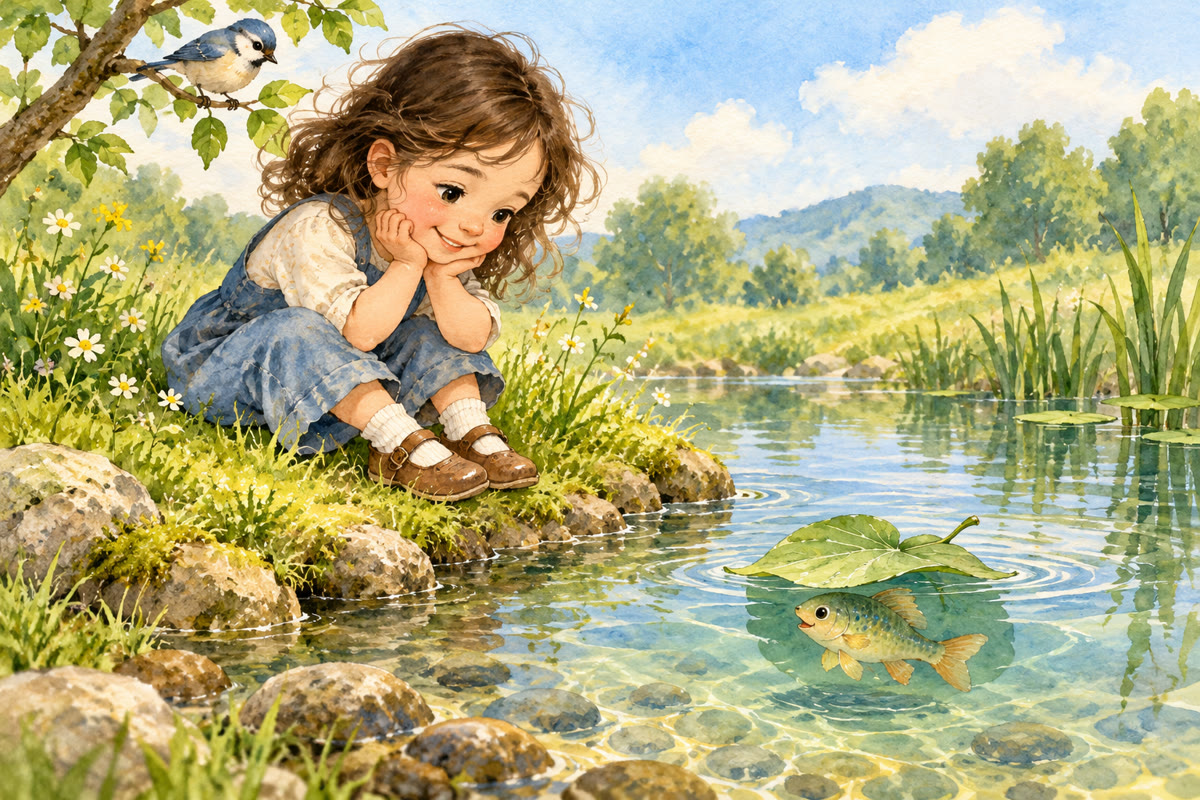
Nina sits by a small pond. One shoe and a green leaf are next to her foot. A fish swims close to the water’s edge. Nina lifts the shoe. “This is my shoe,” she says. The fish opens its mouth. “Do you want a shoe?” Nina asks. A bird on a branch looks down at them. Nina holds the shoe near the water. The fish swims in a little circle. “But you do not have a foot,” Nina says. She shows the fish her foot. The fish splashes. The bird makes a loud sound. Nina thinks. Then she puts the shoe back on her foot. She picks up the green leaf and puts it on the water. The fish swims under the leaf. “A green hat!” says Nina. The fish swims around with the leaf above it. Nina laughs. “No shoe for you. But that hat looks good.”
Nina sits by a small pond. One shoe and a green leaf are next to her foot.
A fish swims close to the water’s edge.
Nina lifts the shoe.
“This is my shoe,” she says.
The fish opens its mouth.
“Do you want a shoe?” Nina asks.
A bird on a branch looks down at them.
Nina holds the shoe near the water. The fish swims in a little circle.
“But you do not have a foot,” Nina says.
She shows the fish her foot.
The fish splashes.
The bird makes a loud sound.
Nina thinks.
Then she puts the shoe back on her foot. She picks up the green leaf and puts it on the water.
The fish swims under the leaf.
“A green hat!” says Nina.
The fish swims around with the leaf above it.
Nina laughs. “No shoe for you. But that hat looks good.”
Nota fish, shoe, foot e leaf. Nina mette la foglia sull’acqua.
Due domande:
- Perché Nina tiene la sua scarpa? The fish does not have a foot.
- Che cosa fa da cappello al pesce? A green leaf.
Il testo accanto a ogni lettore è la sua trascrizione completa; puoi anche aprire “Trascrizione” sotto il lettore. La narrazione usa una voce generata. Ascolta una volta per la storia, poi riascolta o leggi una parte preferita. Non occorre ripetere ogni frase.
Fai le due domande accanto a una storia dopo aver raggiunto la fine. Se una risposta è difficile, tornate insieme a quel momento. Un bambino può indicare, disegnare o usare una parola familiare; le domande non sbloccano la storia successiva.
Gli oggetti sbagliati riportati da Pip
- Obiettivo
- Mettere in ordine gli eventi della prima storia.
- Preparazione
- Una scarpa, un libro e una palla, oppure i loro disegni.
Passaggi
- Leggi o riproduci Where Is the Blue Ball?
- Disponi i tre oggetti o disegni in ordine sparso. Chiedi cosa porta Pip per prima cosa.
- Mettili nell’ordine della storia: shoe, poi book, poi ball. Tornate alla storia se serve.
- Mima un evento. Invita a dire “Where is the blue ball?” o lascia che tuo figlio indichi mentre lo dici tu.
- Aiuto dell’adulto
- Mantieni gli oggetti visibili. È un gioco per raccontare di nuovo, non una prova di memoria.
- Variante più semplice
- Proponi solo shoe e ball, poi aggiungi book.
Un altro giorno, disegnate il cappello di banana di Leo o muovete una foglia di carta sopra un pesce disegnato. Potete unirvi a una frase ripetuta, indicare una parola familiare o semplicemente riascoltare. Provate canzoni con azioni se tuo figlio vuole cambiare ritmo.
Sono storie originali preparate da Nativik per una pratica condivisa di inglese per principianti. Le indicazioni del British Council consigliano supporti visivi e di condividere di nuovo storie familiari. La rassegna Cochrane e lo studio strutturato prescolare norvegese nelle Fonti riguardano interventi più ampi, non queste storie. Non stabiliscono un particolare guadagno di apprendimento da questa raccolta.