3 cuentos cortos en inglés para niños principiantes: escuchen y lean juntos
Un perro trae lo que no era, un plátano se convierte en sombrero y un pez recibe un regalo inesperado. Comparte estos tres cuentos cortos con tu hijo usando texto completo, imágenes y audio. Cada uno incluye palabras para identificar, dos preguntas y una forma de volver a contar lo ocurrido sin lectura independiente.
- Idioma de aprendizaje
- inglés
- Edad
- Edad 3–10

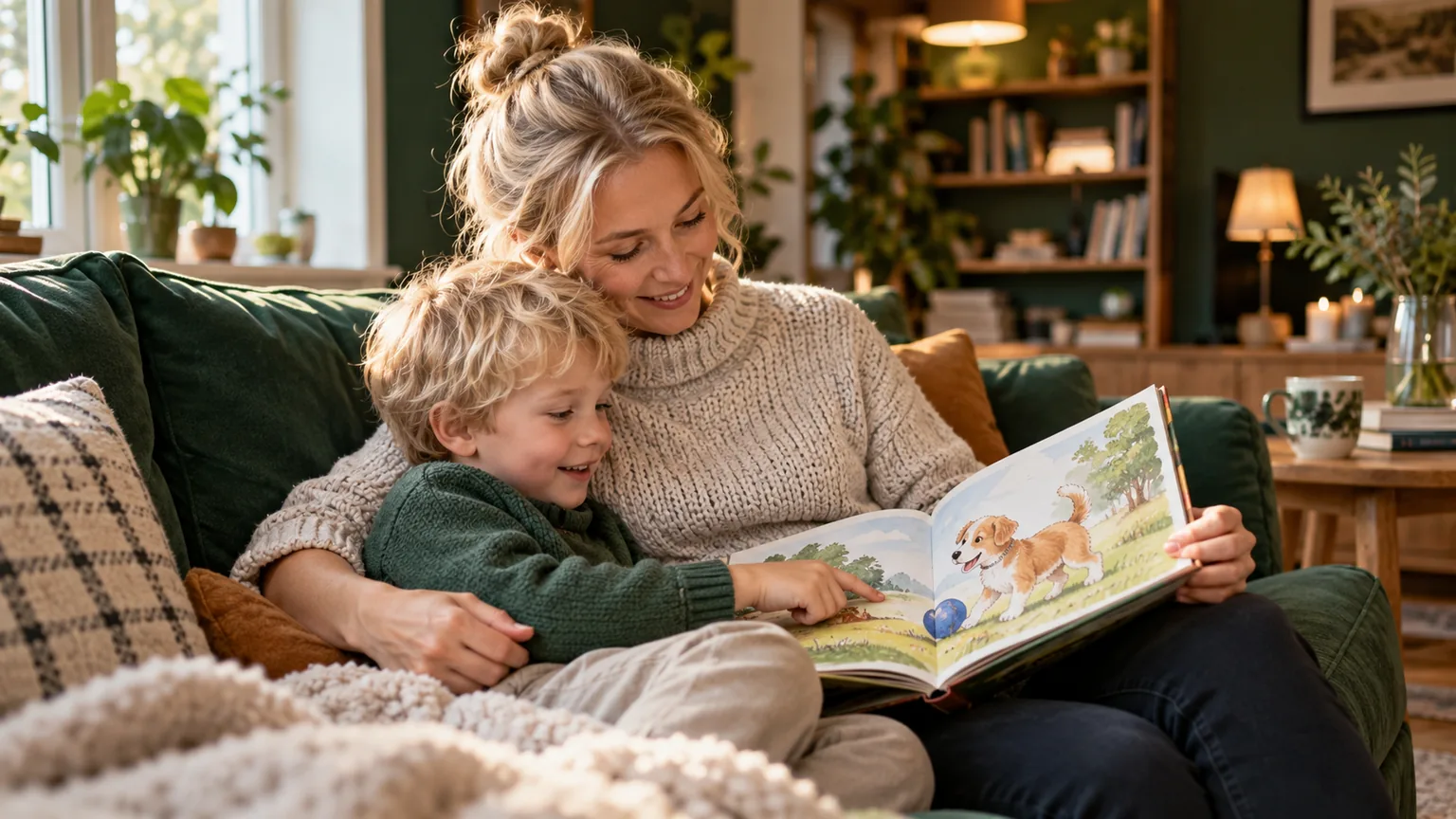
Miren la imagen y explica la situación en el idioma del hogar si ayuda. Reproduce un cuento o pausa entre sucesos mientras lees el texto. Tu hijo puede señalar o hacer gestos en lugar de leer en voz alta. Elige dos o tres palabras útiles para identificar; explica otras solo según haga falta para seguir la historia.
Cada reproductor lee el cuento completo impreso debajo. El audio empieza solo al pulsar reproducir. Prueba las dos preguntas después de escuchar, aceptando gestos o una respuesta en el idioma del hogar.
Transcripción
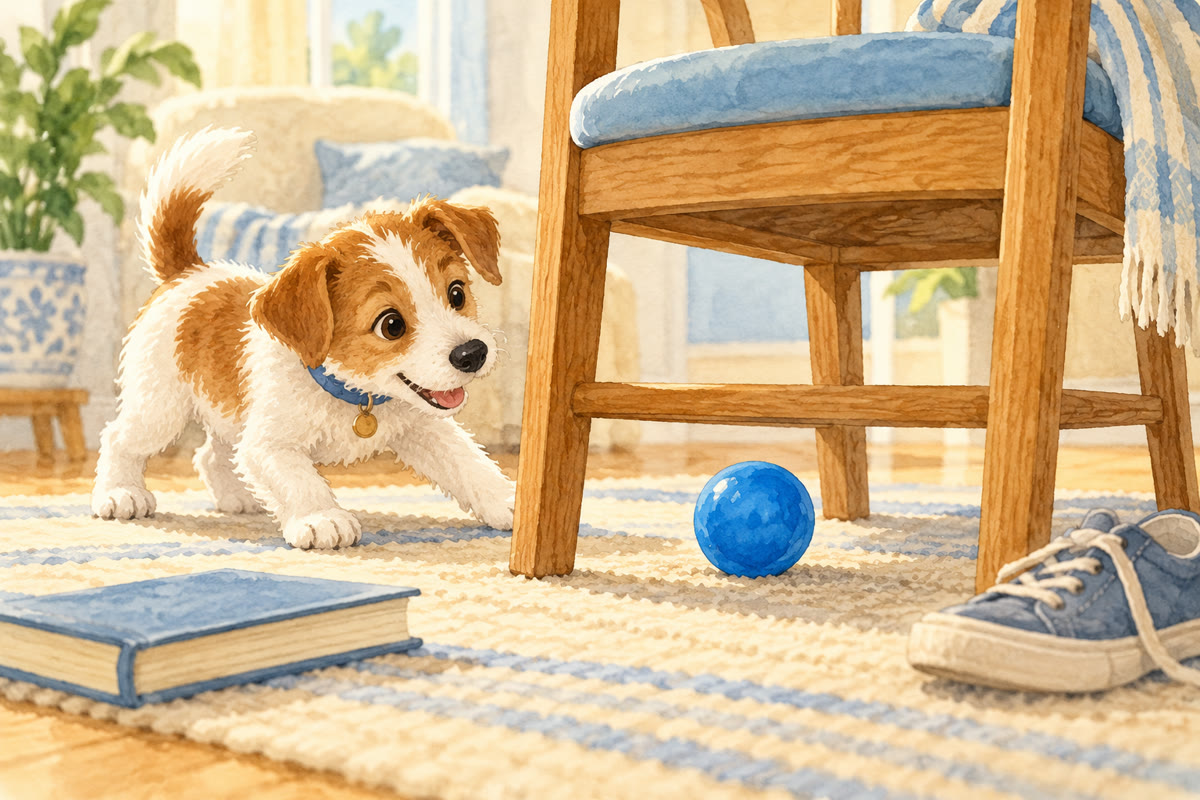
Maya has a blue ball. Her dog, Pip, loves the ball too. “Ready, Pip?” Maya asks. She throws the ball. Pip runs fast. The ball rolls under a chair. Pip comes back with a shoe. Maya laughs. “That is a shoe. Where is the blue ball?” Pip runs away again. This time he comes back with a book. “That is my book!” says Maya. “Where is the blue ball?” Pip puts his nose under the chair. He jumps back. Then he barks. Maya looks under the chair. The blue ball is there. “Good dog, Pip!” Maya reaches for the ball, but Pip is faster. He takes it and runs to the door. Maya laughs again. “Now I know where the blue ball is!”
Maya has a blue ball. Her dog, Pip, loves the ball too.
“Ready, Pip?” Maya asks.
She throws the ball. Pip runs fast. The ball rolls under a chair.
Pip comes back with a shoe.
Maya laughs. “That is a shoe. Where is the blue ball?”
Pip runs away again. This time he comes back with a book.
“That is my book!” says Maya. “Where is the blue ball?”
Pip puts his nose under the chair. He jumps back. Then he barks.
Maya looks under the chair. The blue ball is there.
“Good dog, Pip!”
Maya reaches for the ball, but Pip is faster. He takes it and runs to the door.
Maya laughs again.
“Now I know where the blue ball is!”
Busca ball, blue, dog y shoe. “Under the chair” indica dónde encuentra Maya la pelota.
Dos preguntas:
- ¿Qué trae Pip primero? A shoe.
- ¿Dónde encuentra Maya la pelota azul? Under the chair.
Transcripción
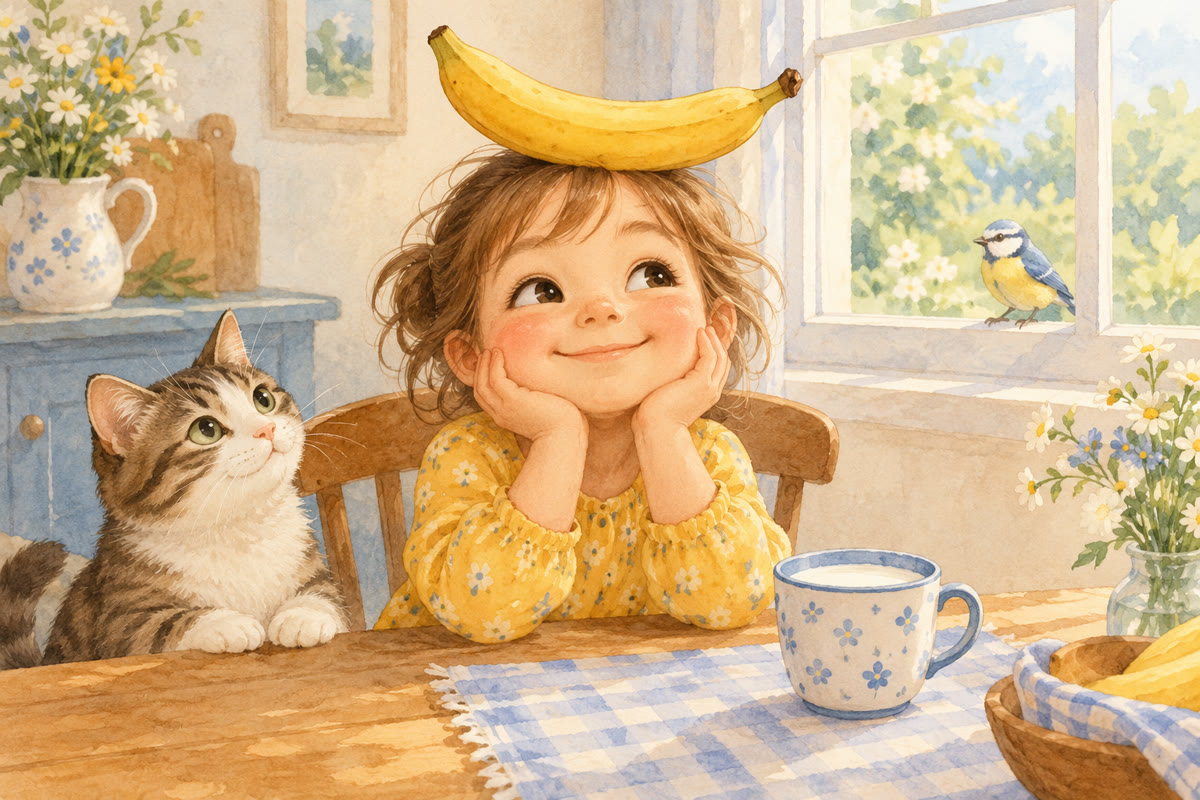
Leo is hungry. He has a yellow banana and a cup of milk. His cat, Coco, sits by the table. Leo puts the banana on his head. “Look, Coco. I have a banana hat!” Coco looks at Leo. Coco does not laugh. A little bird lands on the windowsill outside. Leo points to his head. “Banana hat!” The bird looks at Leo. Then it hops along the windowsill. Coco stands up. The bird hops again. Coco jumps too. Leo turns to watch them. Plop! The banana falls from his head and lands in his empty hand. Now Leo laughs. Coco looks at the banana. The bird looks at the banana. “No,” says Leo. “It is not a hat now. It is my snack.” He peels the banana. Coco sits down. The bird flies away. Leo takes a bite and says, “Yellow hats are delicious.”
Leo is hungry. He has a yellow banana and a cup of milk.
His cat, Coco, sits by the table.
Leo puts the banana on his head.
“Look, Coco. I have a banana hat!”
Coco looks at Leo. Coco does not laugh.
A little bird lands on the windowsill outside.
Leo points to his head. “Banana hat!”
The bird looks at Leo. Then it hops along the windowsill.
Coco stands up. The bird hops again. Coco jumps too.
Leo turns to watch them.
Plop!
The banana falls from his head and lands in his empty hand.
Now Leo laughs.
Coco looks at the banana.
The bird looks at the banana.
“No,” says Leo. “It is not a hat now. It is my snack.”
He peels the banana.
Coco sits down.
The bird flies away.
Leo takes a bite and says, “Yellow hats are delicious.”
Fíjate en banana, yellow, cat y bird. Windowsill es el borde estrecho de la parte inferior de una ventana.
Dos preguntas:
- ¿Qué se pone Leo en la cabeza? A yellow banana.
- ¿Qué le pasa al plátano? It falls into his hand, and he eats it.
Transcripción
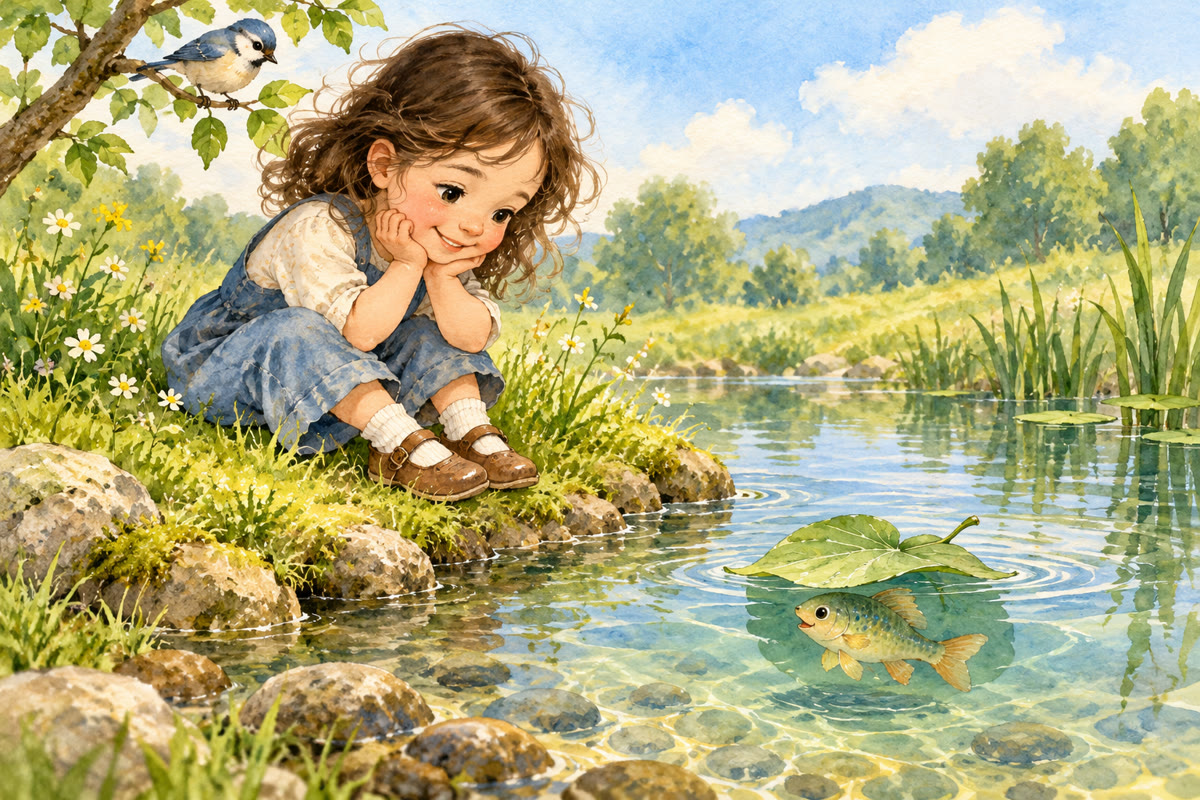
Nina sits by a small pond. One shoe and a green leaf are next to her foot. A fish swims close to the water’s edge. Nina lifts the shoe. “This is my shoe,” she says. The fish opens its mouth. “Do you want a shoe?” Nina asks. A bird on a branch looks down at them. Nina holds the shoe near the water. The fish swims in a little circle. “But you do not have a foot,” Nina says. She shows the fish her foot. The fish splashes. The bird makes a loud sound. Nina thinks. Then she puts the shoe back on her foot. She picks up the green leaf and puts it on the water. The fish swims under the leaf. “A green hat!” says Nina. The fish swims around with the leaf above it. Nina laughs. “No shoe for you. But that hat looks good.”
Nina sits by a small pond. One shoe and a green leaf are next to her foot.
A fish swims close to the water’s edge.
Nina lifts the shoe.
“This is my shoe,” she says.
The fish opens its mouth.
“Do you want a shoe?” Nina asks.
A bird on a branch looks down at them.
Nina holds the shoe near the water. The fish swims in a little circle.
“But you do not have a foot,” Nina says.
She shows the fish her foot.
The fish splashes.
The bird makes a loud sound.
Nina thinks.
Then she puts the shoe back on her foot. She picks up the green leaf and puts it on the water.
The fish swims under the leaf.
“A green hat!” says Nina.
The fish swims around with the leaf above it.
Nina laughs. “No shoe for you. But that hat looks good.”
Fíjate en fish, shoe, foot y leaf. Nina pone la hoja en el agua.
Dos preguntas:
- ¿Por qué Nina se queda con su zapato? The fish does not have a foot.
- ¿Qué se convierte en el sombrero del pez? A green leaf.
El texto junto a cada reproductor es su transcripción completa; también puedes abrir “Transcripción” debajo. La narración usa una voz generada. Escuchen una vez la historia y después repitan o lean una parte favorita. No hace falta repetir cada oración.
Haz las dos preguntas junto a un cuento después de llegar al final. Si una respuesta cuesta, vuelvan juntos a ese momento. El niño puede señalar, dibujar o usar una palabra conocida; las preguntas no desbloquean el siguiente cuento.
Pip trae lo que no es
- Objetivo
- Ordenar los sucesos del primer cuento.
- Preparación
- Un zapato, un libro y una pelota, o dibujos de ellos.
Pasos
- Lee o reproduce Where Is the Blue Ball?
- Coloca los tres objetos o dibujos en desorden. Pregunta qué trae Pip primero.
- Ponlos en el orden del cuento: zapato, libro y pelota. Vuelve al cuento si hace falta.
- Representa un suceso. Invita a decir “Where is the blue ball?” o deja que tu hijo señale mientras tú lo dices.
- Ayuda del adulto
- Mantén los objetos visibles. Es un juego para volver a contar, no un examen de memoria.
- Variante más fácil
- Ofrece solo shoe y ball, y después añade book.
Otro día, dibujen el sombrero de plátano de Leo o muevan una hoja de papel sobre un pez dibujado. Pueden sumarse a una frase repetida, señalar una palabra conocida o simplemente volver a escuchar. Prueben canciones con acciones si tu hijo quiere cambiar de ritmo.
Son cuentos originales preparados por Nativik para practicar inglés inicial juntos. La orientación del British Council recomienda apoyo visual y volver a compartir historias conocidas. La revisión Cochrane y el estudio estructurado en preescolar noruego citados en Fuentes tratan intervenciones más amplias, no estos cuentos. No establecen una ganancia de aprendizaje concreta de esta colección.