3 σύντομες αγγλικές ιστορίες για αρχάρια παιδιά: ακούστε και διαβάστε μαζί
Ένας σκύλος φέρνει το λάθος πράγμα, μια μπανάνα γίνεται καπέλο και ένα ψάρι παίρνει ένα απρόσμενο δώρο. Μοιραστείτε αυτές τις τρεις σύντομες ιστορίες με το παιδί σας με πλήρες κείμενο, εικόνες και ήχο. Καθεμία έχει λίγες λέξεις για να προσέξετε, δύο ερωτήσεις και τρόπο αναδιήγησης χωρίς αυτόνομη ανάγνωση.
- Γλώσσα εκμάθησης
- Αγγλικά
- Ηλικία
- Ηλικία 3–10

Κοιτάξτε την εικόνα και εξηγήστε το σκηνικό στη γλώσσα του σπιτιού σας, αν βοηθά. Παίξτε μία ιστορία ή κάντε παύση ανάμεσα στα γεγονότα καθώς διαβάζετε το κείμενο. Το παιδί μπορεί να δείχνει ή να κάνει κινήσεις αντί να διαβάζει δυνατά. Επιλέξτε δύο ή τρεις χρήσιμες λέξεις για να προσέξετε· εξηγήστε άλλες μόνο όσο χρειάζεται για την παρακολούθηση της πλοκής.
Κάθε πρόγραμμα αναπαραγωγής διαβάζει την πλήρη ιστορία που είναι τυπωμένη από κάτω του. Ο ήχος ξεκινά μόνο όταν πατήσετε αναπαραγωγή. Δοκιμάστε τις δύο ερωτήσεις μετά την ακρόαση, δεχόμενοι κινήσεις ή απάντηση στη γλώσσα του σπιτιού σας.
Απομαγνητοφώνηση
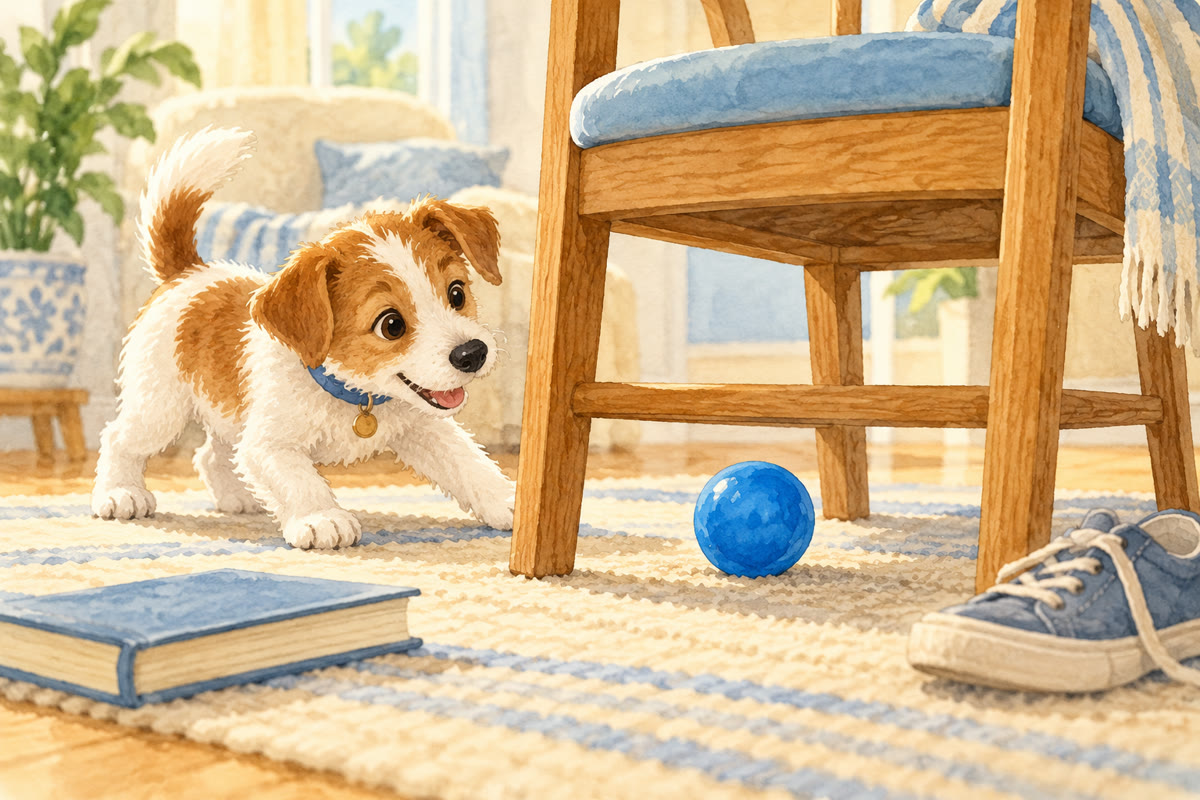
Maya has a blue ball. Her dog, Pip, loves the ball too. “Ready, Pip?” Maya asks. She throws the ball. Pip runs fast. The ball rolls under a chair. Pip comes back with a shoe. Maya laughs. “That is a shoe. Where is the blue ball?” Pip runs away again. This time he comes back with a book. “That is my book!” says Maya. “Where is the blue ball?” Pip puts his nose under the chair. He jumps back. Then he barks. Maya looks under the chair. The blue ball is there. “Good dog, Pip!” Maya reaches for the ball, but Pip is faster. He takes it and runs to the door. Maya laughs again. “Now I know where the blue ball is!”
Maya has a blue ball. Her dog, Pip, loves the ball too.
“Ready, Pip?” Maya asks.
She throws the ball. Pip runs fast. The ball rolls under a chair.
Pip comes back with a shoe.
Maya laughs. “That is a shoe. Where is the blue ball?”
Pip runs away again. This time he comes back with a book.
“That is my book!” says Maya. “Where is the blue ball?”
Pip puts his nose under the chair. He jumps back. Then he barks.
Maya looks under the chair. The blue ball is there.
“Good dog, Pip!”
Maya reaches for the ball, but Pip is faster. He takes it and runs to the door.
Maya laughs again.
“Now I know where the blue ball is!”
Προσέξτε τα ball, blue, dog και shoe. Το “Under the chair” λέει πού βρίσκει η Maya την μπάλα.
Δύο ερωτήσεις:
- Τι φέρνει πρώτα ο Pip; A shoe.
- Πού βρίσκει η Maya την μπλε μπάλα; Under the chair.
Απομαγνητοφώνηση
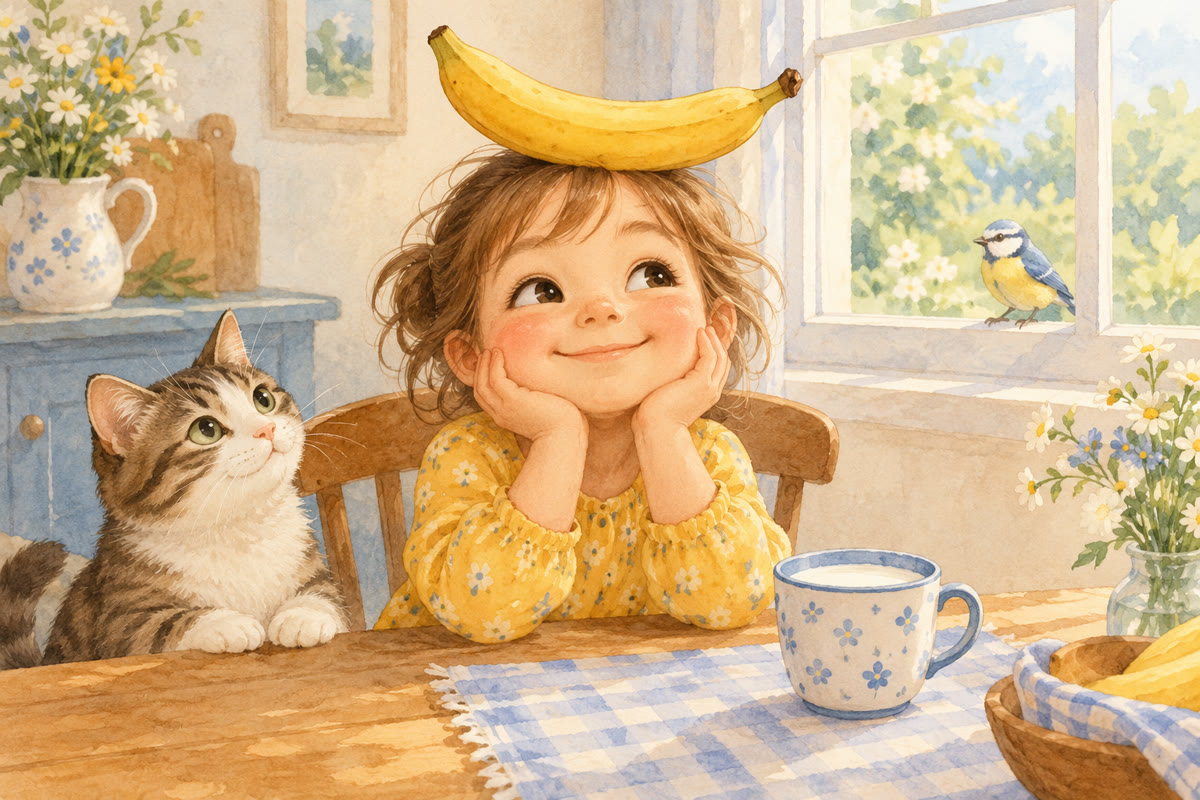
Leo is hungry. He has a yellow banana and a cup of milk. His cat, Coco, sits by the table. Leo puts the banana on his head. “Look, Coco. I have a banana hat!” Coco looks at Leo. Coco does not laugh. A little bird lands on the windowsill outside. Leo points to his head. “Banana hat!” The bird looks at Leo. Then it hops along the windowsill. Coco stands up. The bird hops again. Coco jumps too. Leo turns to watch them. Plop! The banana falls from his head and lands in his empty hand. Now Leo laughs. Coco looks at the banana. The bird looks at the banana. “No,” says Leo. “It is not a hat now. It is my snack.” He peels the banana. Coco sits down. The bird flies away. Leo takes a bite and says, “Yellow hats are delicious.”
Leo is hungry. He has a yellow banana and a cup of milk.
His cat, Coco, sits by the table.
Leo puts the banana on his head.
“Look, Coco. I have a banana hat!”
Coco looks at Leo. Coco does not laugh.
A little bird lands on the windowsill outside.
Leo points to his head. “Banana hat!”
The bird looks at Leo. Then it hops along the windowsill.
Coco stands up. The bird hops again. Coco jumps too.
Leo turns to watch them.
Plop!
The banana falls from his head and lands in his empty hand.
Now Leo laughs.
Coco looks at the banana.
The bird looks at the banana.
“No,” says Leo. “It is not a hat now. It is my snack.”
He peels the banana.
Coco sits down.
The bird flies away.
Leo takes a bite and says, “Yellow hats are delicious.”
Προσέξτε τα banana, yellow, cat και bird. Το windowsill είναι το στενό περβάζι στο κάτω μέρος ενός παραθύρου.
Δύο ερωτήσεις:
- Τι βάζει ο Leo στο κεφάλι του; A yellow banana.
- Τι συμβαίνει στην μπανάνα; It falls into his hand, and he eats it.
Απομαγνητοφώνηση
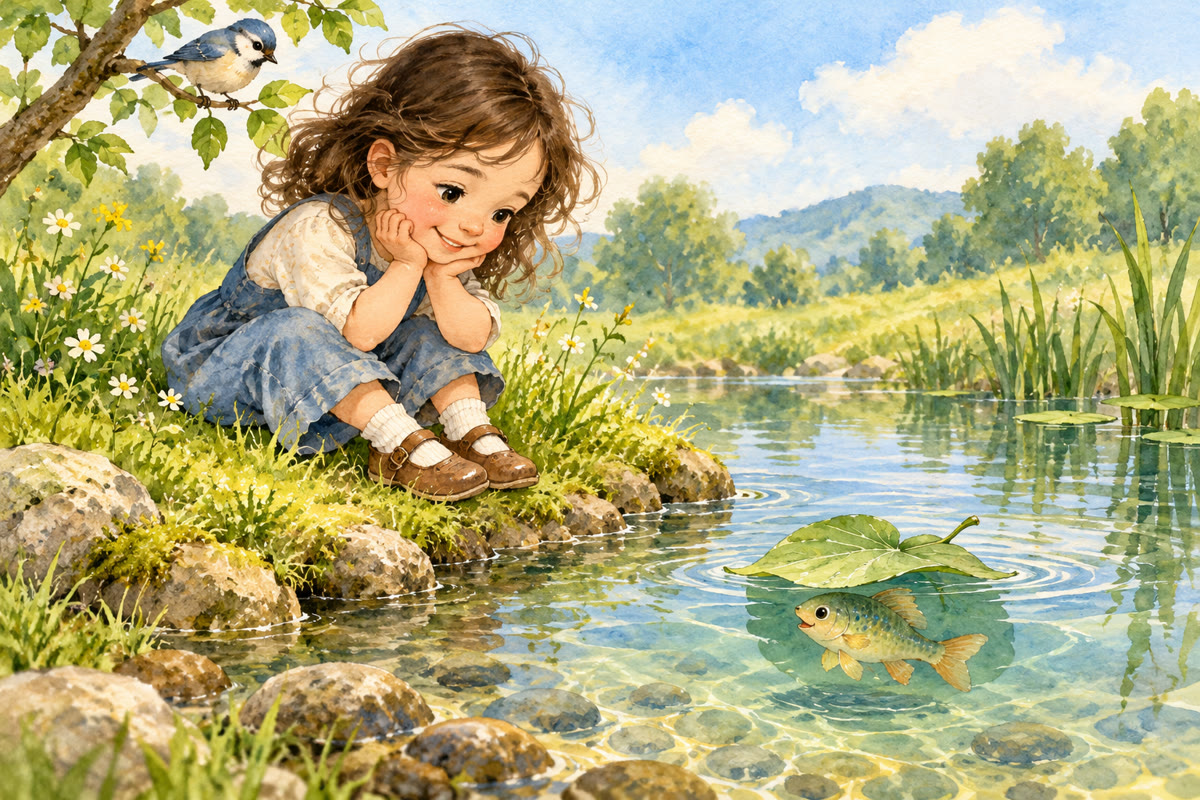
Nina sits by a small pond. One shoe and a green leaf are next to her foot. A fish swims close to the water’s edge. Nina lifts the shoe. “This is my shoe,” she says. The fish opens its mouth. “Do you want a shoe?” Nina asks. A bird on a branch looks down at them. Nina holds the shoe near the water. The fish swims in a little circle. “But you do not have a foot,” Nina says. She shows the fish her foot. The fish splashes. The bird makes a loud sound. Nina thinks. Then she puts the shoe back on her foot. She picks up the green leaf and puts it on the water. The fish swims under the leaf. “A green hat!” says Nina. The fish swims around with the leaf above it. Nina laughs. “No shoe for you. But that hat looks good.”
Nina sits by a small pond. One shoe and a green leaf are next to her foot.
A fish swims close to the water’s edge.
Nina lifts the shoe.
“This is my shoe,” she says.
The fish opens its mouth.
“Do you want a shoe?” Nina asks.
A bird on a branch looks down at them.
Nina holds the shoe near the water. The fish swims in a little circle.
“But you do not have a foot,” Nina says.
She shows the fish her foot.
The fish splashes.
The bird makes a loud sound.
Nina thinks.
Then she puts the shoe back on her foot. She picks up the green leaf and puts it on the water.
The fish swims under the leaf.
“A green hat!” says Nina.
The fish swims around with the leaf above it.
Nina laughs. “No shoe for you. But that hat looks good.”
Προσέξτε τα fish, shoe, foot και leaf. Η Nina βάζει το φύλλο στο νερό.
Δύο ερωτήσεις:
- Γιατί η Nina κρατά το παπούτσι της; The fish does not have a foot.
- Τι γίνεται το καπέλο του ψαριού; A green leaf.
Το κείμενο δίπλα σε κάθε πρόγραμμα αναπαραγωγής είναι η πλήρης απομαγνητοφώνησή του· μπορείτε επίσης να ανοίξετε την «Απομαγνητοφώνηση» από κάτω. Η αφήγηση χρησιμοποιεί παραγόμενη φωνή. Ακούστε μία φορά για την ιστορία και μετά ξαναπαίξτε ή διαβάστε ένα αγαπημένο μέρος. Δεν χρειάζεται να επαναλαμβάνετε κάθε πρόταση.
Κάντε τις δύο ερωτήσεις δίπλα σε μια ιστορία αφού φτάσετε στο τέλος της. Αν μια απάντηση δυσκολεύει, επιστρέψτε μαζί σε εκείνη τη στιγμή. Το παιδί μπορεί να δείξει, να ζωγραφίσει ή να χρησιμοποιήσει οικεία λέξη· οι ερωτήσεις δεν ξεκλειδώνουν την επόμενη ιστορία.
Ο Pip φέρνει λάθος πράγματα
- Στόχος
- Βάλτε τα γεγονότα της πρώτης ιστορίας στη σειρά.
- Προετοιμασία
- Ένα παπούτσι, ένα βιβλίο και μια μπάλα ή ζωγραφιές τους.
Βήματα
- Διαβάστε ή παίξτε το Where Is the Blue Ball?
- Βάλτε τα τρία αντικείμενα ή ζωγραφιές σε ανακατεμένη σειρά. Ρωτήστε τι φέρνει πρώτα ο Pip.
- Βάλτε τα στη σειρά της ιστορίας: shoe, μετά book, μετά ball. Ξαναδείτε την ιστορία αν χρειάζεται.
- Αναπαραστήστε ένα γεγονός. Προτείνετε το “Where is the blue ball?” ή αφήστε το παιδί να δείχνει ενώ το λέτε εσείς.
- Βοήθεια ενηλίκου
- Κρατήστε τα αντικείμενα ορατά. Είναι παιχνίδι αναδιήγησης, όχι τεστ μνήμης.
- Ευκολότερη παραλλαγή
- Προσφέρετε μόνο shoe και ball και μετά προσθέστε book.
Μια άλλη μέρα, ζωγραφίστε το καπέλο μπανάνας του Leo ή μετακινήστε ένα χάρτινο φύλλο πάνω από ζωγραφισμένο ψάρι. Μπορείτε να συμμετέχετε σε μια επαναλαμβανόμενη φράση, να δείχνετε οικεία λέξη ή απλώς να ακούσετε ξανά. Δοκιμάστε τραγούδια με κινήσεις αν το παιδί θέλει αλλαγή ρυθμού.
Αυτές είναι πρωτότυπες ιστορίες του Nativik για κοινή εξάσκηση αρχαρίων στα αγγλικά. Οι οδηγίες του British Council συνιστούν οπτική υποστήριξη και επανάληψη οικείων ιστοριών. Η ανασκόπηση Cochrane και η οργανωμένη νορβηγική μελέτη προσχολικής ηλικίας στις Πηγές αφορούν ευρύτερες παρεμβάσεις, όχι αυτές τις ιστορίες. Δεν τεκμηριώνουν συγκεκριμένο μαθησιακό όφελος από αυτή τη συλλογή.