3 korte Engelse verhalen voor beginnende kinderen: samen luisteren en lezen
Een hond brengt het verkeerde ding, een banaan wordt een hoed en een vis krijgt een onverwacht cadeau. Deel deze drie korte verhalen met je kind met volledige tekst, plaatjes en audio. Elk verhaal heeft een paar woorden om op te letten, twee vragen en een manier om de gebeurtenissen na te vertellen zonder zelfstandig te lezen.
- Leertaal
- Engels
- Leeftijd
- Leeftijd 3–10

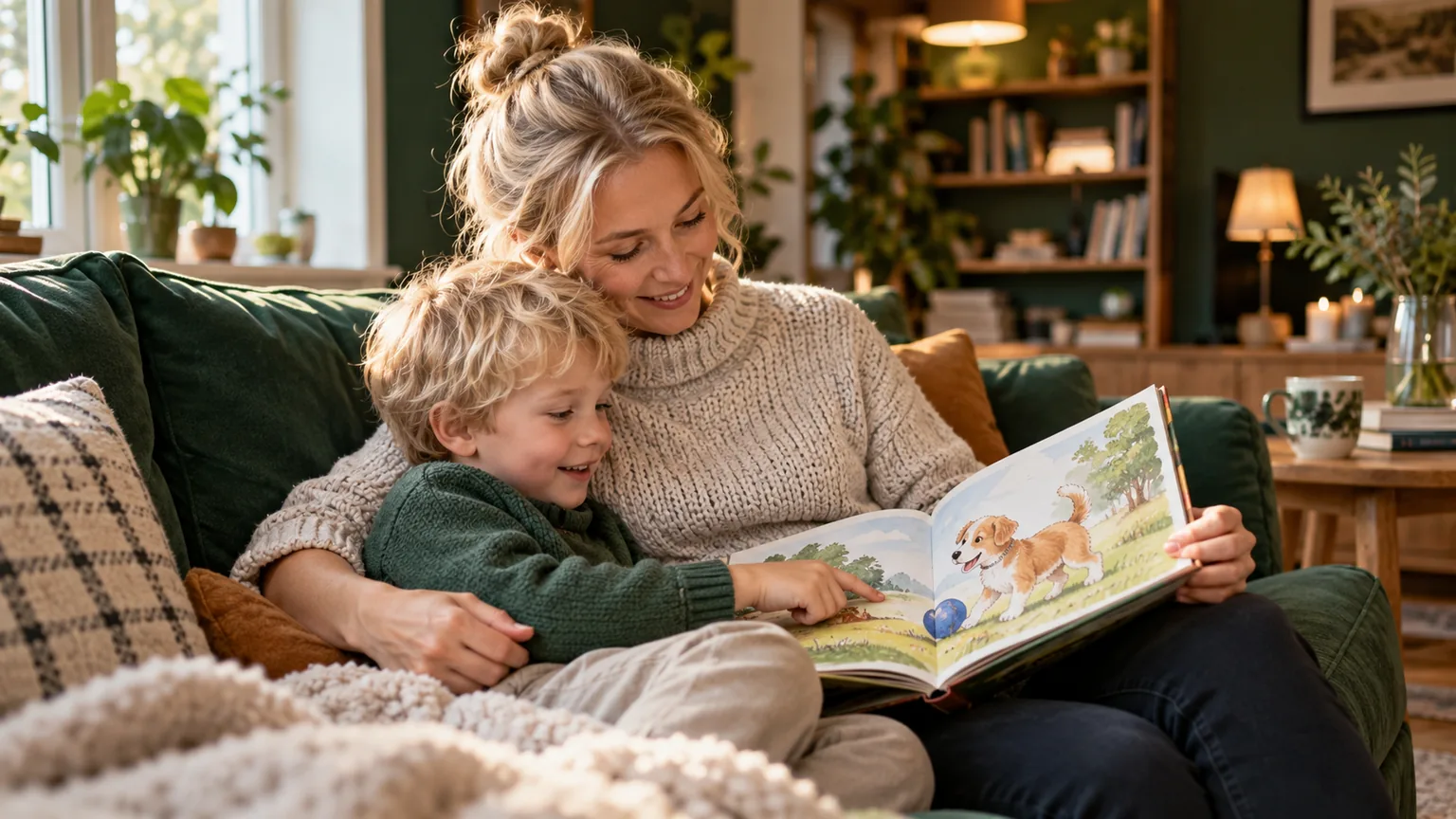
Bekijk het plaatje en leg de situatie zo nodig in je thuistaal uit. Speel één verhaal of pauzeer tussen gebeurtenissen bij het voorlezen. Je kind mag wijzen of gebaren in plaats van hardop te lezen. Kies twee of drie bruikbare woorden om op te letten; leg andere woorden alleen uit als dat nodig is om het verhaal te volgen.
Elke speler leest het volledige verhaal dat eronder staat. Audio start pas als je op afspelen drukt. Probeer na het luisteren de twee vragen en accepteer gebaren of een antwoord in je thuistaal.
Transcript
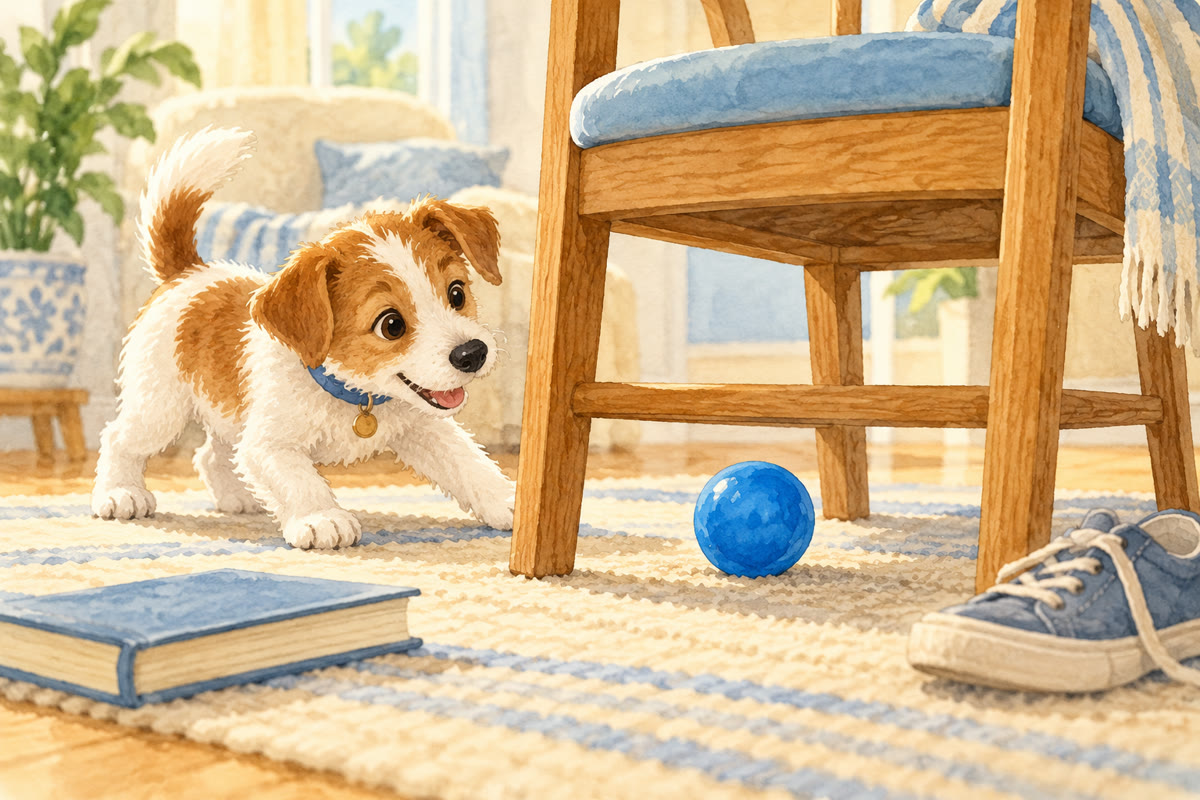
Maya has a blue ball. Her dog, Pip, loves the ball too. “Ready, Pip?” Maya asks. She throws the ball. Pip runs fast. The ball rolls under a chair. Pip comes back with a shoe. Maya laughs. “That is a shoe. Where is the blue ball?” Pip runs away again. This time he comes back with a book. “That is my book!” says Maya. “Where is the blue ball?” Pip puts his nose under the chair. He jumps back. Then he barks. Maya looks under the chair. The blue ball is there. “Good dog, Pip!” Maya reaches for the ball, but Pip is faster. He takes it and runs to the door. Maya laughs again. “Now I know where the blue ball is!”
Maya has a blue ball. Her dog, Pip, loves the ball too.
“Ready, Pip?” Maya asks.
She throws the ball. Pip runs fast. The ball rolls under a chair.
Pip comes back with a shoe.
Maya laughs. “That is a shoe. Where is the blue ball?”
Pip runs away again. This time he comes back with a book.
“That is my book!” says Maya. “Where is the blue ball?”
Pip puts his nose under the chair. He jumps back. Then he barks.
Maya looks under the chair. The blue ball is there.
“Good dog, Pip!”
Maya reaches for the ball, but Pip is faster. He takes it and runs to the door.
Maya laughs again.
“Now I know where the blue ball is!”
Let op ball, blue, dog en shoe. “Under the chair” vertelt je waar Maya de bal vindt.
Twee vragen:
- Wat brengt Pip als eerste? A shoe.
- Waar vindt Maya de blauwe bal? Under the chair.
Transcript
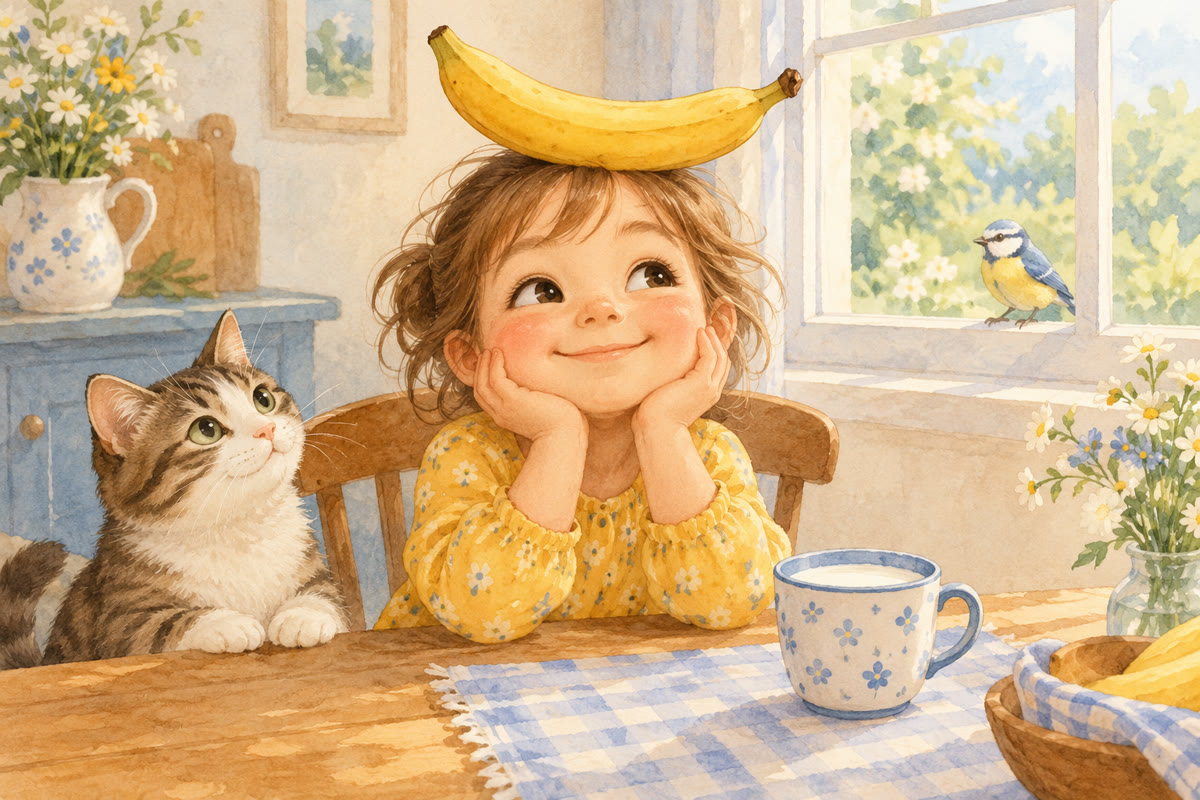
Leo is hungry. He has a yellow banana and a cup of milk. His cat, Coco, sits by the table. Leo puts the banana on his head. “Look, Coco. I have a banana hat!” Coco looks at Leo. Coco does not laugh. A little bird lands on the windowsill outside. Leo points to his head. “Banana hat!” The bird looks at Leo. Then it hops along the windowsill. Coco stands up. The bird hops again. Coco jumps too. Leo turns to watch them. Plop! The banana falls from his head and lands in his empty hand. Now Leo laughs. Coco looks at the banana. The bird looks at the banana. “No,” says Leo. “It is not a hat now. It is my snack.” He peels the banana. Coco sits down. The bird flies away. Leo takes a bite and says, “Yellow hats are delicious.”
Leo is hungry. He has a yellow banana and a cup of milk.
His cat, Coco, sits by the table.
Leo puts the banana on his head.
“Look, Coco. I have a banana hat!”
Coco looks at Leo. Coco does not laugh.
A little bird lands on the windowsill outside.
Leo points to his head. “Banana hat!”
The bird looks at Leo. Then it hops along the windowsill.
Coco stands up. The bird hops again. Coco jumps too.
Leo turns to watch them.
Plop!
The banana falls from his head and lands in his empty hand.
Now Leo laughs.
Coco looks at the banana.
The bird looks at the banana.
“No,” says Leo. “It is not a hat now. It is my snack.”
He peels the banana.
Coco sits down.
The bird flies away.
Leo takes a bite and says, “Yellow hats are delicious.”
Let op banana, yellow, cat en bird. Een windowsill is de smalle rand onderaan een raam.
Twee vragen:
- Wat zet Leo op zijn hoofd? A yellow banana.
- Wat gebeurt er met de banaan? It falls into his hand, and he eats it.
Transcript
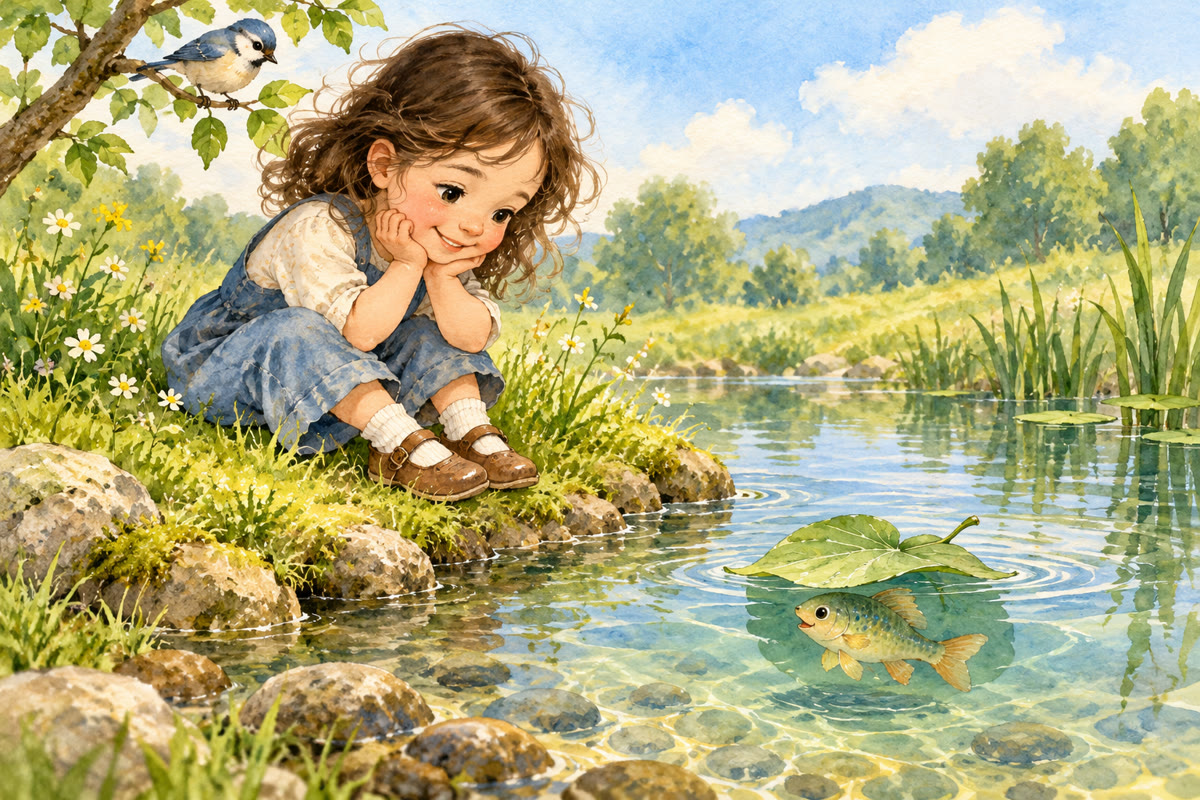
Nina sits by a small pond. One shoe and a green leaf are next to her foot. A fish swims close to the water’s edge. Nina lifts the shoe. “This is my shoe,” she says. The fish opens its mouth. “Do you want a shoe?” Nina asks. A bird on a branch looks down at them. Nina holds the shoe near the water. The fish swims in a little circle. “But you do not have a foot,” Nina says. She shows the fish her foot. The fish splashes. The bird makes a loud sound. Nina thinks. Then she puts the shoe back on her foot. She picks up the green leaf and puts it on the water. The fish swims under the leaf. “A green hat!” says Nina. The fish swims around with the leaf above it. Nina laughs. “No shoe for you. But that hat looks good.”
Nina sits by a small pond. One shoe and a green leaf are next to her foot.
A fish swims close to the water’s edge.
Nina lifts the shoe.
“This is my shoe,” she says.
The fish opens its mouth.
“Do you want a shoe?” Nina asks.
A bird on a branch looks down at them.
Nina holds the shoe near the water. The fish swims in a little circle.
“But you do not have a foot,” Nina says.
She shows the fish her foot.
The fish splashes.
The bird makes a loud sound.
Nina thinks.
Then she puts the shoe back on her foot. She picks up the green leaf and puts it on the water.
The fish swims under the leaf.
“A green hat!” says Nina.
The fish swims around with the leaf above it.
Nina laughs. “No shoe for you. But that hat looks good.”
Let op fish, shoe, foot en leaf. Nina legt het blad op het water.
Twee vragen:
- Waarom houdt Nina haar schoen? The fish does not have a foot.
- Wat wordt de hoed van de vis? A green leaf.
De tekst naast elke speler is het volledige transcript; je kunt ook “Transcript” onder de speler openen. De vertelling gebruikt een gegenereerde stem. Luister één keer voor het verhaal en speel of lees daarna een favoriet deel opnieuw. Elke zin herhalen hoeft niet.
Stel de twee vragen naast een verhaal na het einde. Ga samen terug naar dat moment als een antwoord lastig is. Een kind mag wijzen, tekenen of een bekend woord gebruiken; de vragen ontgrendelen het volgende verhaal niet.
Pips verwarde apporteerspel
- Doel
- Zet de gebeurtenissen van het eerste verhaal op volgorde.
- Voorbereiding
- Een schoen, een boek en een bal, of tekeningen daarvan.
Stappen
- Lees of speel Where Is the Blue Ball?
- Leg de drie voorwerpen of tekeningen door elkaar. Vraag wat Pip eerst brengt.
- Leg ze in de verhaalvolgorde: shoe, dan book en dan ball. Bekijk het verhaal zo nodig opnieuw.
- Beeld één gebeurtenis uit. Nodig uit tot “Where is the blue ball?” of laat je kind wijzen terwijl jij het zegt.
- Hulp van een volwassene
- Houd de voorwerpen zichtbaar. Dit is een navertelspel, geen geheugentest.
- Eenvoudigere variant
- Bied alleen shoe en ball aan en voeg daarna book toe.
Teken een andere dag Leo's bananenhoed of beweeg een papieren blad over een getekende vis. Je kunt een herhaalde zin meedoen, een bekend woord aanwijzen of gewoon opnieuw luisteren. Probeer liedjes met bewegingen als je kind iets anders wil.
Dit zijn originele verhalen van Nativik om samen beginnersengels te oefenen. De British Council adviseert visuele steun en bekende verhalen opnieuw delen. Het Cochrane-overzicht en het gestructureerde Noorse kleuteronderzoek in Bronnen betreffen bredere interventies, niet deze verhalen. Ze tonen geen specifieke leerwinst door deze verzameling aan.