3 个儿童英语入门短故事:一起听与读
小狗拿错东西,香蕉变成帽子,小鱼收到意外礼物。用完整文字、图片和音频,与孩子分享这三个短故事。每个都有几个可留意的词、两个问题,以及不需独立阅读的复述方法。
- 学习语言
- 英语
- 年龄
- 年龄 3–10

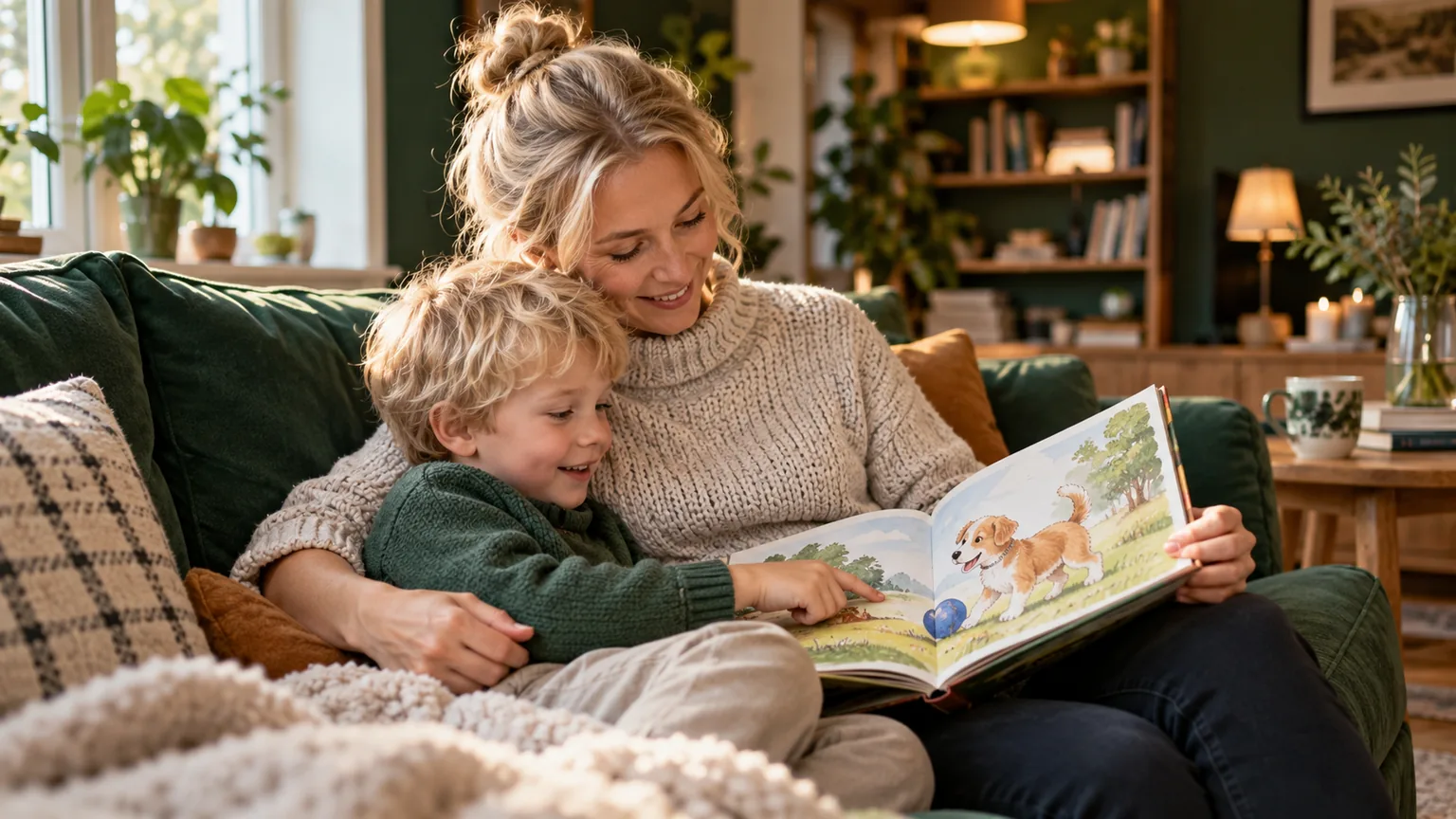
先看图片,有帮助时用家庭语言解释情境。播放一个故事,或阅读时在事件之间停顿。孩子可以指认或做手势,不必朗读。选两三个实用词来留意;其他词只在理解情节需要时解释。
每个播放器朗读其下方的完整故事,按播放才会开始。听完可试两个问题,接受手势或家庭语言回答。
文字记录
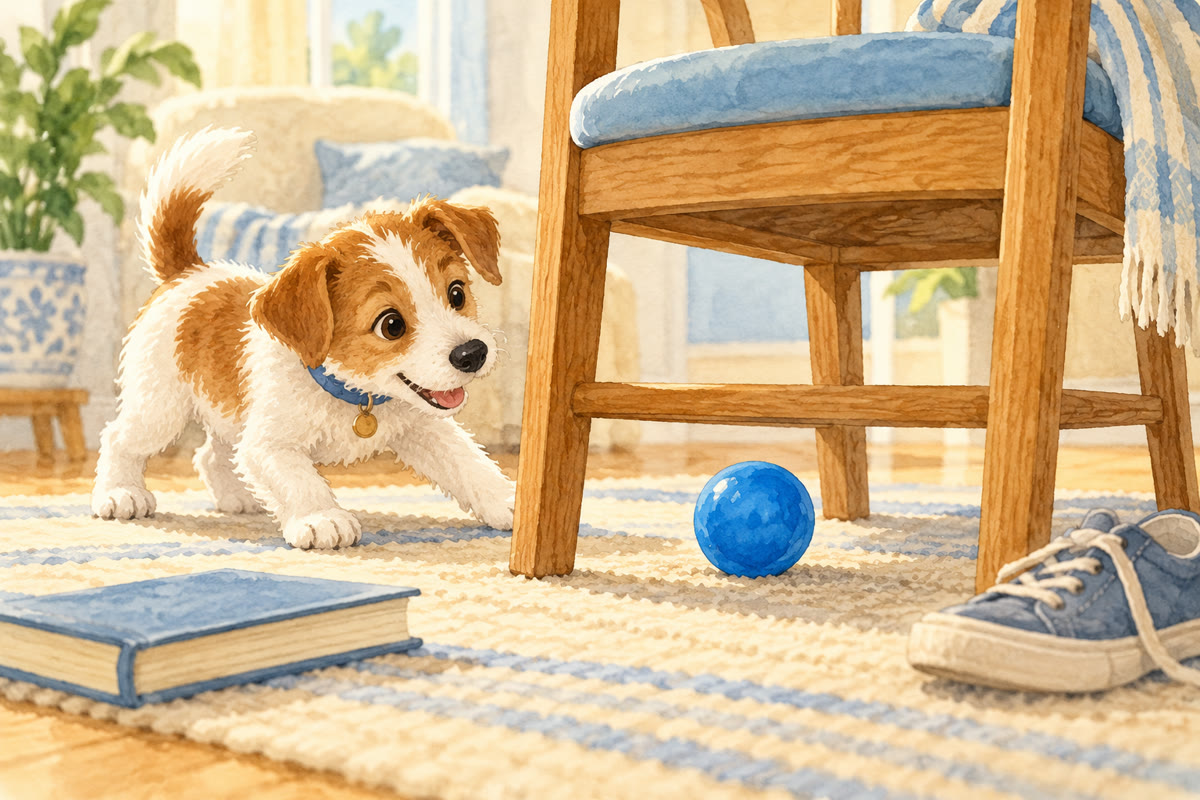
Maya has a blue ball. Her dog, Pip, loves the ball too. “Ready, Pip?” Maya asks. She throws the ball. Pip runs fast. The ball rolls under a chair. Pip comes back with a shoe. Maya laughs. “That is a shoe. Where is the blue ball?” Pip runs away again. This time he comes back with a book. “That is my book!” says Maya. “Where is the blue ball?” Pip puts his nose under the chair. He jumps back. Then he barks. Maya looks under the chair. The blue ball is there. “Good dog, Pip!” Maya reaches for the ball, but Pip is faster. He takes it and runs to the door. Maya laughs again. “Now I know where the blue ball is!”
Maya has a blue ball. Her dog, Pip, loves the ball too.
“Ready, Pip?” Maya asks.
She throws the ball. Pip runs fast. The ball rolls under a chair.
Pip comes back with a shoe.
Maya laughs. “That is a shoe. Where is the blue ball?”
Pip runs away again. This time he comes back with a book.
“That is my book!” says Maya. “Where is the blue ball?”
Pip puts his nose under the chair. He jumps back. Then he barks.
Maya looks under the chair. The blue ball is there.
“Good dog, Pip!”
Maya reaches for the ball, but Pip is faster. He takes it and runs to the door.
Maya laughs again.
“Now I know where the blue ball is!”
留意 ball、blue、dog 和 shoe。“Under the chair”说明 Maya 在哪里找到球。
两个问题:
- Pip 最先拿来了什么?A shoe.
- Maya 在哪里找到蓝色的球?Under the chair.
文字记录
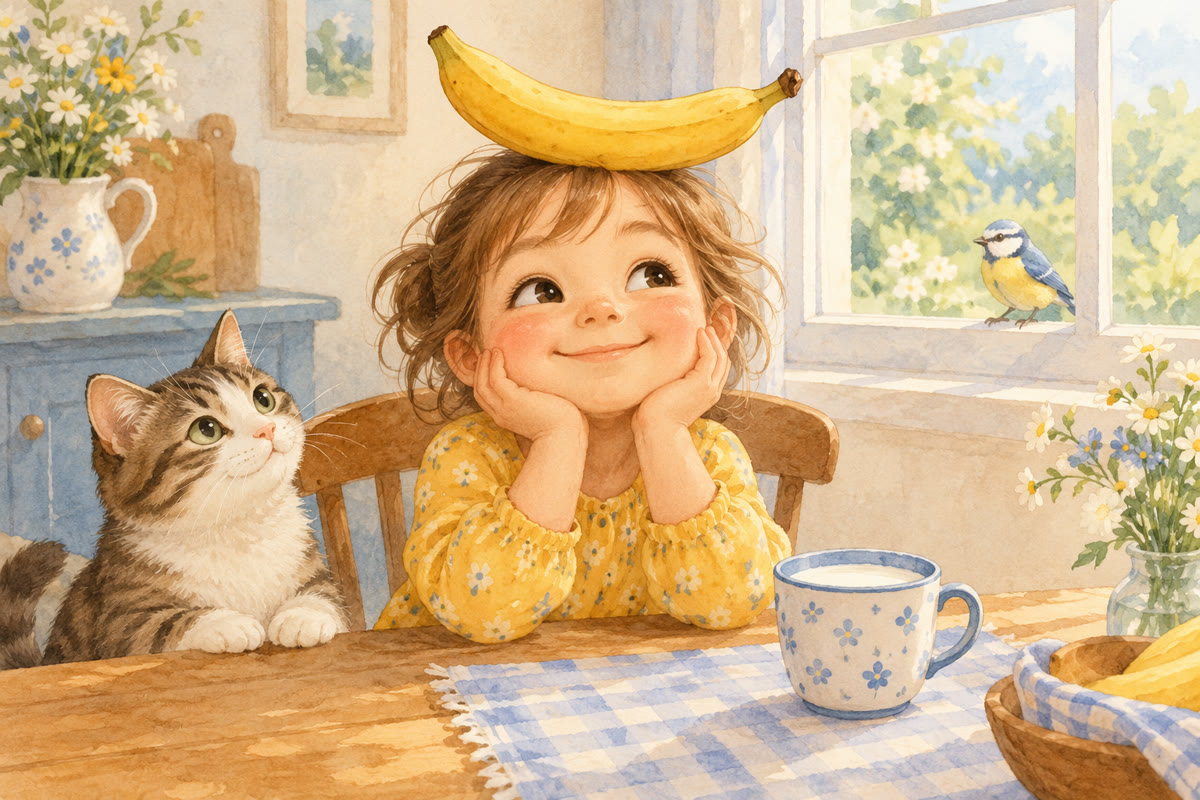
Leo is hungry. He has a yellow banana and a cup of milk. His cat, Coco, sits by the table. Leo puts the banana on his head. “Look, Coco. I have a banana hat!” Coco looks at Leo. Coco does not laugh. A little bird lands on the windowsill outside. Leo points to his head. “Banana hat!” The bird looks at Leo. Then it hops along the windowsill. Coco stands up. The bird hops again. Coco jumps too. Leo turns to watch them. Plop! The banana falls from his head and lands in his empty hand. Now Leo laughs. Coco looks at the banana. The bird looks at the banana. “No,” says Leo. “It is not a hat now. It is my snack.” He peels the banana. Coco sits down. The bird flies away. Leo takes a bite and says, “Yellow hats are delicious.”
Leo is hungry. He has a yellow banana and a cup of milk.
His cat, Coco, sits by the table.
Leo puts the banana on his head.
“Look, Coco. I have a banana hat!”
Coco looks at Leo. Coco does not laugh.
A little bird lands on the windowsill outside.
Leo points to his head. “Banana hat!”
The bird looks at Leo. Then it hops along the windowsill.
Coco stands up. The bird hops again. Coco jumps too.
Leo turns to watch them.
Plop!
The banana falls from his head and lands in his empty hand.
Now Leo laughs.
Coco looks at the banana.
The bird looks at the banana.
“No,” says Leo. “It is not a hat now. It is my snack.”
He peels the banana.
Coco sits down.
The bird flies away.
Leo takes a bite and says, “Yellow hats are delicious.”
留意 banana、yellow、cat 和 bird。windowsill 指窗户底部的窄窗台。
两个问题:
- Leo 把什么放在头上?A yellow banana.
- 香蕉后来怎么样了?It falls into his hand, and he eats it.
文字记录
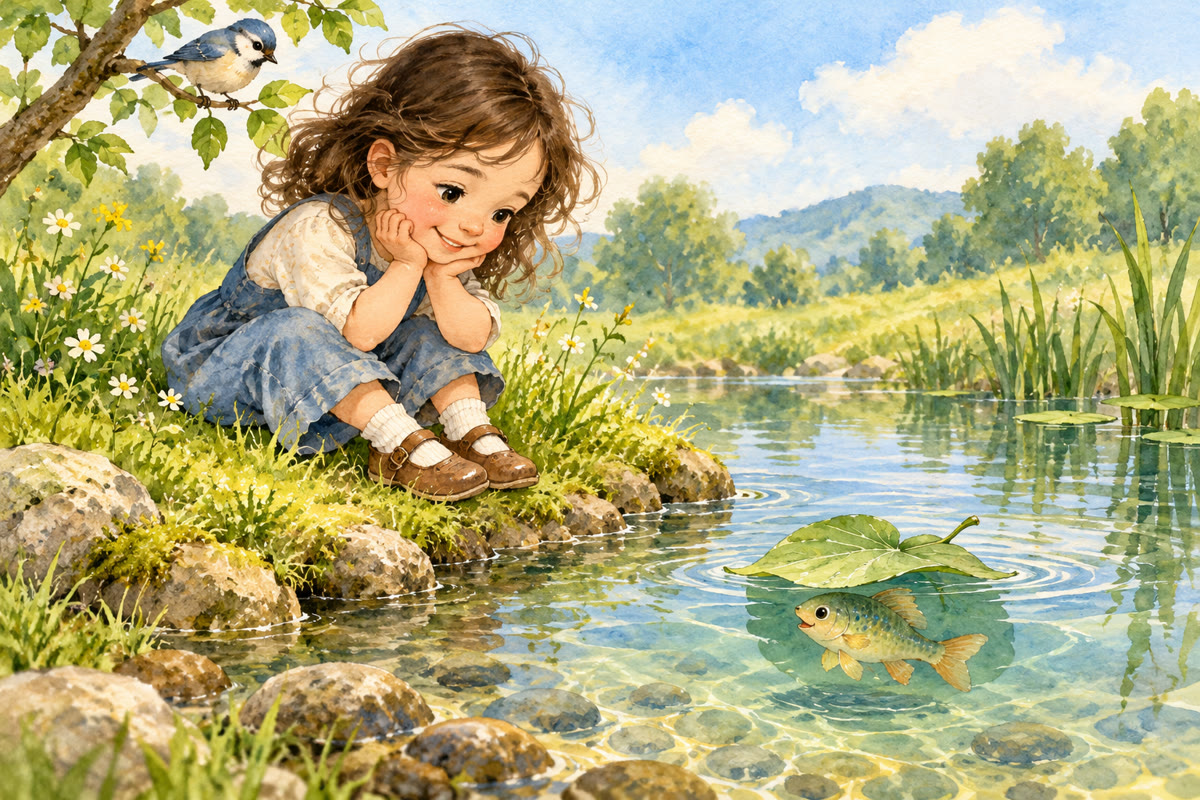
Nina sits by a small pond. One shoe and a green leaf are next to her foot. A fish swims close to the water’s edge. Nina lifts the shoe. “This is my shoe,” she says. The fish opens its mouth. “Do you want a shoe?” Nina asks. A bird on a branch looks down at them. Nina holds the shoe near the water. The fish swims in a little circle. “But you do not have a foot,” Nina says. She shows the fish her foot. The fish splashes. The bird makes a loud sound. Nina thinks. Then she puts the shoe back on her foot. She picks up the green leaf and puts it on the water. The fish swims under the leaf. “A green hat!” says Nina. The fish swims around with the leaf above it. Nina laughs. “No shoe for you. But that hat looks good.”
Nina sits by a small pond. One shoe and a green leaf are next to her foot.
A fish swims close to the water’s edge.
Nina lifts the shoe.
“This is my shoe,” she says.
The fish opens its mouth.
“Do you want a shoe?” Nina asks.
A bird on a branch looks down at them.
Nina holds the shoe near the water. The fish swims in a little circle.
“But you do not have a foot,” Nina says.
She shows the fish her foot.
The fish splashes.
The bird makes a loud sound.
Nina thinks.
Then she puts the shoe back on her foot. She picks up the green leaf and puts it on the water.
The fish swims under the leaf.
“A green hat!” says Nina.
The fish swims around with the leaf above it.
Nina laughs. “No shoe for you. But that hat looks good.”
留意 fish、shoe、foot 和 leaf。Nina 把叶子放到水上。
两个问题:
- Nina 为什么留下自己的鞋?The fish does not have a foot.
- 什么成了小鱼的帽子?A green leaf.
每个播放器旁的文字就是完整文本,也可打开播放器下的“文字稿”。旁白使用生成语音。先听一遍故事,再重播或读喜欢的一段,不必句句重复。
听到结尾后,再问故事旁的两个问题。答案难时,一起回到那一幕。孩子可以指、画或用熟悉词回答;问题不是解锁下个故事的条件。
Pip 拿错东西了
- 目标
- 把第一个故事的事件排好顺序。
- 准备
- 鞋、书和球,或它们的图画。
步骤
- 阅读或播放 Where Is the Blue Ball?
- 把三件实物或图画打乱摆放,问 Pip 最先拿来什么。
- 按故事顺序摆好:先 shoe,再 book,最后 ball。需要时重听故事。
- 表演一个事件,邀请孩子说“Where is the blue ball?”,或由孩子指、您来说。
- 成人协助
- 物品保持可见。这是复述游戏,不是记忆测试。
- 简化玩法
- 先只提供 shoe 和 ball,再加 book。
改天可以画 Leo 的香蕉帽,或把纸叶子移到画出的小鱼上方。可以加入重复台词、指熟悉词,或只是再听一次。孩子想换节奏时,可试试带动作的歌曲。
这些是 Nativik 为亲子入门英语练习准备的原创故事。British Council 指导建议视觉支持,并反复分享熟悉故事。来源中的 Cochrane 综述和挪威学龄前结构化研究涉及更广泛的干预,并非这些故事,不能证明本故事集带来特定学习提升。