3 histórias curtas em inglês para crianças iniciantes: ouçam e leiam juntos
Um cachorro traz a coisa errada, uma banana vira chapéu e um peixe ganha um presente inesperado. Compartilhe estas três histórias curtas com seu filho usando texto completo, figuras e áudio. Cada uma tem algumas palavras para observar, duas perguntas e uma forma de recontar os acontecimentos sem leitura independente.
- Idioma de aprendizagem
- inglês
- Idade
- Idade 3–10

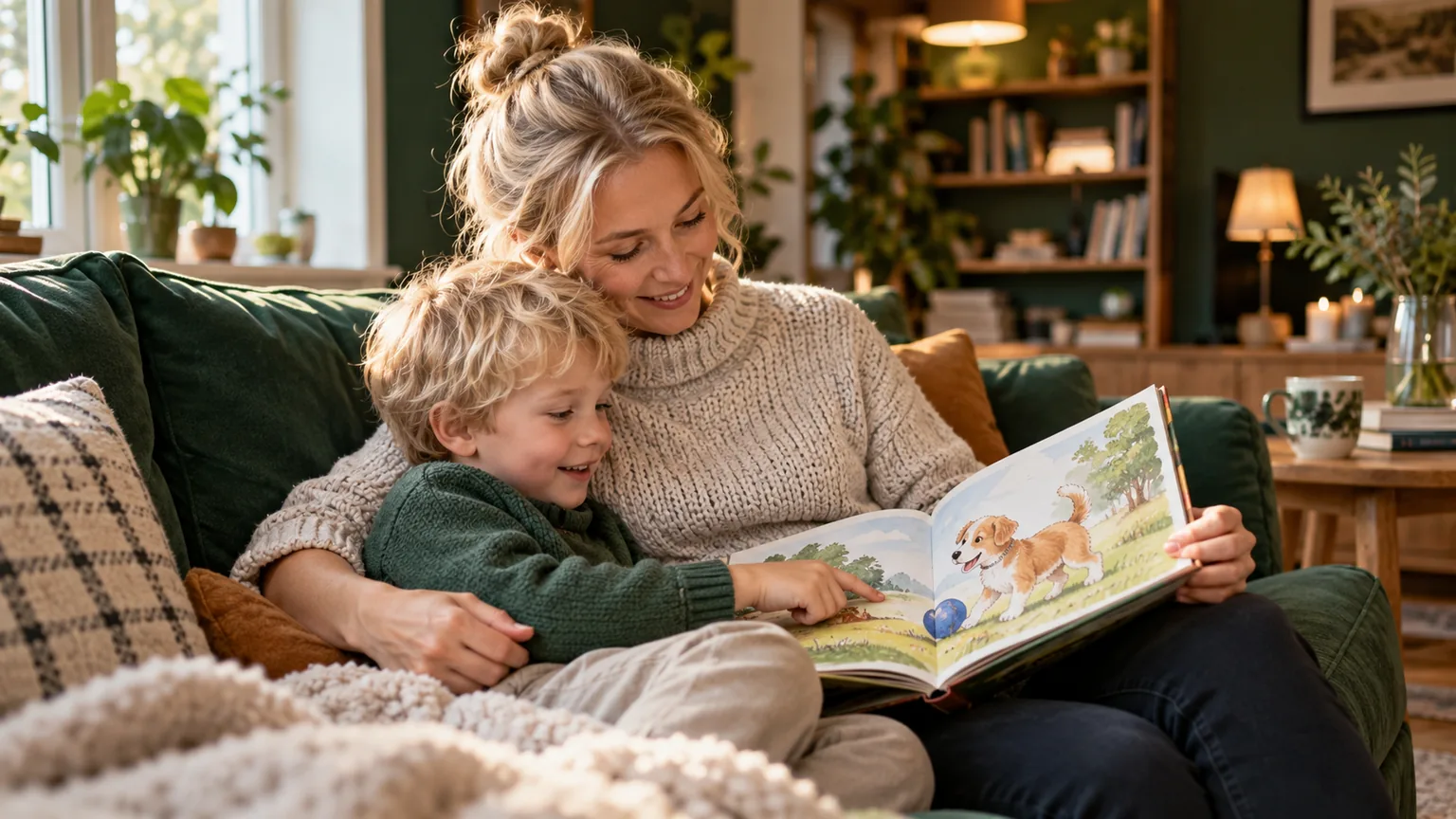
Olhem a figura e explique a situação no idioma de casa se ajudar. Reproduza uma história ou pause entre acontecimentos enquanto lê o texto. Seu filho pode apontar ou fazer gestos em vez de ler em voz alta. Escolha duas ou três palavras úteis para observar; explique outras apenas quando necessário para acompanhar a história.
Cada player lê a história completa impressa abaixo dele. O áudio começa apenas quando você aperta reproduzir. Experimentem as duas perguntas depois de ouvir, aceitando gestos ou uma resposta no idioma de casa.
Transcrição
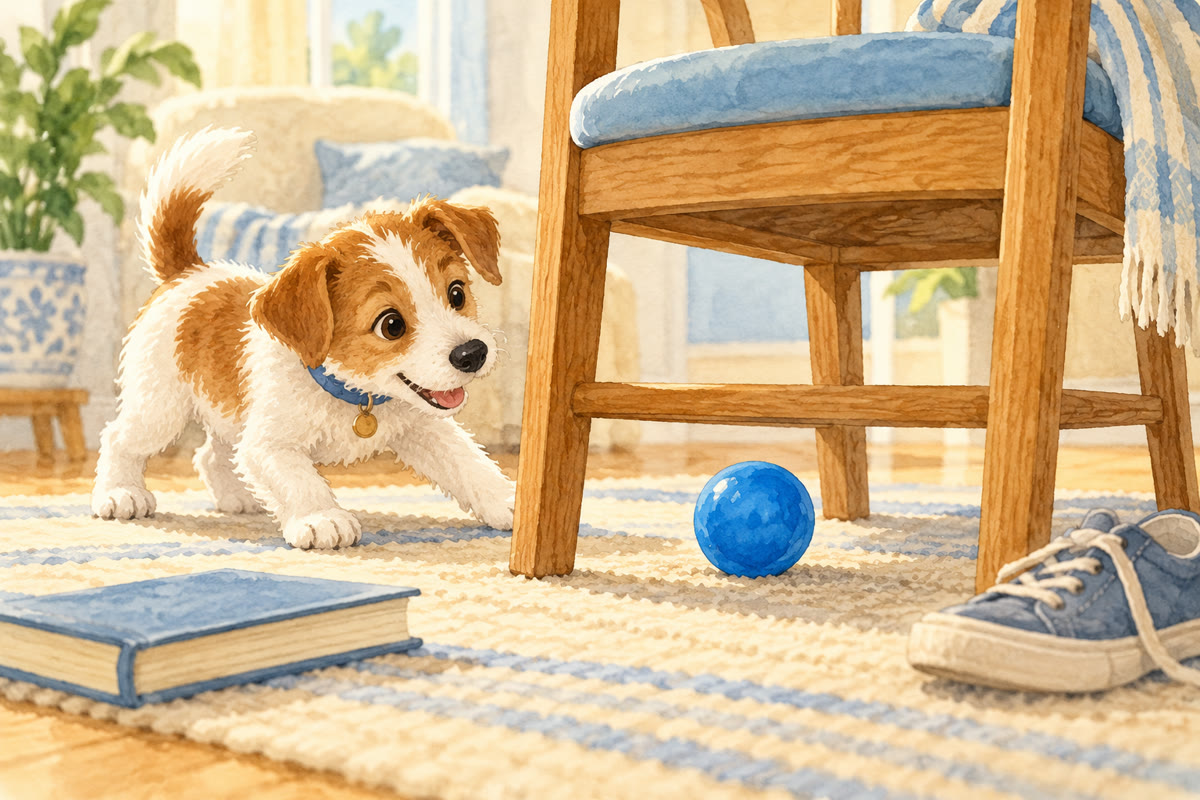
Maya has a blue ball. Her dog, Pip, loves the ball too. “Ready, Pip?” Maya asks. She throws the ball. Pip runs fast. The ball rolls under a chair. Pip comes back with a shoe. Maya laughs. “That is a shoe. Where is the blue ball?” Pip runs away again. This time he comes back with a book. “That is my book!” says Maya. “Where is the blue ball?” Pip puts his nose under the chair. He jumps back. Then he barks. Maya looks under the chair. The blue ball is there. “Good dog, Pip!” Maya reaches for the ball, but Pip is faster. He takes it and runs to the door. Maya laughs again. “Now I know where the blue ball is!”
Maya has a blue ball. Her dog, Pip, loves the ball too.
“Ready, Pip?” Maya asks.
She throws the ball. Pip runs fast. The ball rolls under a chair.
Pip comes back with a shoe.
Maya laughs. “That is a shoe. Where is the blue ball?”
Pip runs away again. This time he comes back with a book.
“That is my book!” says Maya. “Where is the blue ball?”
Pip puts his nose under the chair. He jumps back. Then he barks.
Maya looks under the chair. The blue ball is there.
“Good dog, Pip!”
Maya reaches for the ball, but Pip is faster. He takes it and runs to the door.
Maya laughs again.
“Now I know where the blue ball is!”
Procurem ball, blue, dog e shoe. “Under the chair” diz onde Maya encontra a bola.
Duas perguntas:
- O que Pip traz primeiro? A shoe.
- Onde Maya encontra a bola azul? Under the chair.
Transcrição
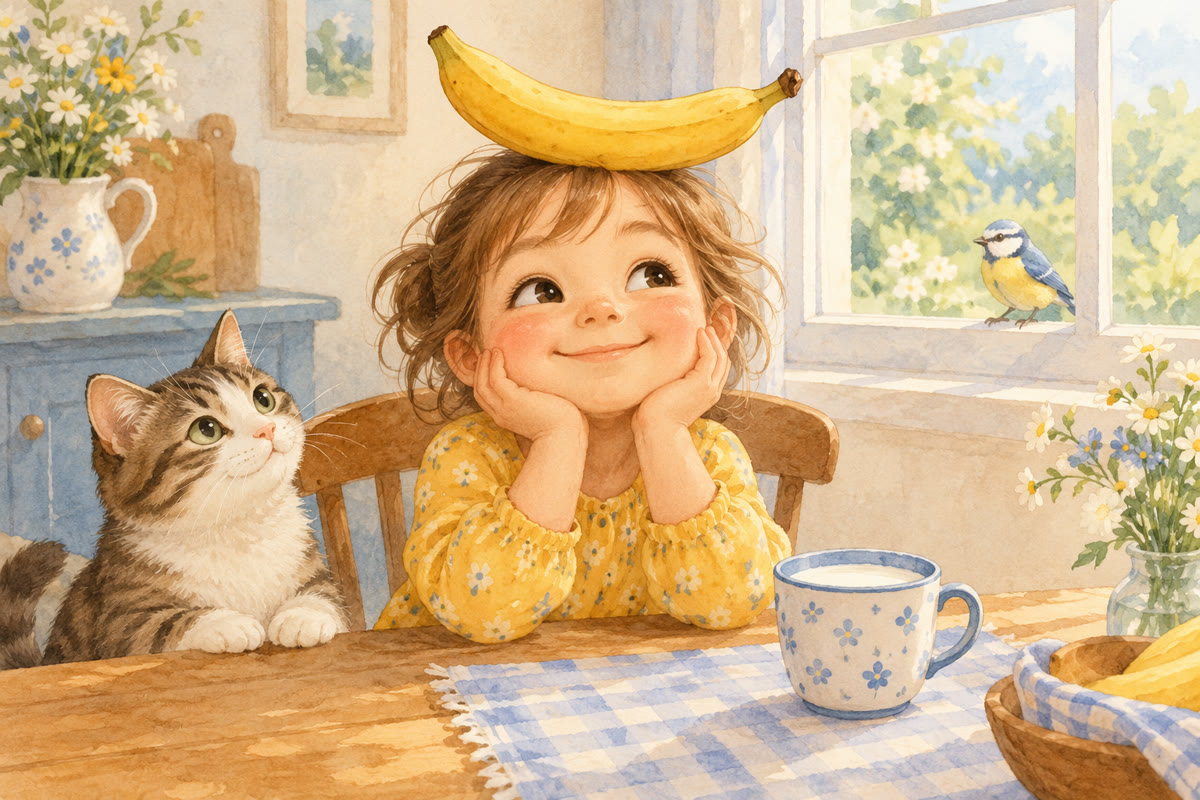
Leo is hungry. He has a yellow banana and a cup of milk. His cat, Coco, sits by the table. Leo puts the banana on his head. “Look, Coco. I have a banana hat!” Coco looks at Leo. Coco does not laugh. A little bird lands on the windowsill outside. Leo points to his head. “Banana hat!” The bird looks at Leo. Then it hops along the windowsill. Coco stands up. The bird hops again. Coco jumps too. Leo turns to watch them. Plop! The banana falls from his head and lands in his empty hand. Now Leo laughs. Coco looks at the banana. The bird looks at the banana. “No,” says Leo. “It is not a hat now. It is my snack.” He peels the banana. Coco sits down. The bird flies away. Leo takes a bite and says, “Yellow hats are delicious.”
Leo is hungry. He has a yellow banana and a cup of milk.
His cat, Coco, sits by the table.
Leo puts the banana on his head.
“Look, Coco. I have a banana hat!”
Coco looks at Leo. Coco does not laugh.
A little bird lands on the windowsill outside.
Leo points to his head. “Banana hat!”
The bird looks at Leo. Then it hops along the windowsill.
Coco stands up. The bird hops again. Coco jumps too.
Leo turns to watch them.
Plop!
The banana falls from his head and lands in his empty hand.
Now Leo laughs.
Coco looks at the banana.
The bird looks at the banana.
“No,” says Leo. “It is not a hat now. It is my snack.”
He peels the banana.
Coco sits down.
The bird flies away.
Leo takes a bite and says, “Yellow hats are delicious.”
Observem banana, yellow, cat e bird. Windowsill é a borda estreita na base de uma janela.
Duas perguntas:
- O que Leo coloca na cabeça? A yellow banana.
- O que acontece com a banana? It falls into his hand, and he eats it.
Transcrição
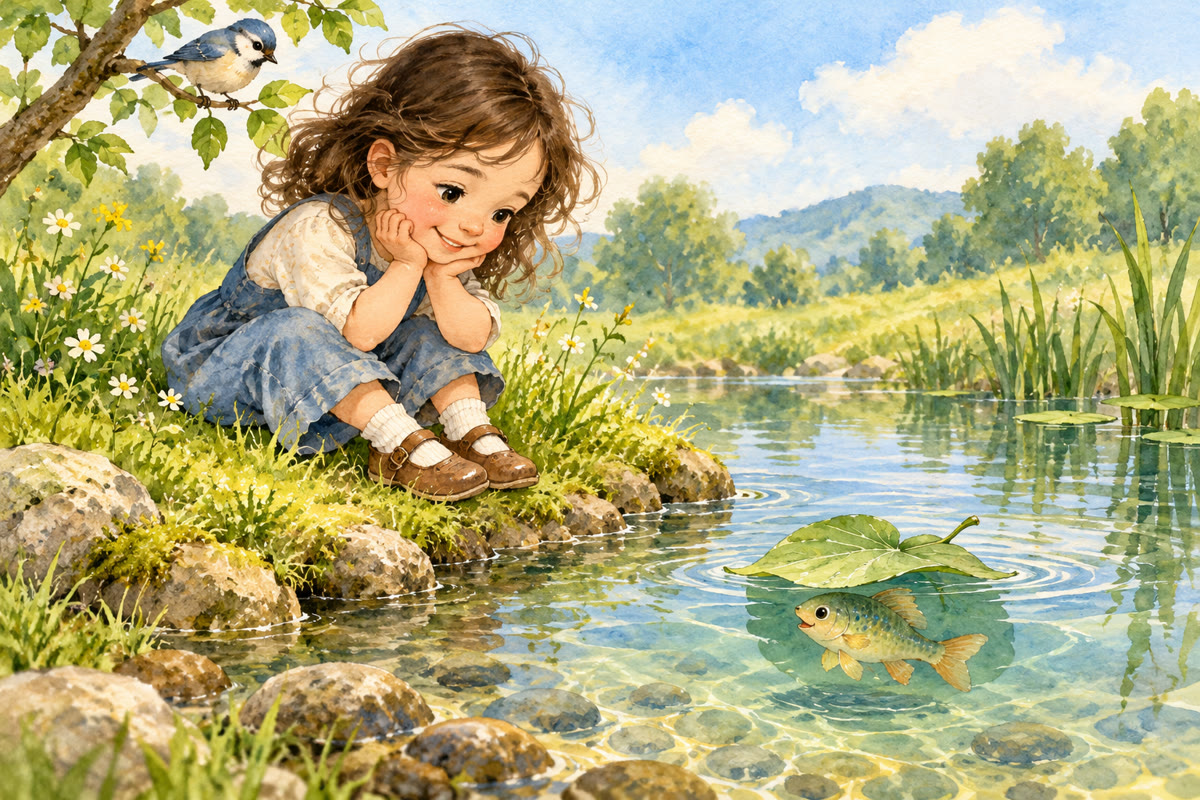
Nina sits by a small pond. One shoe and a green leaf are next to her foot. A fish swims close to the water’s edge. Nina lifts the shoe. “This is my shoe,” she says. The fish opens its mouth. “Do you want a shoe?” Nina asks. A bird on a branch looks down at them. Nina holds the shoe near the water. The fish swims in a little circle. “But you do not have a foot,” Nina says. She shows the fish her foot. The fish splashes. The bird makes a loud sound. Nina thinks. Then she puts the shoe back on her foot. She picks up the green leaf and puts it on the water. The fish swims under the leaf. “A green hat!” says Nina. The fish swims around with the leaf above it. Nina laughs. “No shoe for you. But that hat looks good.”
Nina sits by a small pond. One shoe and a green leaf are next to her foot.
A fish swims close to the water’s edge.
Nina lifts the shoe.
“This is my shoe,” she says.
The fish opens its mouth.
“Do you want a shoe?” Nina asks.
A bird on a branch looks down at them.
Nina holds the shoe near the water. The fish swims in a little circle.
“But you do not have a foot,” Nina says.
She shows the fish her foot.
The fish splashes.
The bird makes a loud sound.
Nina thinks.
Then she puts the shoe back on her foot. She picks up the green leaf and puts it on the water.
The fish swims under the leaf.
“A green hat!” says Nina.
The fish swims around with the leaf above it.
Nina laughs. “No shoe for you. But that hat looks good.”
Observem fish, shoe, foot e leaf. Nina coloca a folha na água.
Duas perguntas:
- Por que Nina fica com seu sapato? The fish does not have a foot.
- O que vira o chapéu do peixe? A green leaf.
O texto ao lado de cada player é sua transcrição completa; você também pode abrir “Transcrição” abaixo do player. A narração usa uma voz gerada. Ouçam uma vez pela história e depois reproduzam ou leiam uma parte favorita. Não é preciso repetir todas as frases.
Faça as duas perguntas ao lado de uma história depois de chegar ao fim. Se uma resposta for difícil, voltem juntos àquele momento. A criança pode apontar, desenhar ou usar uma palavra conhecida; as perguntas não desbloqueiam a próxima história.
A busca atrapalhada de Pip
- Objetivo
- Colocar os acontecimentos da primeira história em ordem.
- Preparação
- Um sapato, um livro e uma bola ou desenhos deles.
Passos
- Leia ou reproduza Where Is the Blue Ball?
- Coloque os três objetos ou desenhos fora de ordem. Pergunte o que Pip traz primeiro.
- Coloque-os na ordem da história: shoe, depois book e depois ball. Retomem a história se necessário.
- Encenem um acontecimento. Convide a dizer “Where is the blue ball?” ou deixe seu filho apontar enquanto você fala.
- Ajuda do adulto
- Mantenha os objetos visíveis. É uma brincadeira de reconto, não um teste de memória.
- Variação mais fácil
- Ofereça apenas shoe e ball e depois acrescente book.
Em outro dia, desenhem o chapéu de banana de Leo ou movam uma folha de papel sobre um peixe desenhado. Vocês podem acompanhar uma frase repetida, apontar para uma palavra conhecida ou simplesmente ouvir novamente. Experimentem músicas com ações se a criança quiser mudar o ritmo.
Estas são histórias originais preparadas pelo Nativik para praticar inglês iniciante juntos. As orientações do British Council recomendam apoio visual e compartilhar novamente histórias conhecidas. A revisão Cochrane e o estudo estruturado de pré-escola norueguesa em Fontes tratam de intervenções mais amplas, não destas histórias. Não estabelecem um ganho específico de aprendizagem desta coleção.