English for Children Ages 3–6: Four Beginner Activities for Home
Preschool English can begin with a movement, a familiar object or a story picture. Here are four activities you can choose according to your child’s interest: two need no reading, and two add written words gently when letters catch their attention.
- Learning language
- English
- Age
- Ages 3–6


A child who is not reading can listen, point, act or move a toy. A child interested in print can add a label to a word they already understand. These are options for ages 3–6 with adult support, not stages every child must reach at a particular age. If your question is when to begin, see when to start another language.
1. Listen and move
- Goal
- Connect a short spoken instruction with an action.
- Preparation
- A little space, or a toy that can do the actions.
Steps
- Choose two actions: “Jump” and “Clap,” or “Sit down” and “Stand up.” Say and demonstrate each.
- Repeat them in a different order, leaving time to respond.
- Let your child choose or demonstrate the next action while you follow.
- Add a third familiar action or combine two only when wanted: “Clap, then sit down.”
- Adult help
- Offer a hand gesture, a drawing or moving a toy instead of standing or jumping. Never require a movement or touch.
- Easier variation
- Demonstrate one action each time; watching is a valid turn.
2. Picture hunt
- Goal
- Find the meaning of a spoken word without reading.
- Preparation
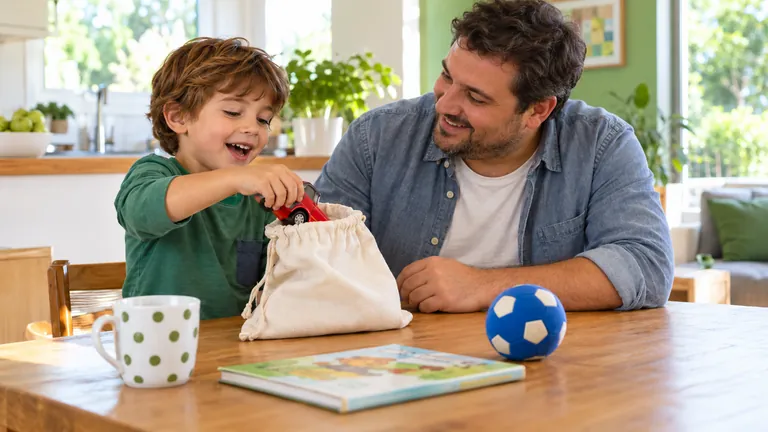
- Two to four objects or drawings: book, ball, cup and shoe.
Steps
- Name two pictures while pointing.
- Say “Show me the book.” Accept looking, pointing or choosing.
- Move the pictures and repeat. Add another when the first pair is familiar.
- Place pictures around an easy-to-reach area for a hunt, or keep them on the table. Swap roles so your child chooses your clue.
- Adult help
- Explain the rules in your home language; keep the short requests in English.
- Easier variation
- Use two objects and point together.
3. Match the label
- Goal
- Notice a written word whose meaning is already familiar.
- Preparation
- Drawings of a cat and dog, and handwritten labels cat and dog.
Steps
- Name each picture and place its label beside it.
- Trace the word with your finger as you say it.
- Mix the two labels and help put them back. The pictures stay visible.
- If your child asks about letters, look at the first letter, then return to the whole word.
- Adult help
- This is print noticing, not a spelling test. Match by looking; independent decoding is not required.
- Easier variation
- Leave one matching pair together as a model.
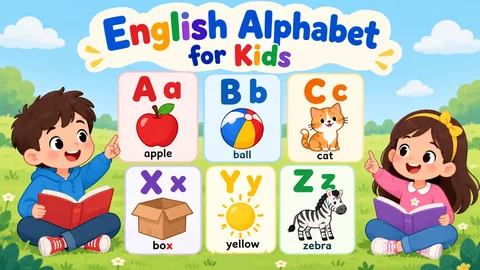
For more letter play, use the alphabet activity. A label game does not need to become a full alphabet lesson.
4. Picture-book detective
- Goal
- Follow a story and notice a familiar word or event.
- Preparation
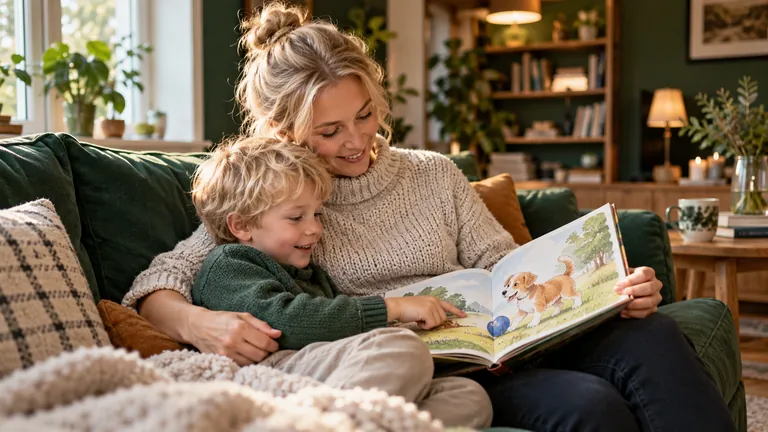
- A short picture book or one of our three stories with audio (linked below).
Steps
- Look at the picture and explain the setup briefly if needed.
- Choose one thing to notice, such as the blue ball.
- Read or play a short section, then pause. Let your child point or make an agreed gesture when the target appears.
- On a later reading, pause before “Where is the blue ball?” and invite your child to join if wanted. Show the printed word ball only if it interests them.
- Adult help
- Keep the plot moving; avoid interrupting every sentence with a question.
- Easier variation
- Point to one object in the picture while the child watches.
For a story you can play now, listen and read with Pip, Leo and Nina.
Keep familiar words while changing who leads or where the picture is. A cat drawing can become a match game: make a second cat picture and find its partner. Before reading, use picture-to-picture pairs; when labels interest your child, try a familiar picture with its word. There is a fuller Memory Match activity in animals.
Your sketches, household objects and a toy are enough. If the task becomes confusing, reduce the choice or demonstrate again. If your child wants to stop, finish there. Planning the length of practice gives more detail; the first-week plan links several object games together.
British Council family guidance suggests games, meaningful repetition and shared reading. The preschool foreign-language review below discusses play, interaction and understandable input across varied settings. General NAEYC literacy guidance supports encounters with print in meaningful contexts; it does not establish an English learning result from these label games. Structured shared-reading research is not a test of these four home activities.