영어 초보 어린이를 위한 짧은 이야기 3편: 함께 듣고 읽기
개가 엉뚱한 물건을 가져오고, 바나나가 모자가 되고, 물고기가 뜻밖의 선물을 받습니다. 완전한 본문, 그림, 음성으로 이 짧은 이야기 세 편을 아이와 함께해 보세요. 각 이야기에는 알아볼 단어 몇 개, 질문 두 가지, 혼자 읽지 않고도 사건을 다시 이야기할 방법이 있습니다.
- 학습 언어
- 영어
- 나이
- 나이 3–10

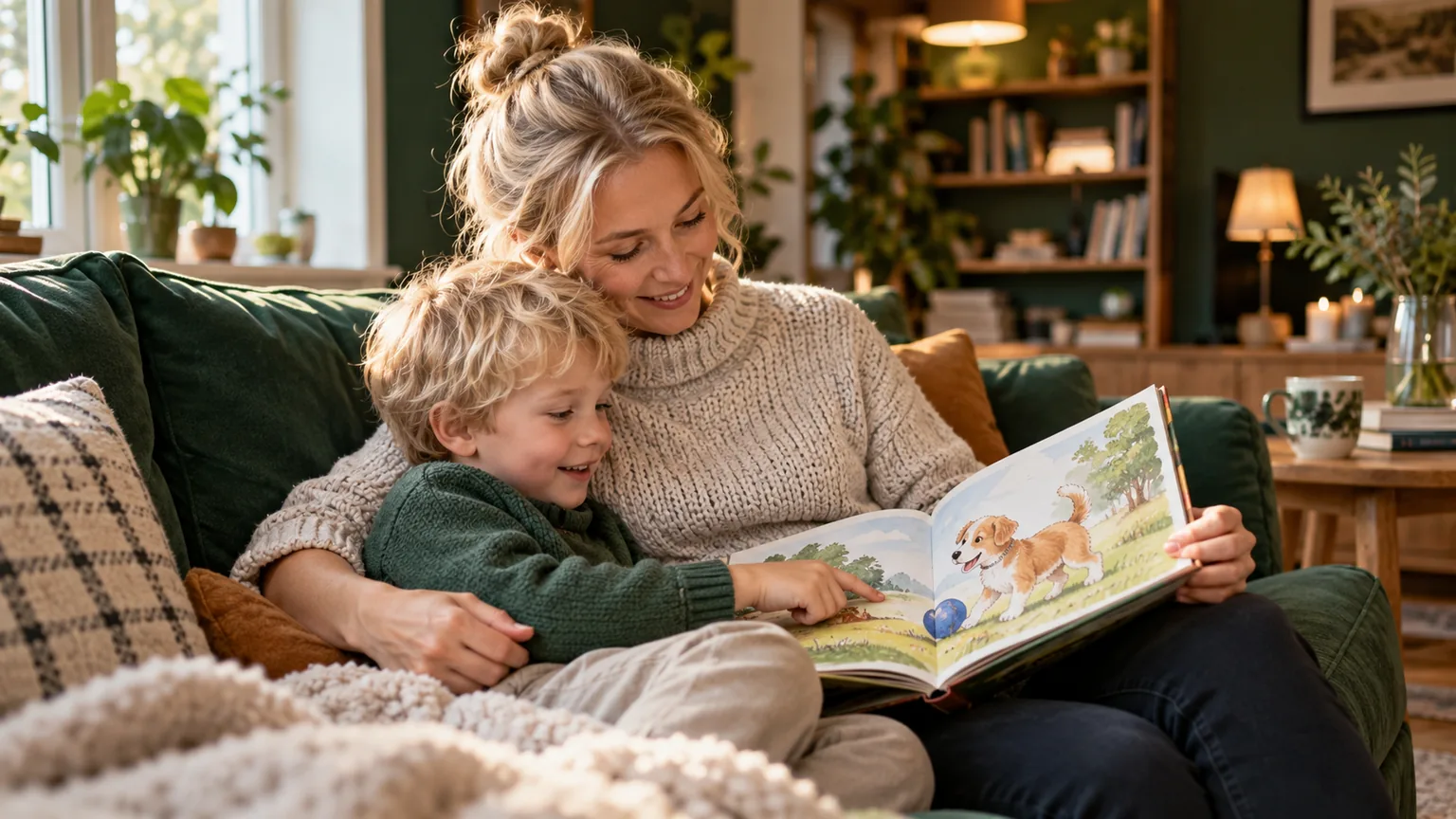
그림을 보고 도움이 된다면 가정 언어로 상황을 설명하세요. 이야기 한 편을 재생하거나 본문을 읽으며 사건 사이에 멈춰 보세요. 아이는 소리 내어 읽는 대신 가리키거나 몸짓을 해도 됩니다. 알아볼 유용한 단어 두세 개를 고르고, 다른 단어는 줄거리를 따라가는 데 필요할 때만 설명하세요.
각 재생기는 그 아래 적힌 이야기 전체를 읽어 줍니다. 재생을 눌러야 음성이 시작됩니다. 들은 뒤 질문 두 가지를 해 보고, 몸짓이나 가정 언어로 하는 답도 받아 주세요.
대본
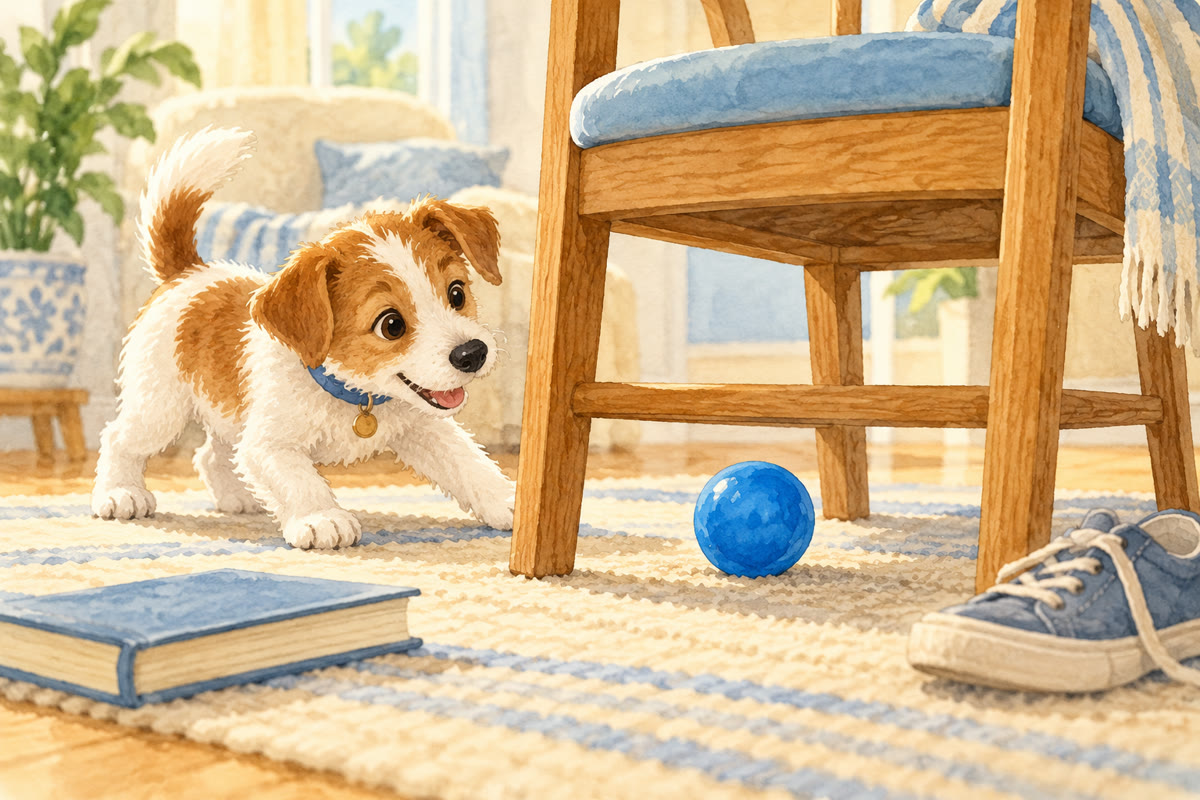
Maya has a blue ball. Her dog, Pip, loves the ball too. “Ready, Pip?” Maya asks. She throws the ball. Pip runs fast. The ball rolls under a chair. Pip comes back with a shoe. Maya laughs. “That is a shoe. Where is the blue ball?” Pip runs away again. This time he comes back with a book. “That is my book!” says Maya. “Where is the blue ball?” Pip puts his nose under the chair. He jumps back. Then he barks. Maya looks under the chair. The blue ball is there. “Good dog, Pip!” Maya reaches for the ball, but Pip is faster. He takes it and runs to the door. Maya laughs again. “Now I know where the blue ball is!”
Maya has a blue ball. Her dog, Pip, loves the ball too.
“Ready, Pip?” Maya asks.
She throws the ball. Pip runs fast. The ball rolls under a chair.
Pip comes back with a shoe.
Maya laughs. “That is a shoe. Where is the blue ball?”
Pip runs away again. This time he comes back with a book.
“That is my book!” says Maya. “Where is the blue ball?”
Pip puts his nose under the chair. He jumps back. Then he barks.
Maya looks under the chair. The blue ball is there.
“Good dog, Pip!”
Maya reaches for the ball, but Pip is faster. He takes it and runs to the door.
Maya laughs again.
“Now I know where the blue ball is!”
ball, blue, dog, shoe를 찾아보세요. “Under the chair”는 Maya가 공을 찾는 곳을 알려 줍니다.
질문 두 가지:
- Pip은 처음에 무엇을 가져오나요? A shoe.
- Maya는 파란 공을 어디서 찾나요? Under the chair.
대본
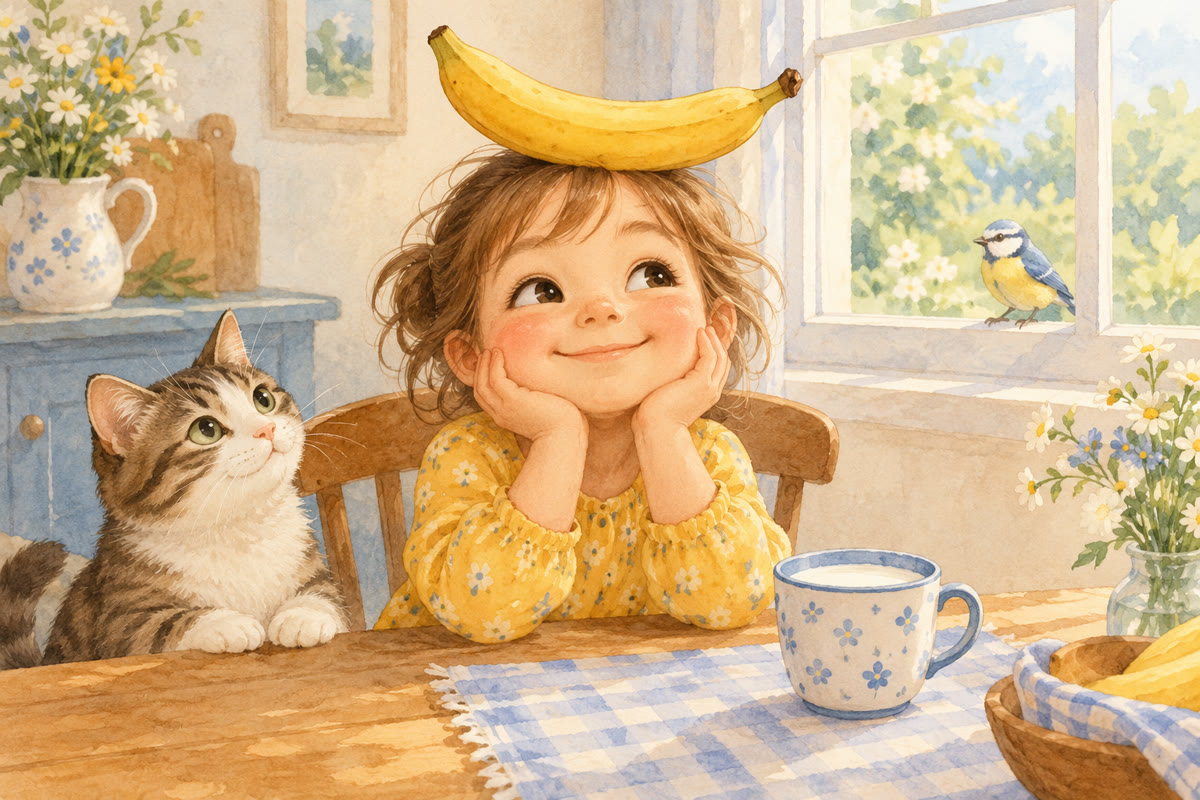
Leo is hungry. He has a yellow banana and a cup of milk. His cat, Coco, sits by the table. Leo puts the banana on his head. “Look, Coco. I have a banana hat!” Coco looks at Leo. Coco does not laugh. A little bird lands on the windowsill outside. Leo points to his head. “Banana hat!” The bird looks at Leo. Then it hops along the windowsill. Coco stands up. The bird hops again. Coco jumps too. Leo turns to watch them. Plop! The banana falls from his head and lands in his empty hand. Now Leo laughs. Coco looks at the banana. The bird looks at the banana. “No,” says Leo. “It is not a hat now. It is my snack.” He peels the banana. Coco sits down. The bird flies away. Leo takes a bite and says, “Yellow hats are delicious.”
Leo is hungry. He has a yellow banana and a cup of milk.
His cat, Coco, sits by the table.
Leo puts the banana on his head.
“Look, Coco. I have a banana hat!”
Coco looks at Leo. Coco does not laugh.
A little bird lands on the windowsill outside.
Leo points to his head. “Banana hat!”
The bird looks at Leo. Then it hops along the windowsill.
Coco stands up. The bird hops again. Coco jumps too.
Leo turns to watch them.
Plop!
The banana falls from his head and lands in his empty hand.
Now Leo laughs.
Coco looks at the banana.
The bird looks at the banana.
“No,” says Leo. “It is not a hat now. It is my snack.”
He peels the banana.
Coco sits down.
The bird flies away.
Leo takes a bite and says, “Yellow hats are delicious.”
banana, yellow, cat, bird에 주목하세요. windowsill은 창문 아래쪽의 좁은 턱입니다.
질문 두 가지:
- Leo는 머리 위에 무엇을 올리나요? A yellow banana.
- 바나나는 어떻게 되나요? It falls into his hand, and he eats it.
대본
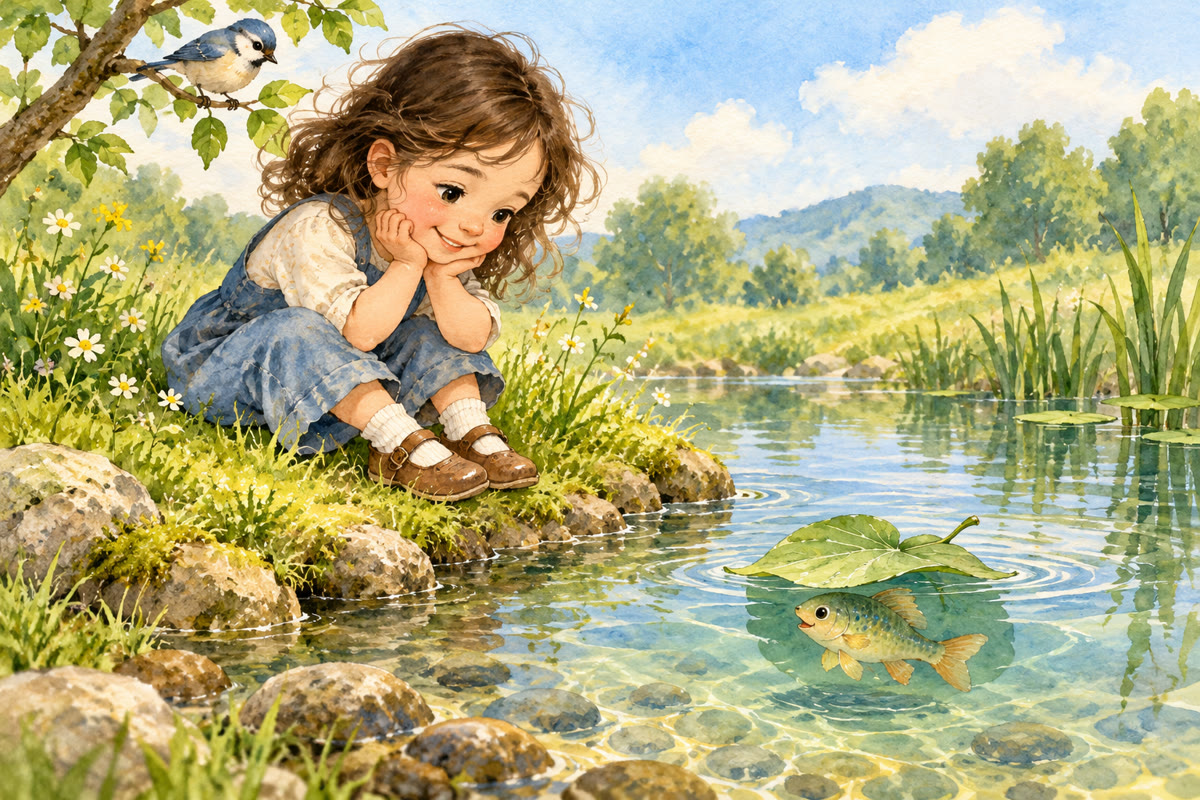
Nina sits by a small pond. One shoe and a green leaf are next to her foot. A fish swims close to the water’s edge. Nina lifts the shoe. “This is my shoe,” she says. The fish opens its mouth. “Do you want a shoe?” Nina asks. A bird on a branch looks down at them. Nina holds the shoe near the water. The fish swims in a little circle. “But you do not have a foot,” Nina says. She shows the fish her foot. The fish splashes. The bird makes a loud sound. Nina thinks. Then she puts the shoe back on her foot. She picks up the green leaf and puts it on the water. The fish swims under the leaf. “A green hat!” says Nina. The fish swims around with the leaf above it. Nina laughs. “No shoe for you. But that hat looks good.”
Nina sits by a small pond. One shoe and a green leaf are next to her foot.
A fish swims close to the water’s edge.
Nina lifts the shoe.
“This is my shoe,” she says.
The fish opens its mouth.
“Do you want a shoe?” Nina asks.
A bird on a branch looks down at them.
Nina holds the shoe near the water. The fish swims in a little circle.
“But you do not have a foot,” Nina says.
She shows the fish her foot.
The fish splashes.
The bird makes a loud sound.
Nina thinks.
Then she puts the shoe back on her foot. She picks up the green leaf and puts it on the water.
The fish swims under the leaf.
“A green hat!” says Nina.
The fish swims around with the leaf above it.
Nina laughs. “No shoe for you. But that hat looks good.”
fish, shoe, foot, leaf에 주목하세요. Nina는 잎을 물 위에 놓습니다.
질문 두 가지:
- Nina가 신발을 그대로 갖고 있는 이유는 무엇인가요? The fish does not have a foot.
- 무엇이 물고기의 모자가 되나요? A green leaf.
각 재생기 옆의 글은 전체 대본이며 재생기 아래의 “대본”도 열 수 있습니다. 내레이션에는 생성된 음성을 사용합니다. 한 번은 이야기를 듣고, 그다음 좋아하는 부분을 다시 재생하거나 읽으세요. 모든 문장을 따라 말할 필요는 없습니다.
이야기가 끝난 뒤 옆의 질문 두 가지를 해 보세요. 답하기 어려우면 해당 장면으로 함께 돌아가세요. 아이는 가리키거나, 그리거나, 익숙한 단어를 사용할 수 있습니다. 질문에 답해야 다음 이야기가 열리는 것은 아닙니다.
Pip의 엉뚱한 가져오기 놀이
- 목표
- 첫 이야기의 사건을 순서대로 놓습니다.
- 준비
- 신발, 책, 공 또는 각각의 그림.
단계
- Where Is the Blue Ball?을 읽거나 재생하세요.
- 물건이나 그림 세 개를 뒤섞어 놓으세요. Pip이 무엇을 먼저 가져오는지 물어봅니다.
- 신발, 책, 공 순서로 놓으세요. 필요하면 이야기를 다시 살펴봅니다.
- 사건 하나를 행동으로 보여 주세요. “Where is the blue ball?”을 말해 보게 하거나, 부모가 말하는 동안 아이는 가리키게 하세요.
- 어른의 도움
- 물건은 보이게 두세요. 다시 이야기하기 놀이이며 기억력 시험이 아닙니다.
- 쉬운 변형
- shoe와 ball만 제시한 뒤 book을 더하세요.
다른 날에는 Leo의 바나나 모자를 그리거나 물고기 그림 위로 종이 잎을 움직여 보세요. 반복되는 표현을 함께 말하거나 익숙한 단어를 가리키거나 그냥 다시 들어도 됩니다. 아이가 분위기를 바꾸고 싶어 하면 동작과 함께하는 노래를 해 보세요.
영어 초보자가 함께 연습하도록 Nativik이 준비한 자체 이야기입니다. British Council 지침은 시각적 도움과 익숙한 이야기의 반복 공유를 권합니다. 출처의 Cochrane 검토와 노르웨이 취학 전 구조화 연구는 더 넓은 중재를 다루며 이 이야기들을 연구하지 않았습니다. 이 모음으로 특정한 학습 향상이 생긴다는 근거가 되지 않습니다.